Although we had been warned that the West Coast of the South Island is extremely wet, we woke to another sunny day. A short drive took us to Paparoa National Park along the coast road (actually the only road) with dramatic coastline on our right and towering mountains, covered in green on our left.
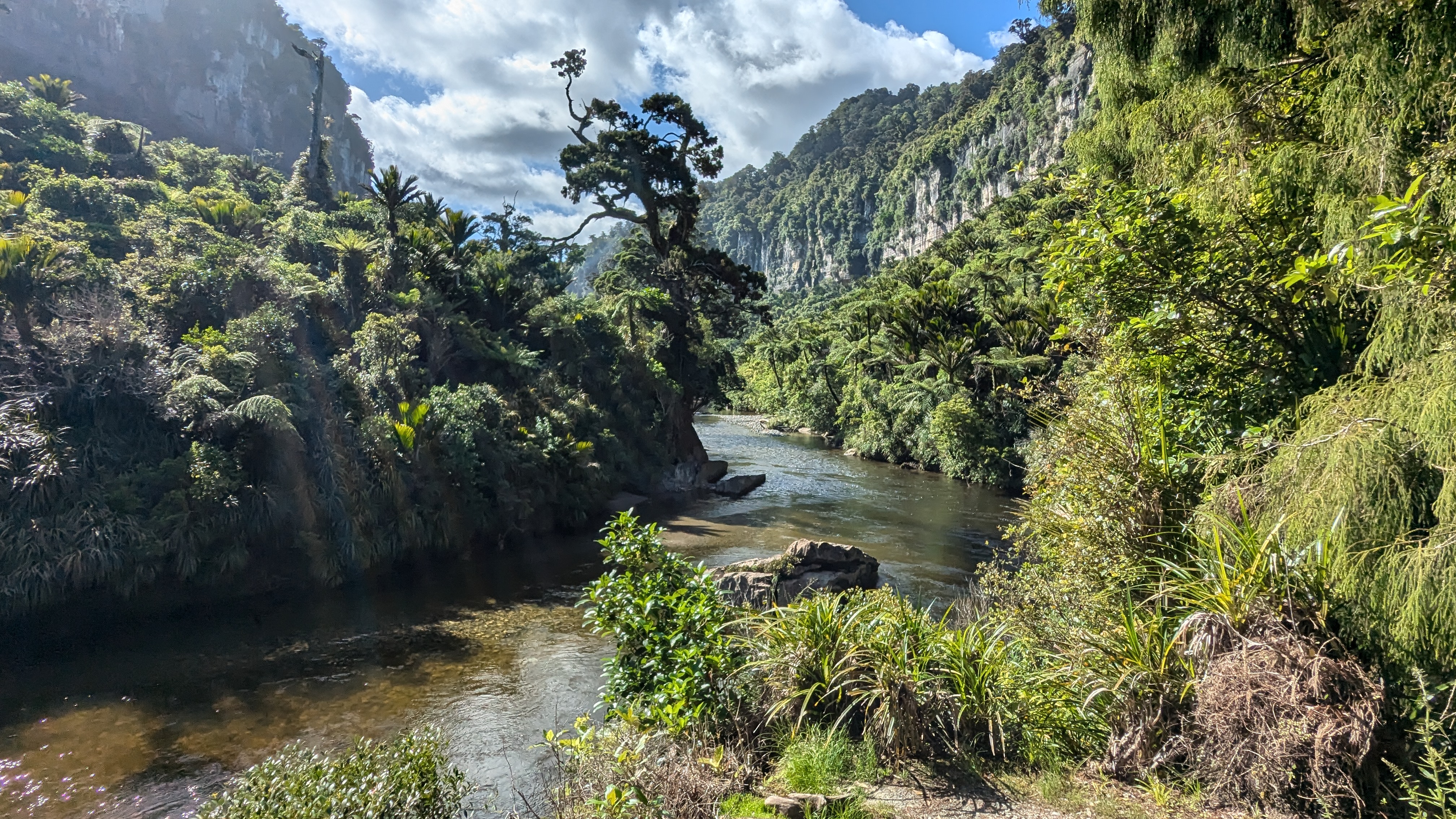
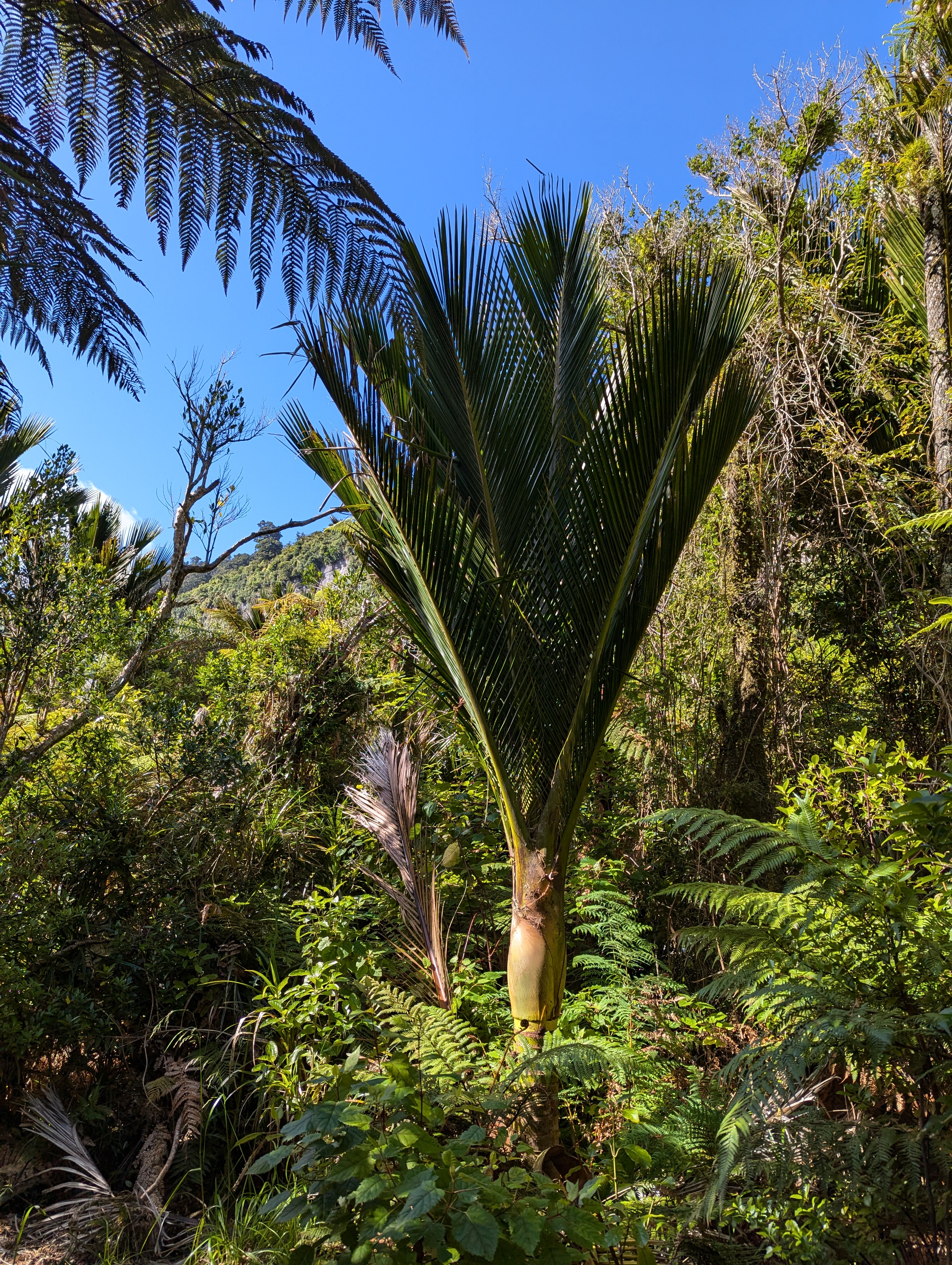
At Paparoa we had a gorgeous walk along the Paparoa river track. The bubbling river was clear but stained brown with the tanins leaching into the water from the surrounding forest, and edged with towering limestone cliffs and luxurious vegetation.
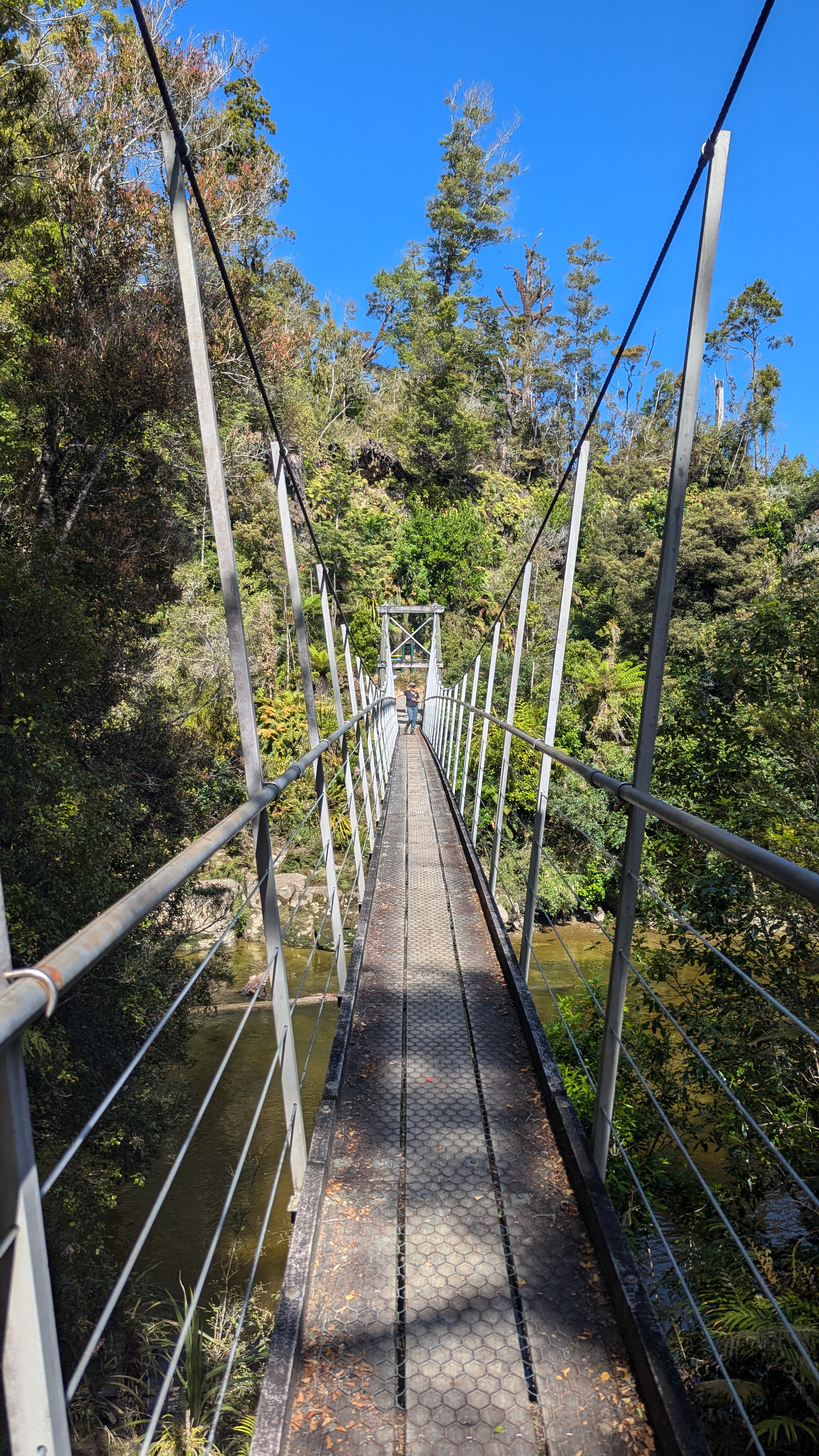
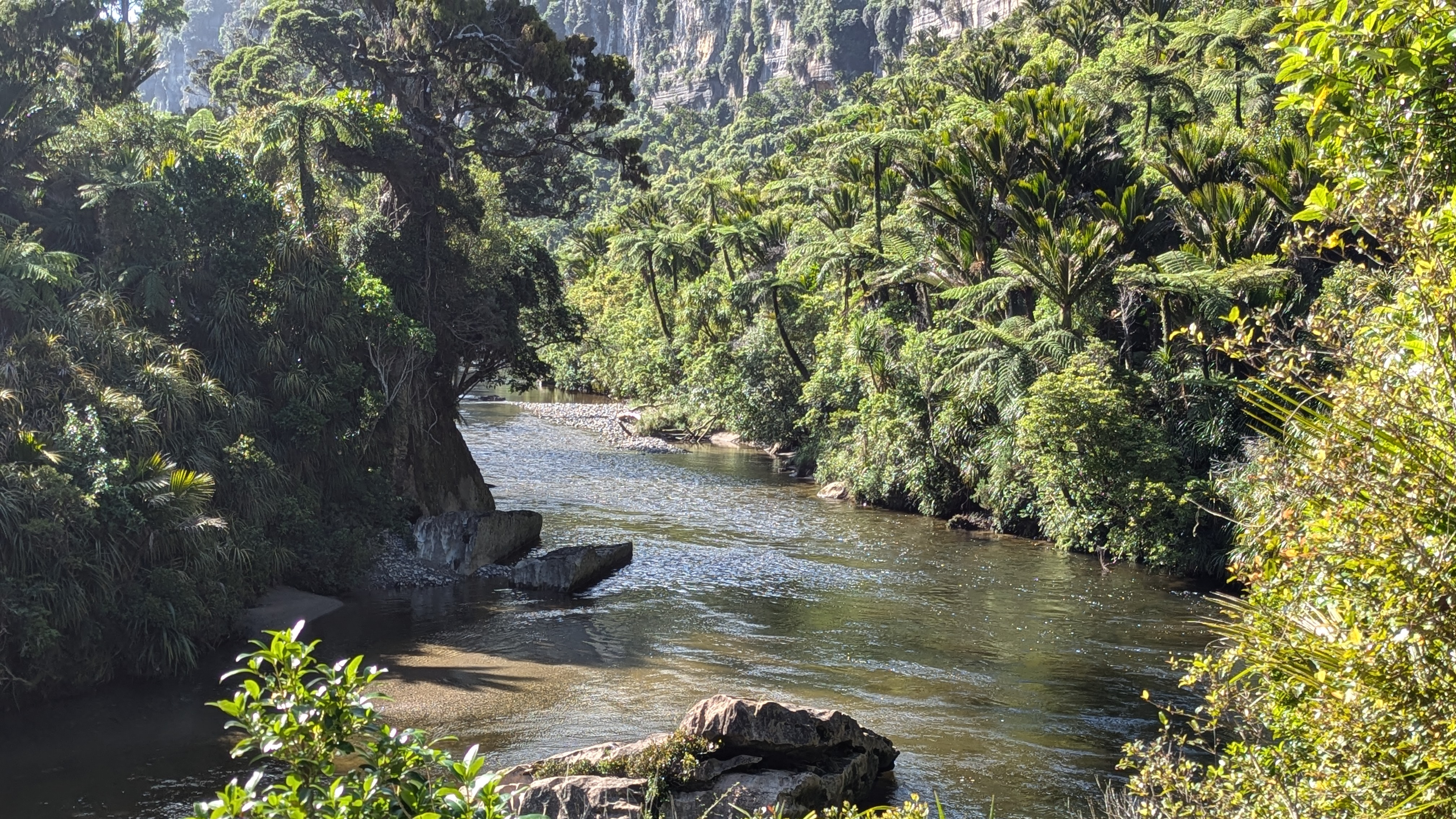
On the way back to the start we spied a wild goat in the vegetation just up from the river. There are numerous goats in this area and they are a threat to native species – so are hunted with the aim of eliminating them. However, they have proven elusive and difficult to catch and so, at this point, the ecological threat remains.
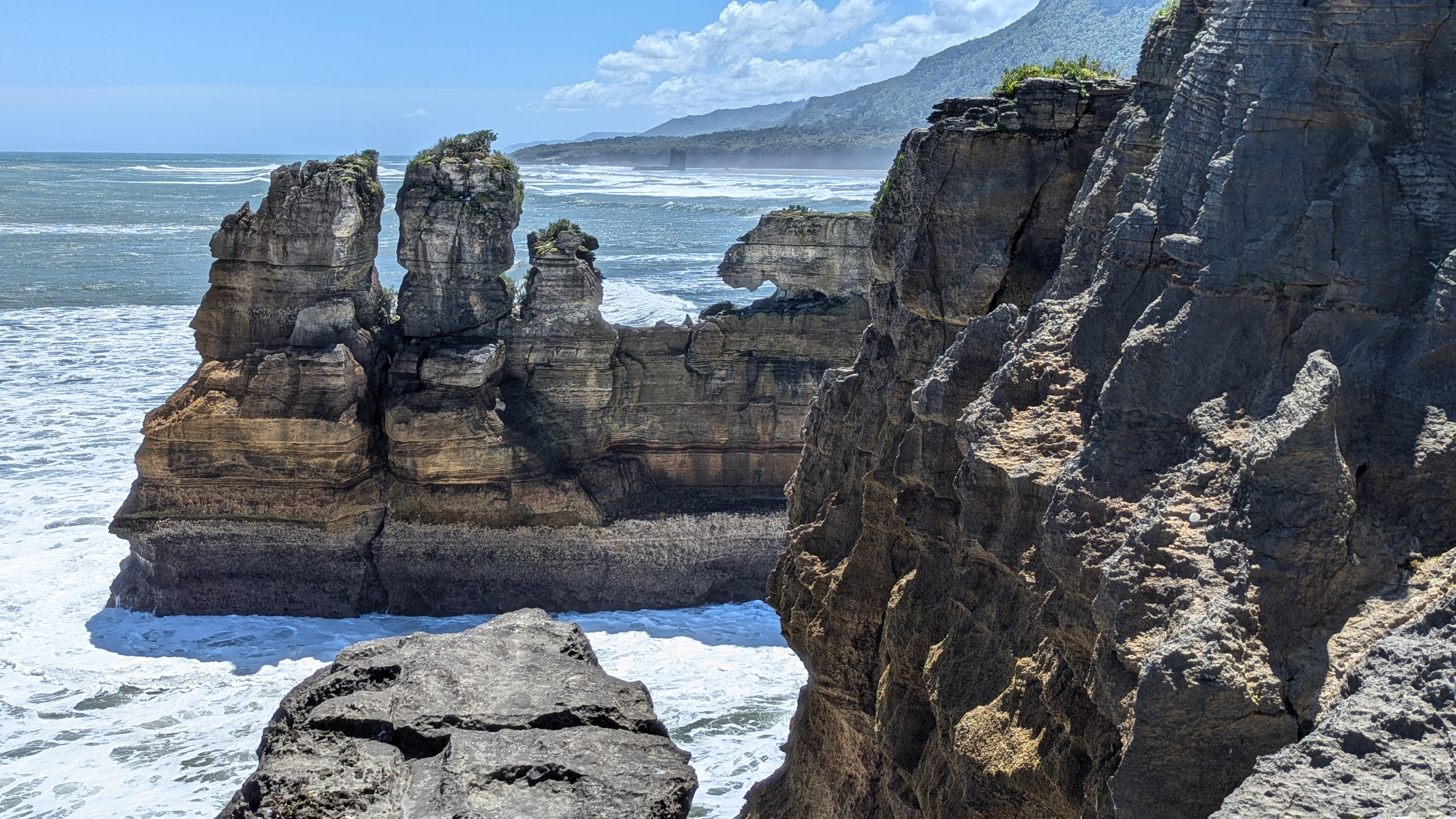
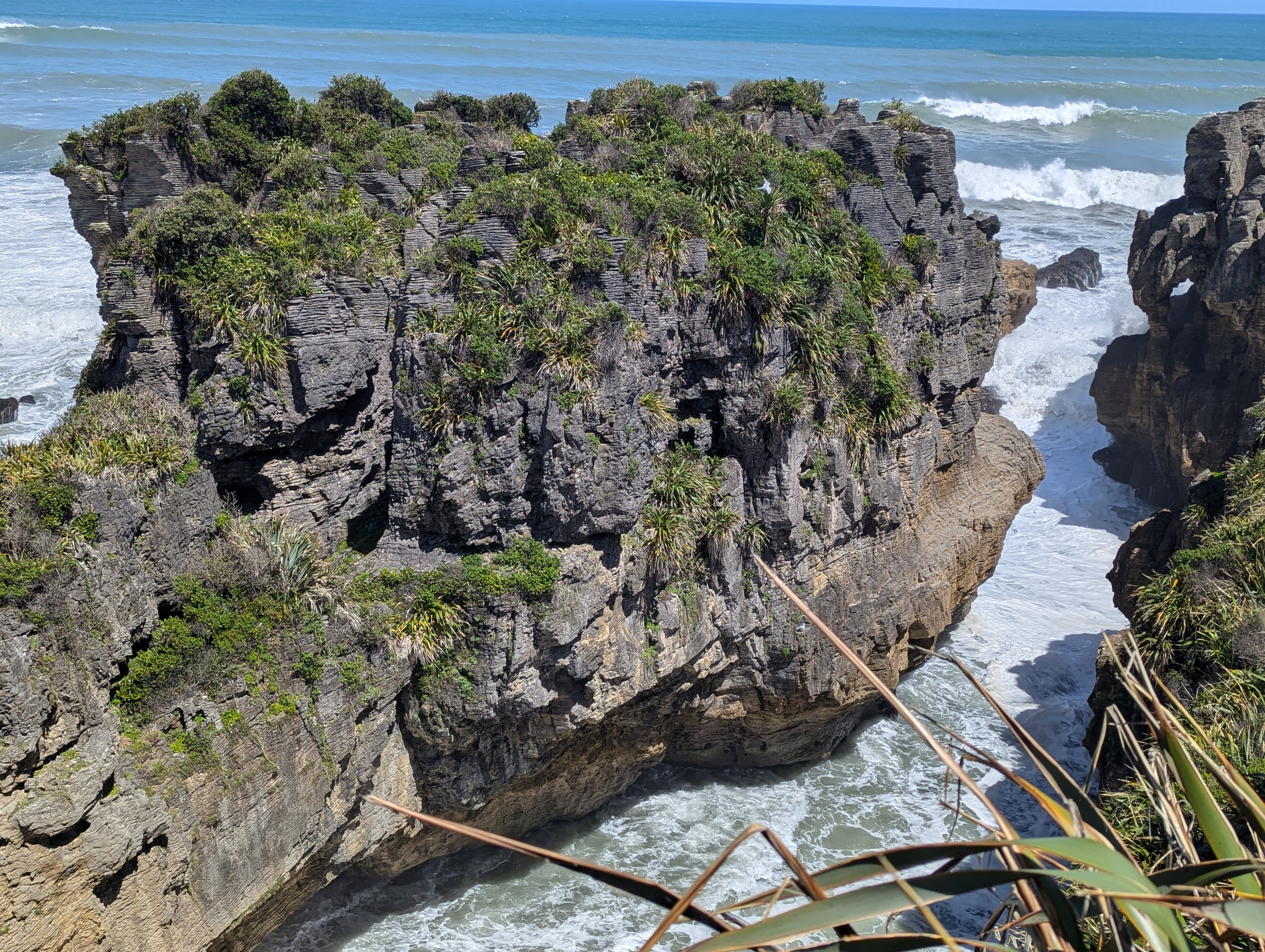
A little further along the coast we reached Pancake Rocks – a promontory of eroded cliffs made up of layers of limestone and compressed mud so that they looked like stacks of pancakes. Large holes, bridges and caves had been made from the waves crashing in from the Tasman Sea. We’ve seen lots of cliffs but none that looked like this.
We then had a longer drive to Lake Mapourika and the village of Franz Joseph Glacier. The famed rain swept through from time to time, clouds wreathing the green mountains, but it had largely cleared by the time we arrived. There had been a hasty change of schedule as the guides had received notification that the coast road (which is the only road) was going to be closed completely the following afternoon for a few hours. Thus, if we wanted to make our way south, we would need to drive through the following morning. The planned kayaking trip on the lake for the morning had therefore been transferred to this evening.
Kitted up with double kayaks, aprons and life jackets, and dosed up with sandfly repellent, we had a serene and instructive guided kayak on the lake. After almost 40 years of marriage David and I managed to paddle our double canoe in (almost) perfect unison; at one stage we were told we had to slow down!!
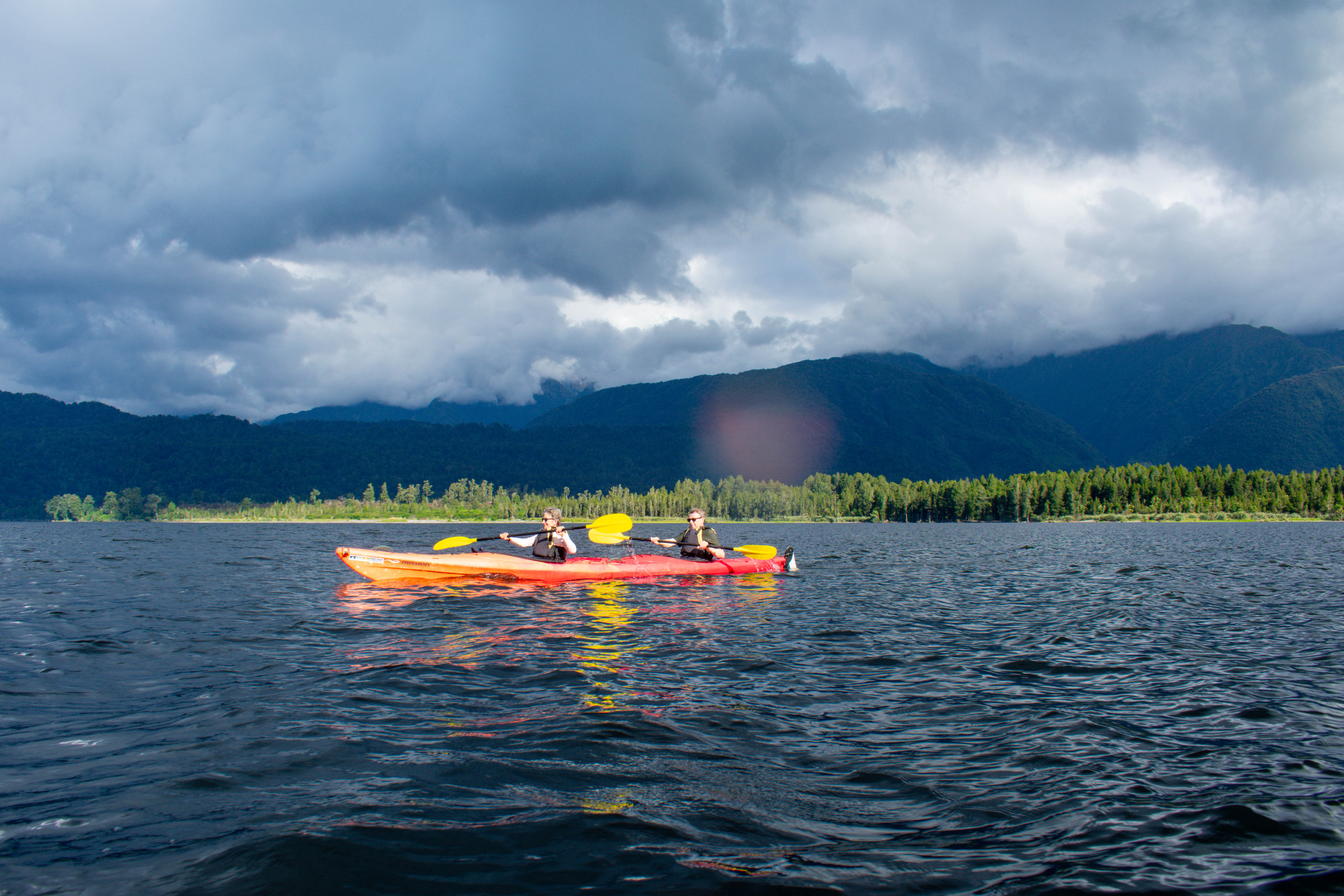
The lake was surrounded by untouched verdant forest. The soil layer was extremely thin so the trees grew very slowly. The average age of the tree canopy was 800 years, with the largest trees being 1400 years old. The dense forestation was incredible to observe close up. There were 5 species of kiwi in the forest and a very active programme of kiwi conservation that was successfully increasing numbers after a period of decline. There was also a very active programme of eradication of mammals, which were introduced species to New Zealand by the colonisers over the last 100+ years (including goats – see above). The area was hoping to become mammal free by 2025 (just a few weeks away) by trapping and poisoning the invaders. Some of the techniques were a bit hit and miss, and were controversial but overall the programme was working- albeit millions of dollars was invested to achieve that outcome. The last amazing fact was that although the lake was just below the mountain glaciers but was entirely fed by rainwater, and the water temperature was 18-20 degrees. This is because it is a kettle lake – formed by a huge lump of glacier ice that had become separated from the main glacier and gradually melted. The lake was therefore not fed by a glacier river but by the massive rainfall (up to 5 meters a year). The lake was almost black in colour from the tanins and therefore absorbed heat from the sun. It could have provided fantastic swimming except for the very pesky swarms of biting sandflies (every inch of showing skin was smothered in bug repellent). The late hour and hunger also deterred us from swimming and so we all left the water more or less unbitten.
 The Slow Cycling Blog
It’s an amazing part of the country isn’t it? Remember calling into a gas station years ago at Franz Joseph’s neighbour, Fox Glacier. Having filled up I asked if they had any Fox’s Glacier Mints, to be greeted with a look of total incomprehension. Missed marketing opportunity.