We woke in the lovely setting of Casa Tamandua. A cockrel of very small stature but very loud crow woke most of us at 4am but luckily he did not crow continuously so I could sleep on and off until six.
We were provided with a delicious breakfast (quantity of food is not a problem on this trip). We are a very well behaved group so we were in the bus by 7.30 as instructed with no stragglers! The bus then mirrored the drive we took along the road to where we started rafting. This time we parked at the top of the hill rather than going all the way by bus down to the river Pacuare. The sun was bright, the sky was blue and and views spectacular.
We all set off in good spirits. Soon we turned off the track into the indigenous area around the Pacuare river, home of the Cebecar tribe. There are 5 protected areas in Costa Rica for the main indigenous tribes and their clans. Jairo, our guide, explained that if the people remained in the protected areas they were pretty autonomous and did not need to pay taxes but if they left to live outside the tribal areas, they were subject to the normal government regulations and taxes of the rest of Ticos.
The route we were taking today was the main path that the Cebecar people used to walk in and out of the reserve to get supplies. We were going to take several hours, kitted out in our walking boots, hiking poles etc, while they galloped up and down in their wellies! Everyone we passed was very friendly with waves and greetings.
It had rained a lot recently, as we knew from the previous couple of days, so even though the weather today was fantastic, the path was extremely muddy (home from home for us). The first section took us down a steep, slippery path through the verdent green.
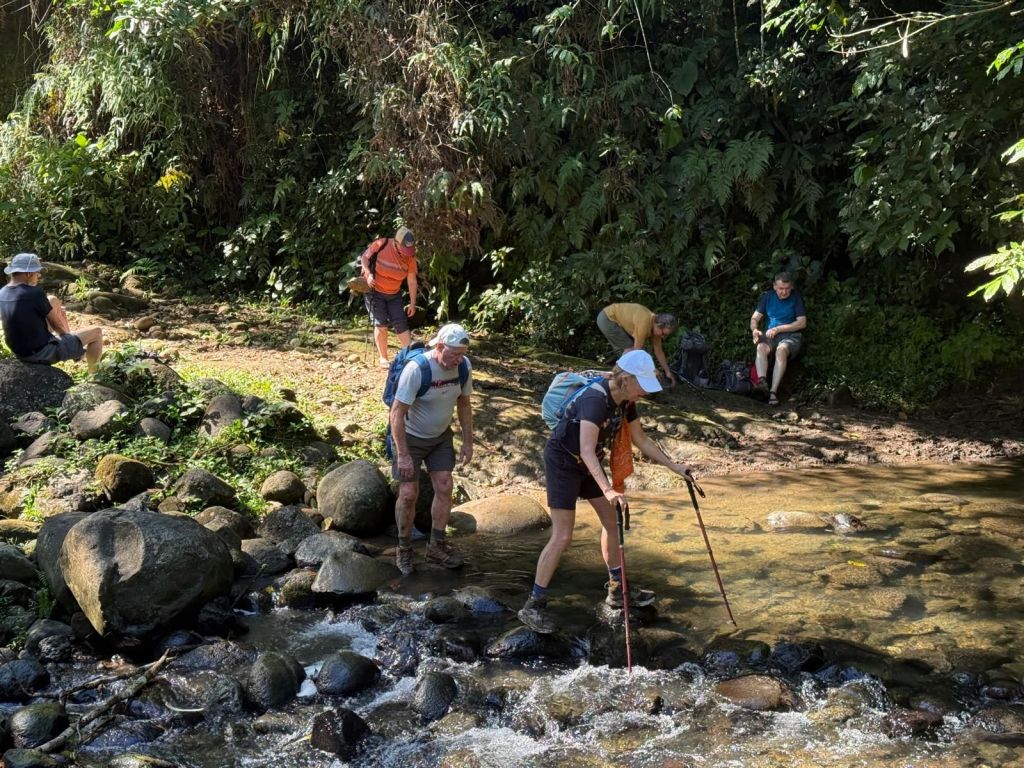
At a small tributary we changed into our water sandles to wade across with only one casualty, who didn’t bother to change and got a boot full of water for his confidence.
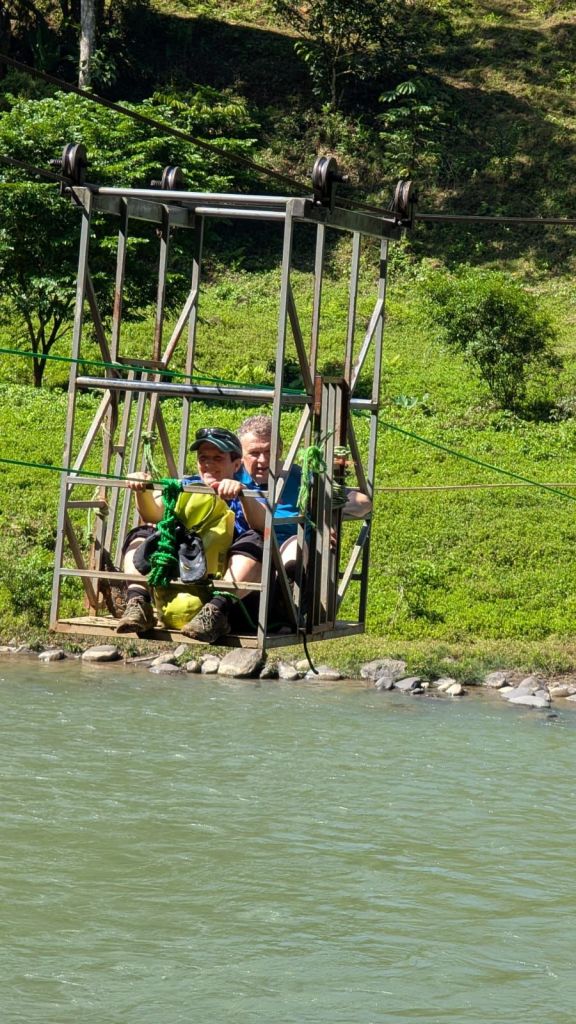
A little further on we reached the beautiful Pacuare river, where we had had a fantastic rafting experience the previous day. There are 52 rapids along about 36km back to Siquirres and we saw groups experiencing this delight for the first time. We had passed under a cable that our rafting guide had told us the indigenous people used to cross the river and here our fun began.
We met Leo at the bank, our indigenous guide (a requirement when in the reserve) and a young lad specfically recruited to help us across the river. Two at a time we were loaded into a metal cage high on the river bank. A graceful slide along the cable took us to mid river – then the cage was hauled up the side by rope. Hard work for them, great fun for us! Normally tribe members pull themselves across the river – all part of the fun of going to the shops.
After we all safely reached the other side there was a steep 3km climb up a muddy path through beautiful jungle. David had his heart monitor on to keep his heart rate under 140 bpm but he climbed steadily at pretty much the same pace as the rest of the group. We all needed to catch our breath from time to time.
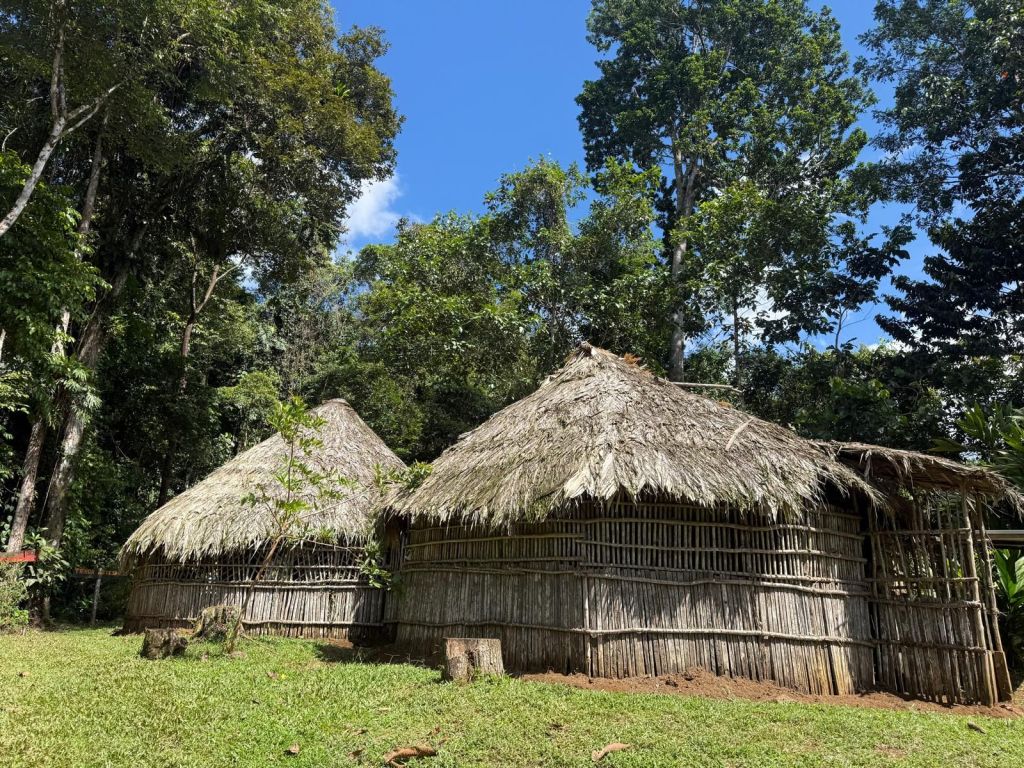
The path opened out onto a flattish green plateau to Leo’s village. Here was a mixture of traditional building of wood and rush walls and roof and government provided homes with the standard corrugated iron rooves. The village had 85 inhabitants and included a school for the 20 or so children. Being on the route of the Camino it also had a restaurant where we were to have lunch. Part of the ethos of the Camino, which was devised over a number of years and had opened 6 years ago, was to bring ecotourism into the rural areas of Costa Rica to provide jobs and tourist dollars more equitably in the country. The tribe members probably survived on subsistance farming and products from the forest before the tourists arrived, but now walkers provide a steady income for the village.
Before lunch, Leo gave us an informative talk about his tribe, their systems and beliefs etc (translated for us by Jairo). This was the largest village in this reserve but others were scattered across a wide area defined by river boundaries. We had walked in 6km and were going to back track the way we came. If we were following the full Camino we would have had another 17km before getting to a road and the exit of the reserve. Leo said he could do that in 3 hours if he was in a hurry and it had been known to be done in 2 hours 20 minutes! They are pretty fit people as this was not flat terrain or smooth paths!
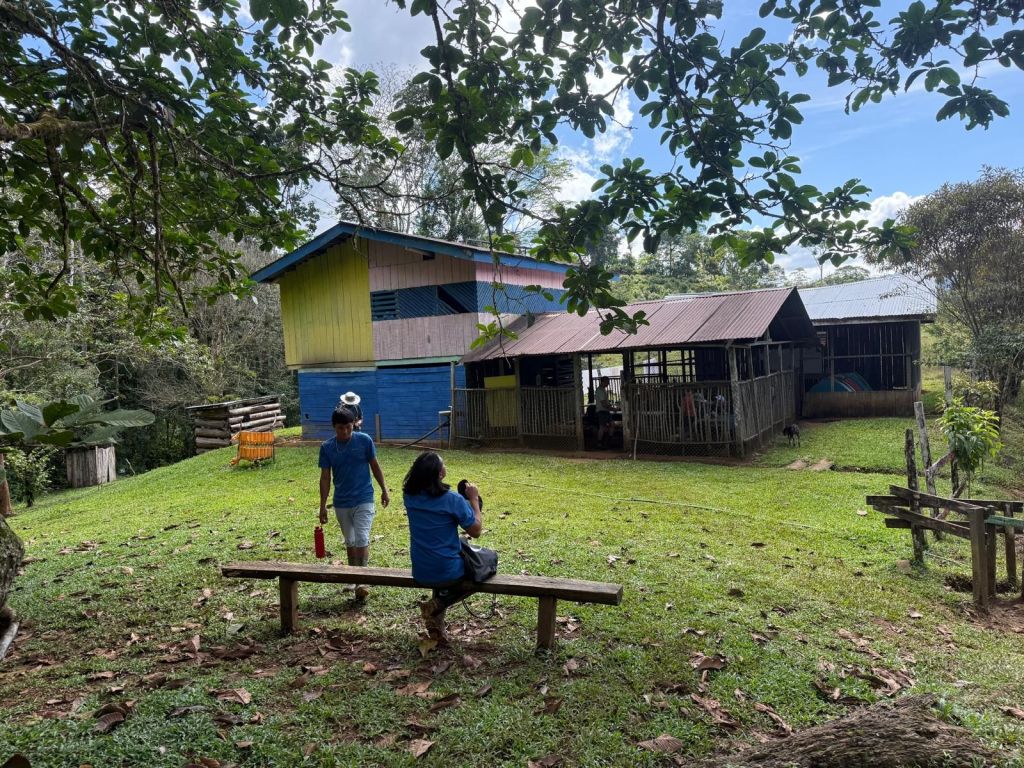
Leo’s wife cooked us lunch – chicken, rice, beans, cassava, plantain and really delicious. It was her birthday the previous day and we all sung her happy birthday – although I doubt she spoke any English. She looked ot be in her early twenties with 3 young children in tow, the older ones of which seemed wholly comfortable with the strangers who turned up with rucksacks hiking poles and the like.
We then retraced our steps, slithering down the steep muddy trail, back over the river in the cage and up the other side. The weather gods shined on us all day.
We picked up the bus at the top of the hill again and then it was a 40 minute drive or so to Rita’s House – our accomodation for the night. I’m really loving Costan Rican cooking as another delicious meal was served. We are not going to lose weight on this holiday!
We were tired, as much as by adjusting to walking in heat and humidity as by the steep track, but fell into bed early after a very satisfying day.
 The Slow Cycling Blog