Tag Archives: nature

A Jetboat trip up the Haast river and on to Makarora

We started the day on the bus to get through before the road closed.  There had been a landslip and the road was closing at midday – so we went early to pick up our boat at the mouth of the Haast river. We were directed onto the jet boat by our driver and guide – a formidable huntin’ shootin’ and fishin’ woman – for the 36km ride upstream. She described how she lived in the tiny township of Haast, proudly told us the entire population numbered 259 and that the nearest supermarket was 2 hour drive away in Wanaka.  She said the locals were hugely self-supporting and largely made do with what they could hunt or forage from the sea – mainly fish and crayfish.  She said she could take her boat home and in half an hour put on her dive stuff and come back up with 6 crayfish and 10 abalone (a type of sea snail) – the allowed daily quotas. These were not crayfish as we knew them but in her photos looked like enormous lobsters.  She told us that she could also shoot dear from her from gate. We decided she was not to be messed with – but she was also informative and great fun.
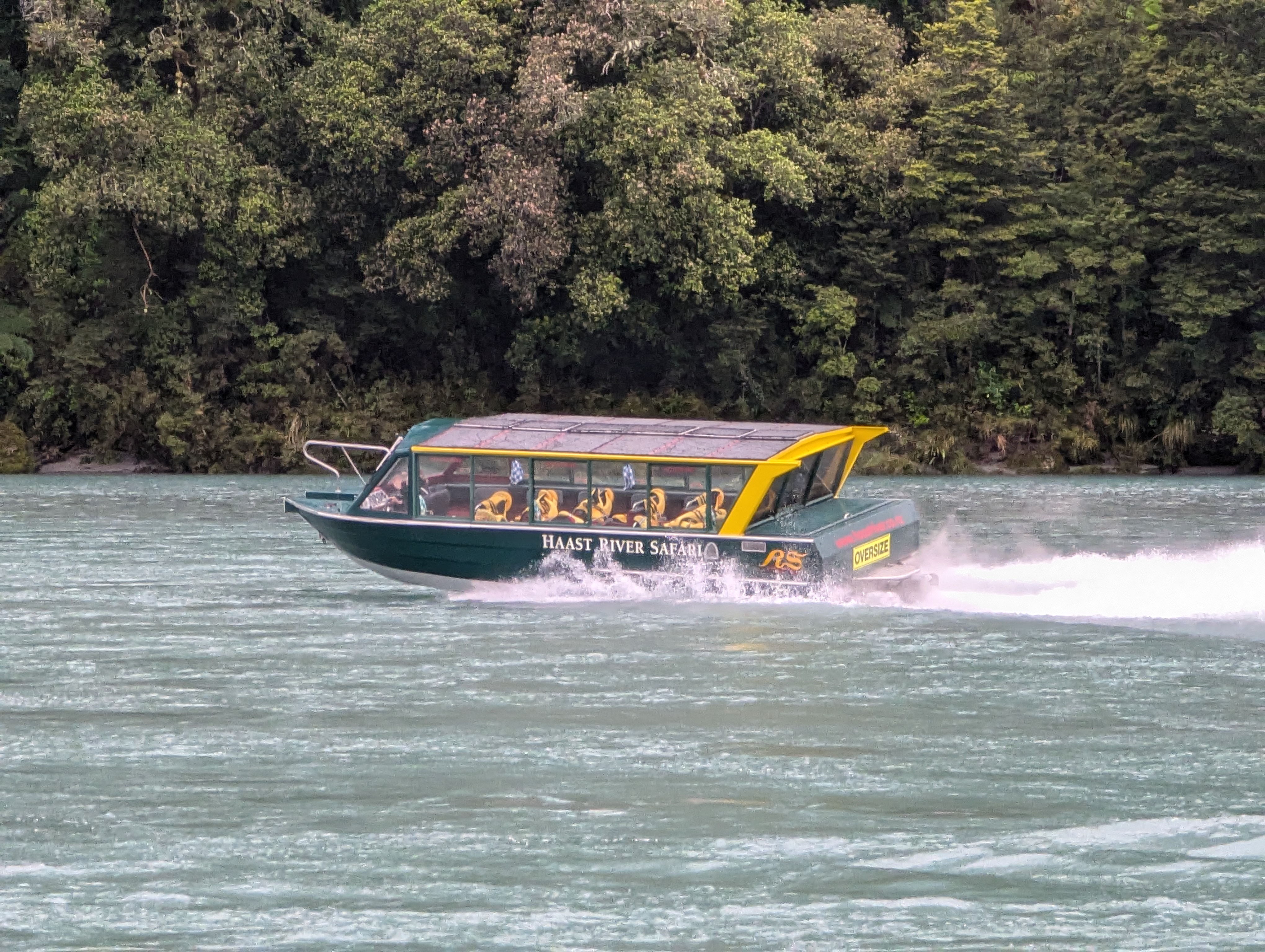
The Haast is a braided river – a glacial river formed of many channels. The jet boat was invented in New Zealand she claimed to allow navigation through the sometimes very shallow channels.  When the boat is at full speed and rising above the water, she only needed 4 inches clearance (she also said the Japanese had stolen the idea to develop jet skis).  The river channels can change after every rainfall and we marvelled at her skill as she wove through the river threads at considerable speed.
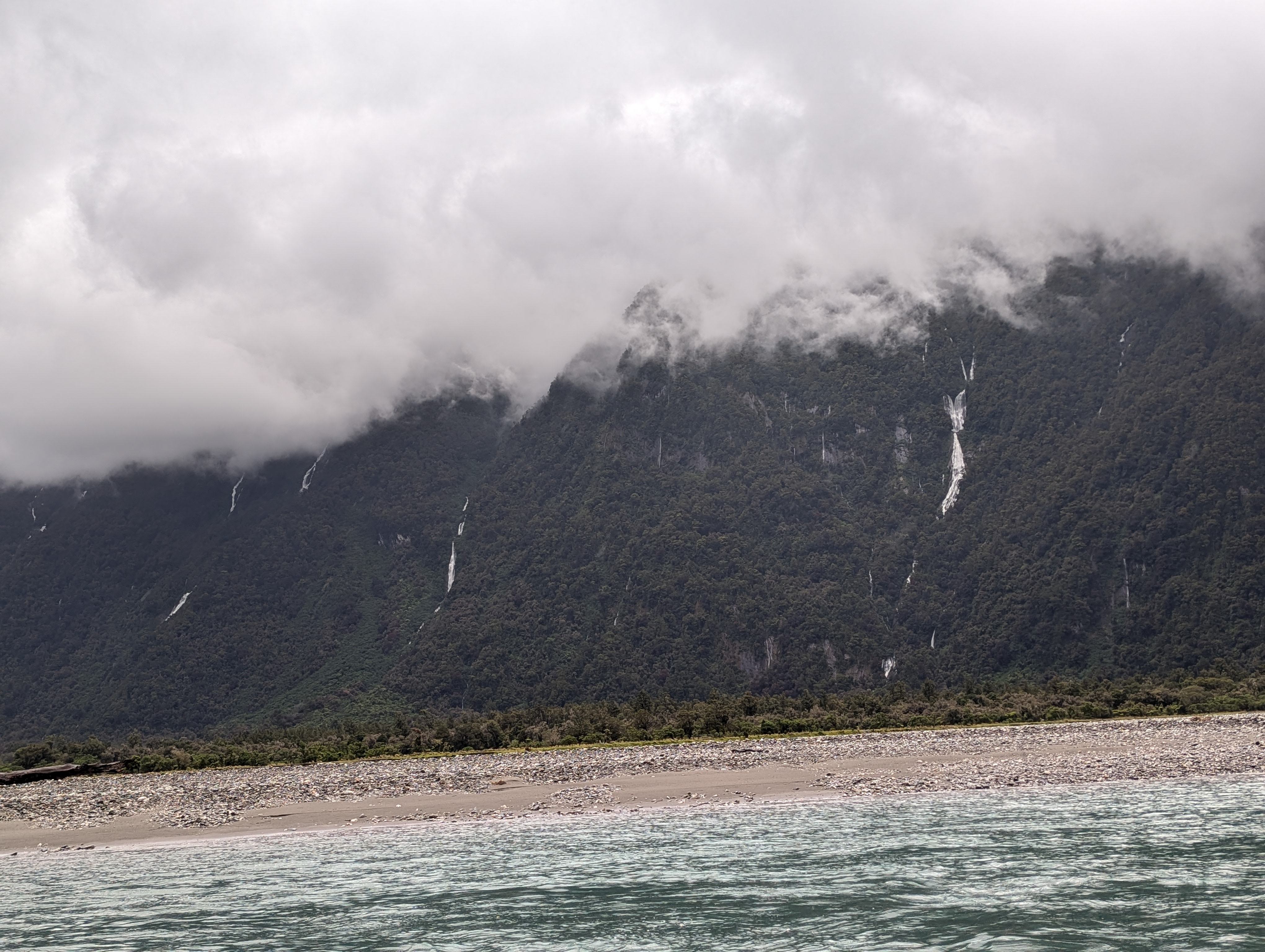
The Haast river is located along the Alpine Fault, where the Pacific and Australian tectonic plates clash against each other.  These plates are responsible for forming the Southern Alps. We were shown the valley where the Pacific plate is on one side and the Australian plate on the other – a rare event on land apparently.  They appeared quiet as we passed over.
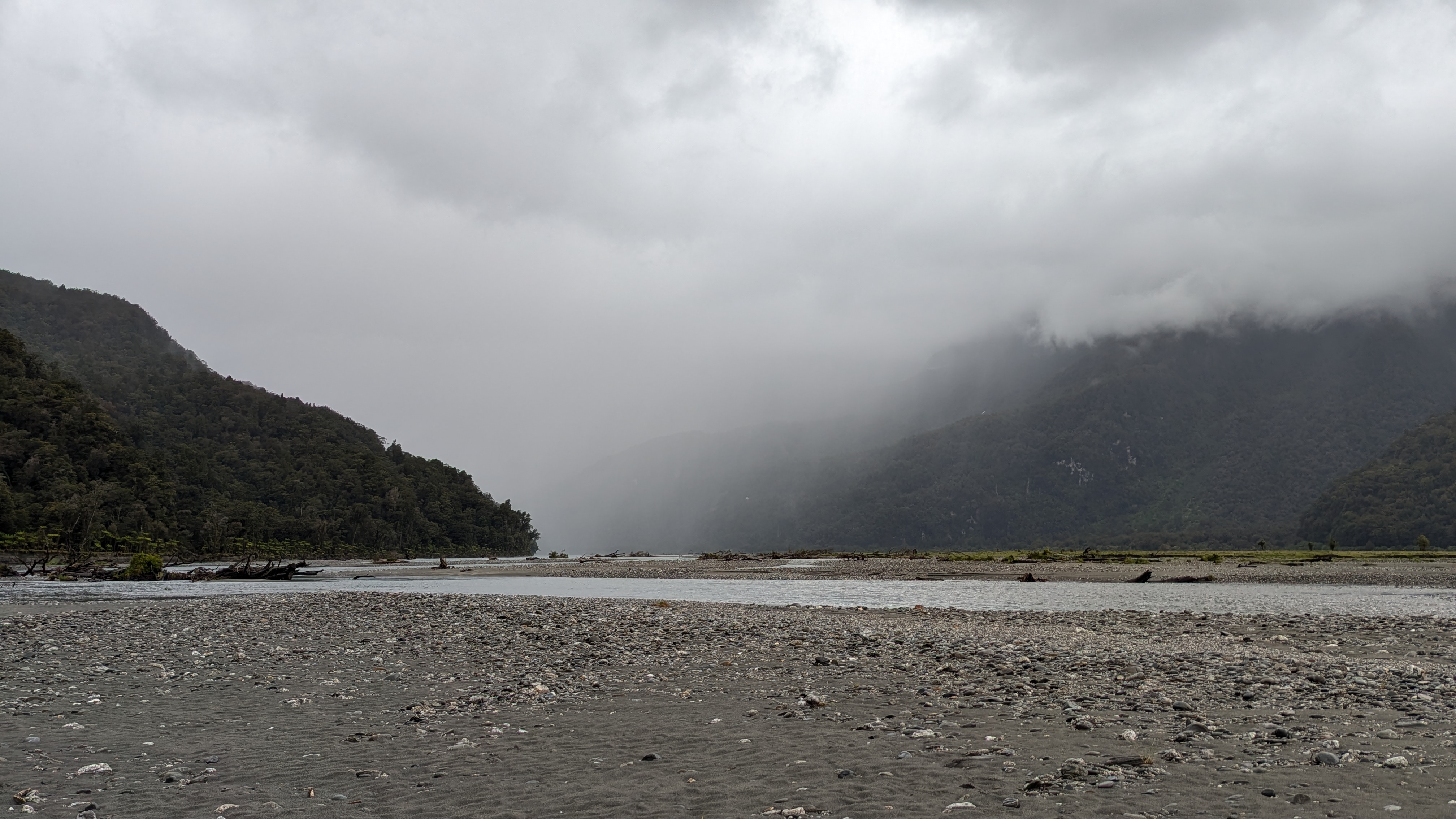
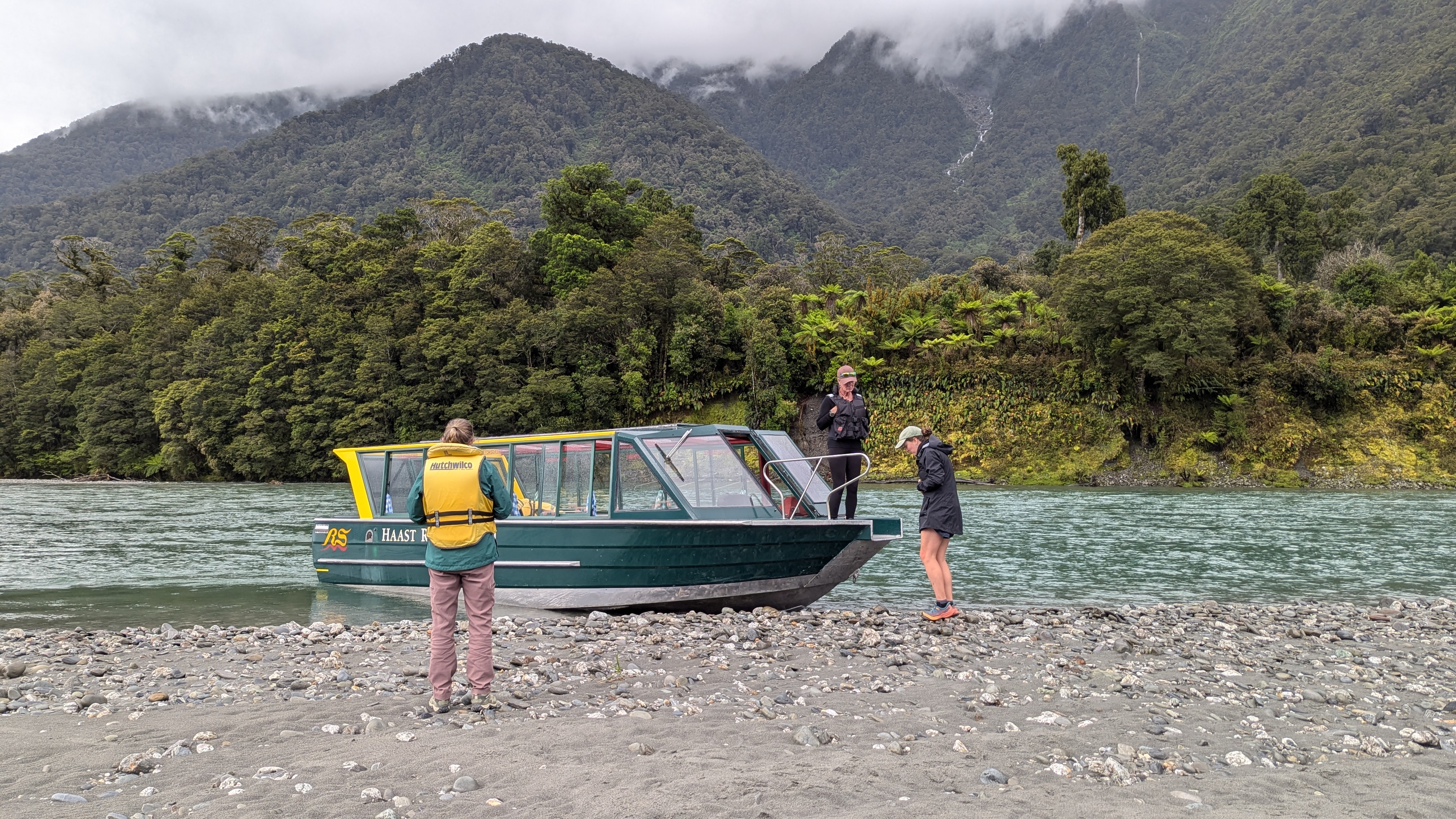
She stopped the boat after half an hour or so to land on a large stony sandbar, and invited us to disembark to look for Douglas Jade – a rare form of the green stone that is famous in NZ.  Needless to say none of us made out fortune by finding any real jade, but we did find a lot of pretty stones!
We got back on the jet boat and zipped up the river, passing numerous waterfalls which formed whenever there was recent rain. ‘Do you want to spin’ she said?  As “no” didn’t appear to be an acceptable answer, we were told to hold on tight with both hands and after picking up speed she did the equivalent of a handbrake turn, which had us all squealing like kids on a rollercoaster (with much the same feeling). After four of these, the final turn brought us up opposite the largest waterfall – and with some relief the journey was over!

 We continued up the narrowing river valley in the minibus and over the Haast pass. We stopped for a short, wet walk through the forest to a lookout point – but it was rainy and foggy and not much was seen.

We ended the day at the Wonderland Lodge on Lake Makarora – a complex of toy-town like A framed houses. The clouds were clearing so we could see the mountain tops from our bed.  Our guides cooked us a delicious barbeque to end the day.
Return walk from Bushline Hut and Coastal Walk to Seal Colony

(David) The night was quite cold and the wind blew under our tent. I felt it blowing right onto an exposed patch of my body; one where the sleeping bag appeared to have no effective covering.  Adjustments to clothing mostly sorted this and eventually we both slept well – or fairly well at least.  We woke, ambled into the hut and were greeted by tea, coffee and breakfast!  We could get used to being catered for.

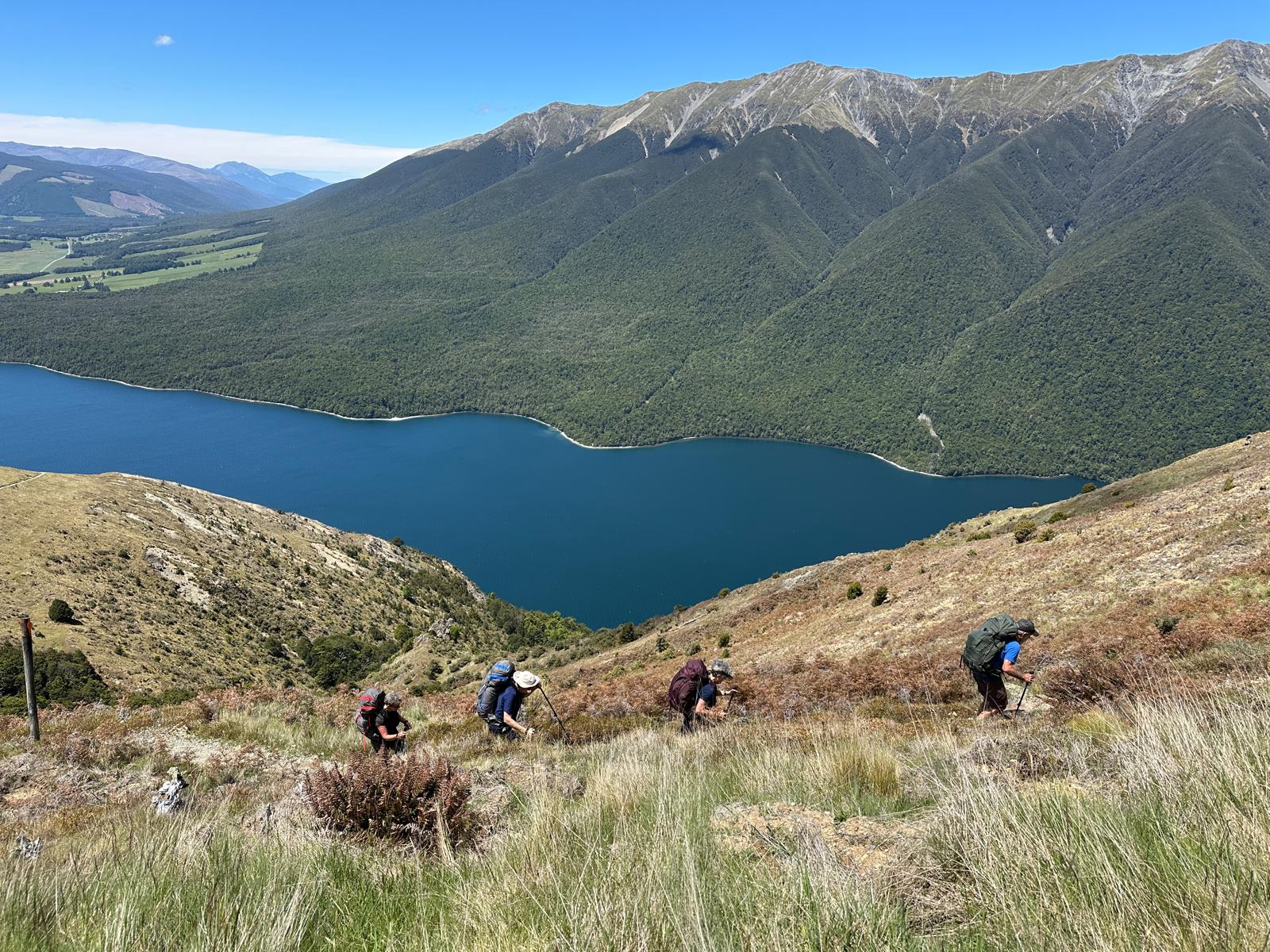
After breakfast we packed up and ambled down the mountain.  I have been resistant to out and back walks in the past but we have done quite a few this holiday and my resistance is crumbling.  The views are different going the other way, the weather is different and we see the mountains at a different time of the day.  It was a delightful hour plod down the hill, with great views of the lake and then back to the minibus.

We put this in because it made us laugh!

We had a bit of free time at Lake Rotoiti again. We and saw again the long finned eels around the jetty and read about their incredible lifecycle.  The eels can live up to 100 years of age and only spawn once in their lifetime. Before spawning they leave the lake and head to the Pacific and swim 1000s of miles to near to Tonga where they mate, spawn and die.  The baby eels spend 7-10 months drifting back to New Zealand on the ocean currents and as they develop, swim upstream to the lake.

Leaving the lake we had  another (tedious) drive of a few hours, heading to the west coast, where we reached the wonderfully named “Cape Foulwind”.  We were booked into mini-cabins at this seaside resort.  The area was a former quarrying centre where granite was discovered as part of the cliffs, and so these were blasted away to make roads and the like during the C19 and early C20. 

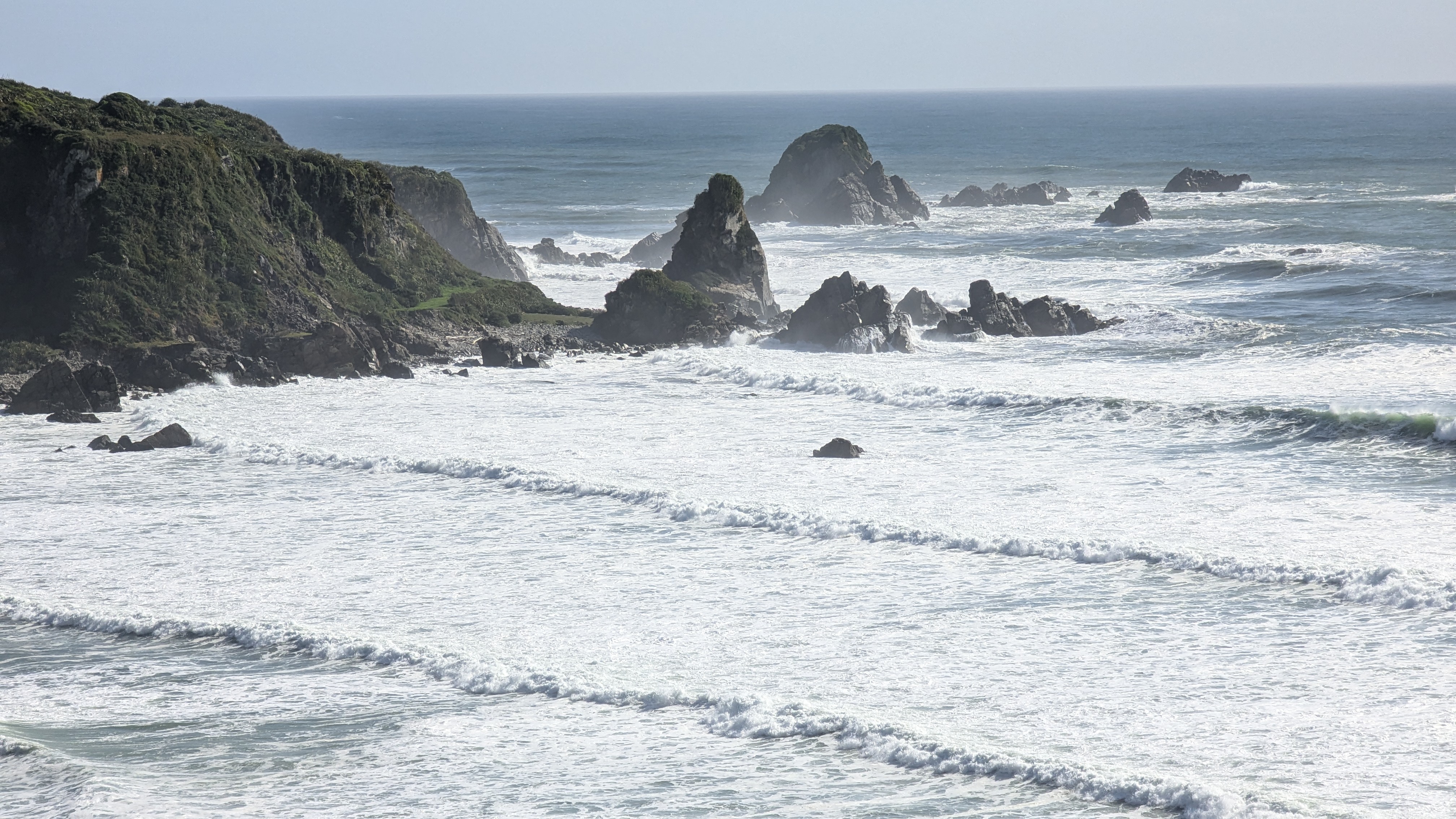
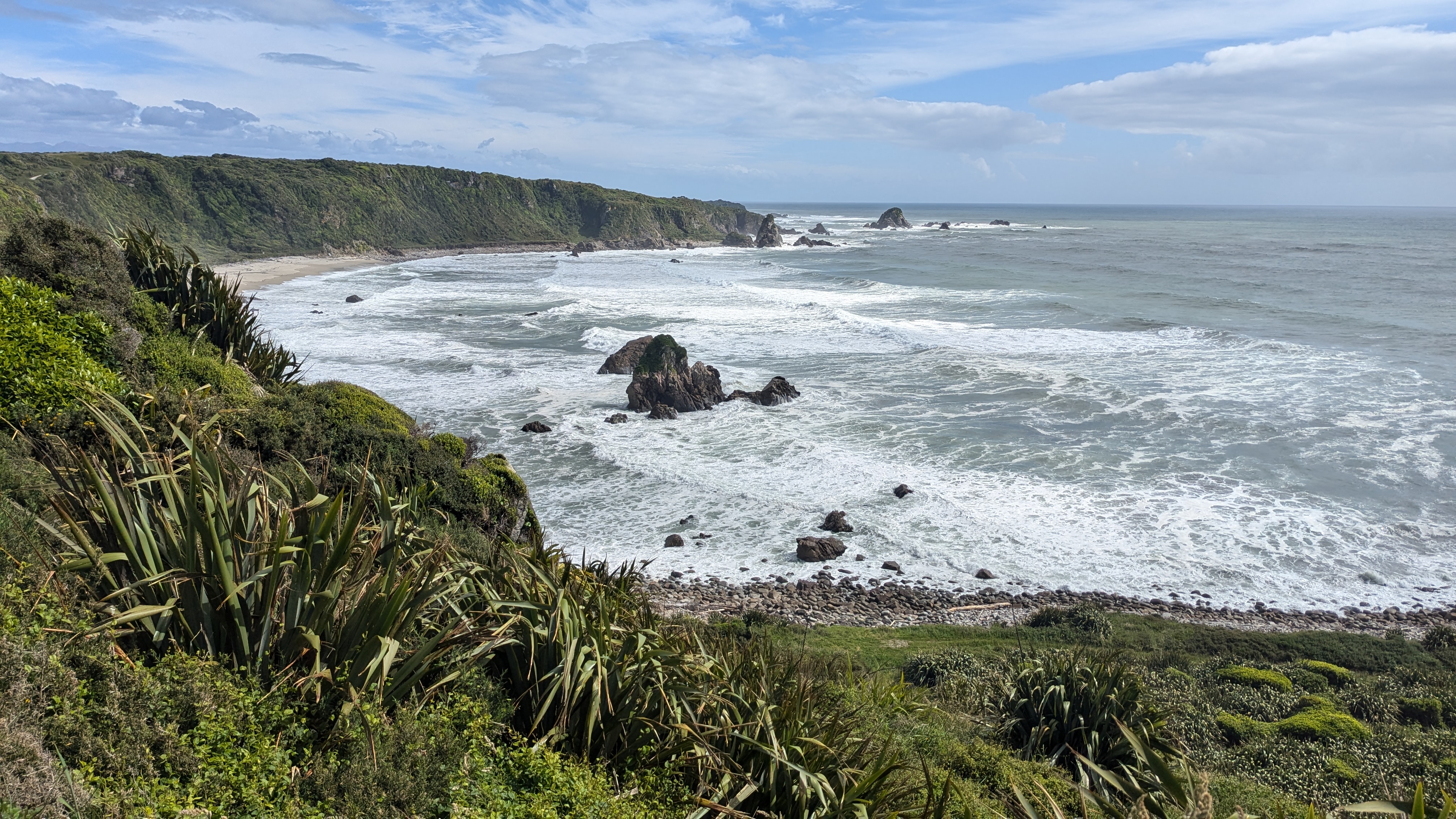
The stone was used in a concrete plant which operated here as late as 2016, but there is no evidence of the plant now.  Instead, there is a coastal area with some modern (expensive looking) houses probably being second homes for Christchurch’s elite.  We walked along the road and then joined a cliff walk at a lighthouse.  It was a great walk for a couple of hours to see a seal colony.  In typical DOC style, the path was well marked with barriers and signs preventing anyone being tempted to go too close to the cliffs. 

This was the Tasman Sea, with waves rolling in every few seconds.  It was a peaceful, sunny afternoon but the storms here must be impressive. 

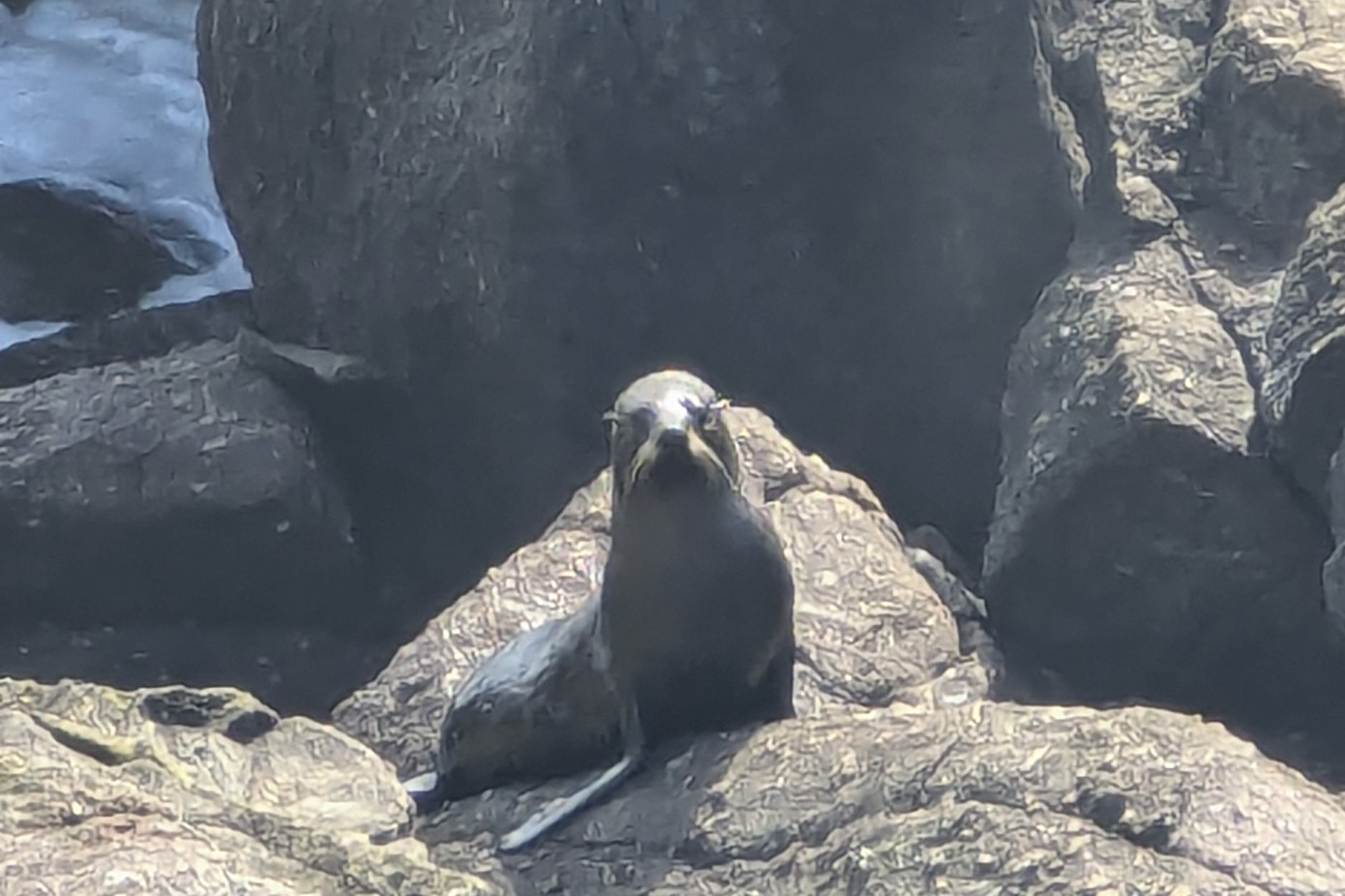
The seals were New Zealand fur seals (known as kekeno in maori).  They were lolloping about on the rocks, having an occasional spat and then gliding into the sea. 

We ambled back to the accommodation feeling we had had a good day.

Kaikoura. Swimming with dolphins.

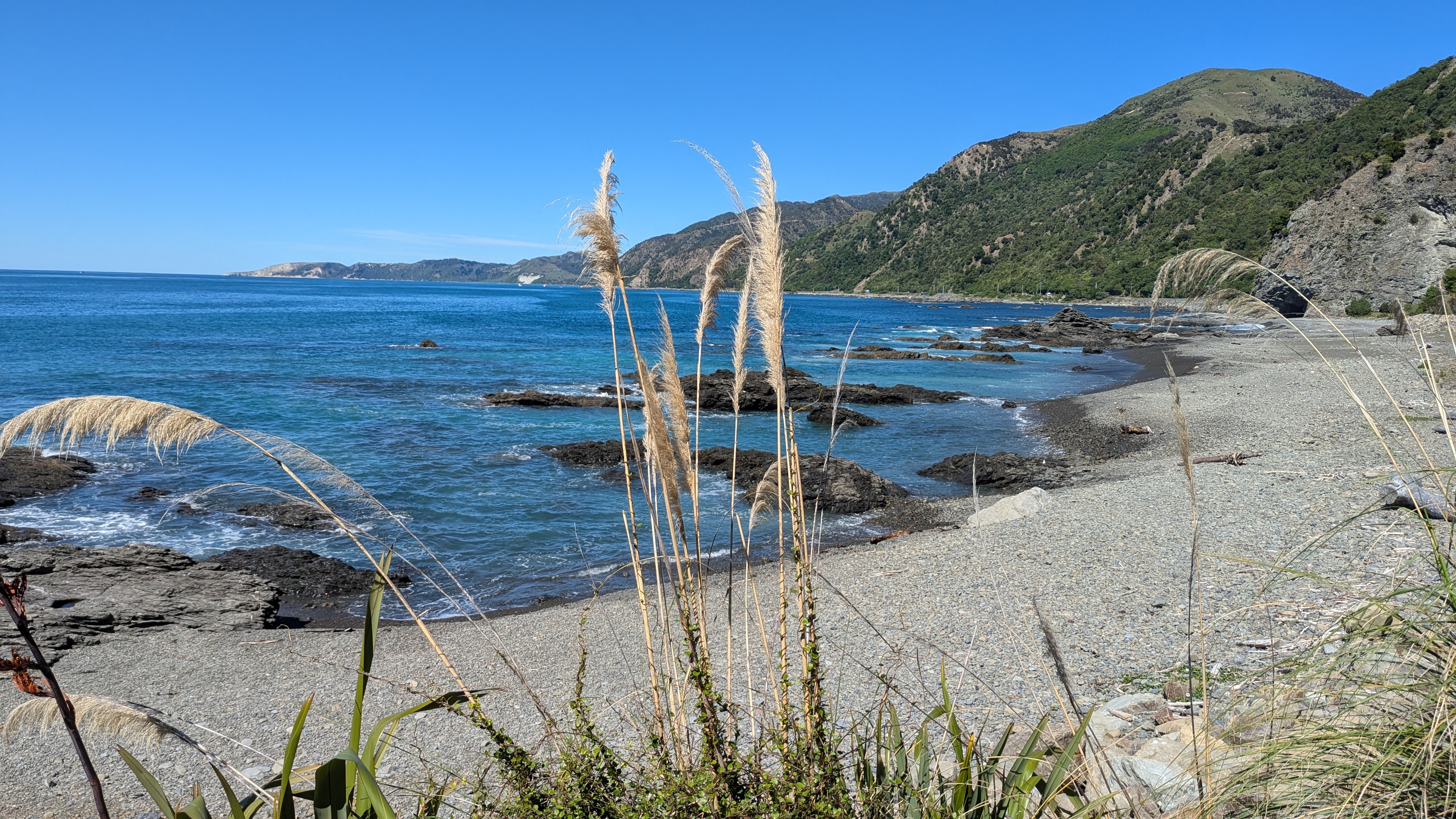
Today is not about cycling or walking but swimming. But a magical swimming experience in a beautiful setting. We trundled through the suburbs of Christchurch heading north. The road looped inland through green hills with a short stop in the pretty town of Cheviot. As we wound down the last hill the first views of the Pacific emerged, blue and sparkling in the sun.  The road hugged the beautiful rocky coastline – a road that had been closed for an extended period following the earthquake in 2009. Seals were basking in the sun, and we glimpsed a few dolphins close to the shore.

The town of Kaikoura straddles two large bays bisected by a small spit.  The area is home to several pods of dusky dolphins – so called because of their bluish/black backs. The dolphins are attracted to the bay because just a kilometre off shore is a deep sea trench that contains lots of good things to eat when they rise up near the surface during the night. This also means the dolphins feed at night and spend the day nearer to shore gambling about in the water.

The Dolphin Experience takes trips out where as a ‘swimmer’ (rather than a spectator) you can get into the water with the dolphins.  This came as part of our trip package and I felt a bit uncomfortable about the prospect; but we were assured that the dolphins remain completely wild.  They are not fed but dolphins are curious creatures and like to investigate what is going on when the boats arrive.  We were also warned that sometimes they don’t play ball and we may not see them at all. The boats go out with a licence from the Department of Conservation with strict limits on the number of boats, the number of people allowed in the water at any one time and the guides monitor the human activity to make sure it does not impact on the behaviour of the pods.

It was a beautiful sunny day. The waters can be very choppy and we were told sea sickness is very common but from a distance the blue waters looked calm.  Although closer up we found it was choppy enough.  I wouldn’t like to see what a windy day looked like. We were togged out with thick, very buoyant wetsuits, flippers and snorkels.  A short bus ride and then we joined a small boat heading out into the bay.  We were in luck and after a 30 minute glide along the coast, we were called up to prepare for our first swim. The boat is adapted with seats at the back almost in the water where you push off to swim.  When the boat stops and a horn blows – in you go. When the horn blows again you come back to the boat.

In all we had 5 swims, each lasting about 5 or 10 minutes and it was a truly magical experience. The pod of dolphins do exactly what they choose – they are in control.  They swim under us, and around us, sometimes got really close to us.  We were encouraged to make squeaky noises to attract the dolphins and soon we were all cheeping away into out face masks! When the pod wants to move on it does.  A couple of the swims I only saw a few dolphins but on a couple they were swarming round, including several mothers with calves.

After the final swim we clambered out of our wet suits and the boat gently chugged after the pod.  An estimated 200 dolphins then gave us an incredible display of swimming and acrobatics. They stayed around the boat for ages, happy to swim around and under the boat, rising and falling out of the water with some doing high jumps and twists and backflips. Dolphins come out of the water to breathe and we saw them spurt water out of their air holes, take a breath in mid air and then descend again. 

There are lot of theories about why the dolphins behave in this way but there seems to be evidence that they do it just for the joy of it, and it certainly looks that way to us landlubbers on the boat. At one point a seal appeared in the middle, flapping his flippers and the smaller dusky dolphins were joined by a larger bottle nose dolphin.  The guide explained that this was highly unusual but it first appeared with the pod a couple of years ago and reappeared a few weeks previously.  He said no one know why he has joined the wrong pod, but his behaviour is starting to mimic the behaviour of his new friends.  In the end it was the boat that had to turn and head for home as we were out of time, with the pod still splashing and churning the water.

As the boat was speeding back to the bay an albatross flew alongside the boat, probably for about 10 minutes. This beautiful bird with its large wingspan was almost as big a highlight as the dolphins.  We were told this was a young, small albatross but it flew at incredible speed with only the occasional flap of the wings, dipping and swooping along the water. A fantastic end to a memorable trip.

Aoraki/Mount Cook – a wet and windy reception to these amazing mountains

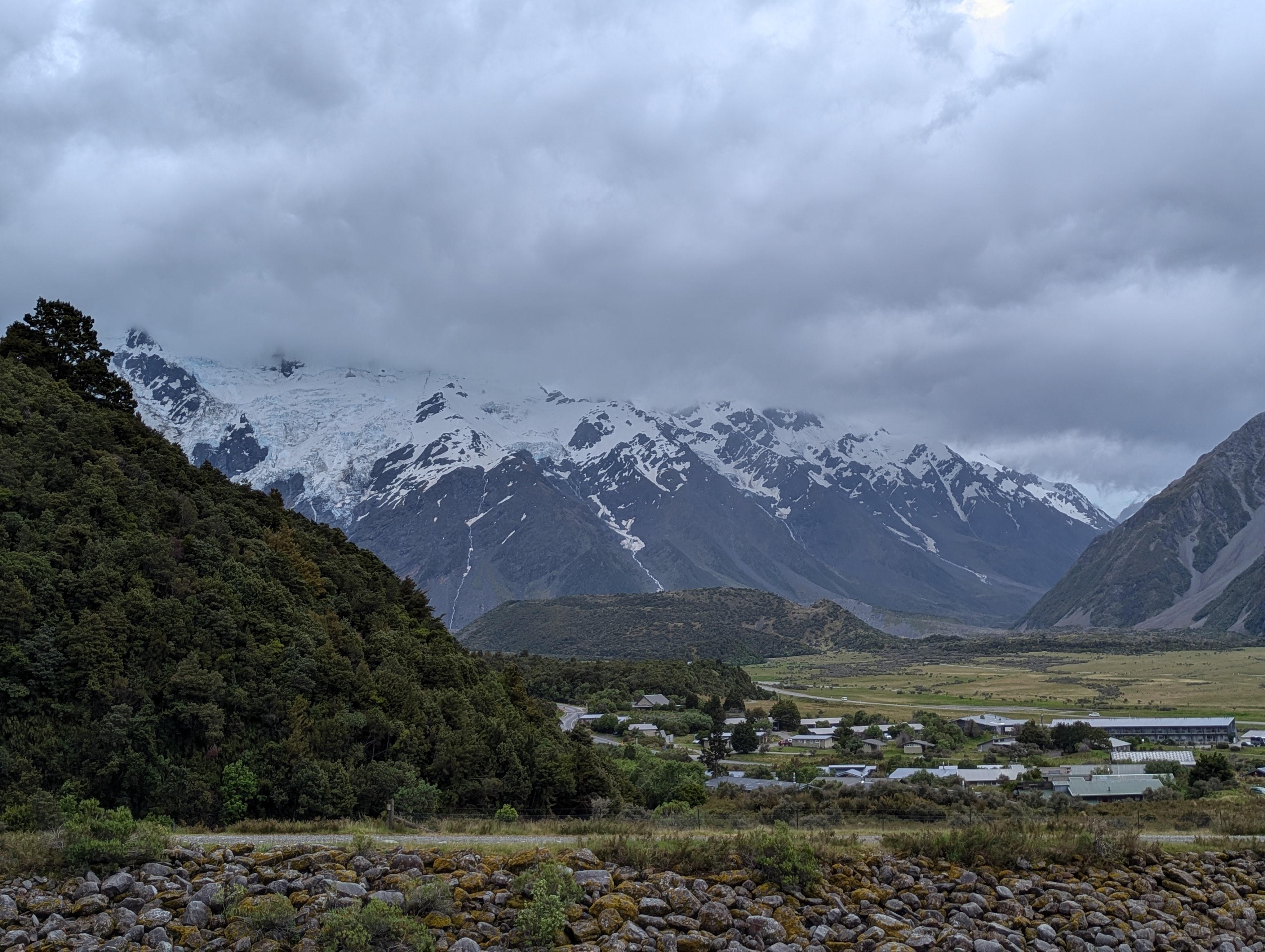
We are now on journey around the South Island of Aotearoa New Zealand – as the country is now known (the addition of Aotearoa reflecting its Maori heritage).  We joined a New Zealand trails group on a fixed itinerary, which started in Queenstown and today took us to from Wanaka to Aoraki/Mount Cook, a village at the foot of the extensive Aoraki/Mount Cook range of mountains, the highest part of the Southern Alps.  Aoraki is the Maori name for Mount Cook, the highest mountain in Aotearoa New Zealand.  As we were driven up Lake Pukaki (which is the lake of the Tasmin River), the weather started got progressively worse.  High winds and driving rain greeted us as we came into the mountain village that serves as a base for walkers, climbers and sightseers in these amazing mountains. 

We dashed out of the rain to visit the DOC (Department of Conservation) visitors centre.  It contained a vast amount of fascinating material about the formation of the mountains, the flora and fauna and a history of first and subsequent ascents.  These are seriously challenging alpine mountains and Mount Cook was only conquered in 1894.  The first attempt to climb Aoraki/Mount Cook was made in 1882 by an Irishman, Rev W.S. Green, and two Swiss guides. Although his party climbed to within 20 metres of the top, it was not until Christmas Day in 1894 that the summit was reached, by three New Zealanders: Tom Fyfe, Jack Clarke and George Graham.   They had been spurred into action by news that the American climber Edward Fitzgerald and the famous Swiss/Italian guide Matthias Zurbriggen were on their way to New Zealand. The foreigners arrived in the country in late December and were less than pleased to discover that they had come all that way only to be thwarted in their aim of climbing Mount Cook for the first time. 

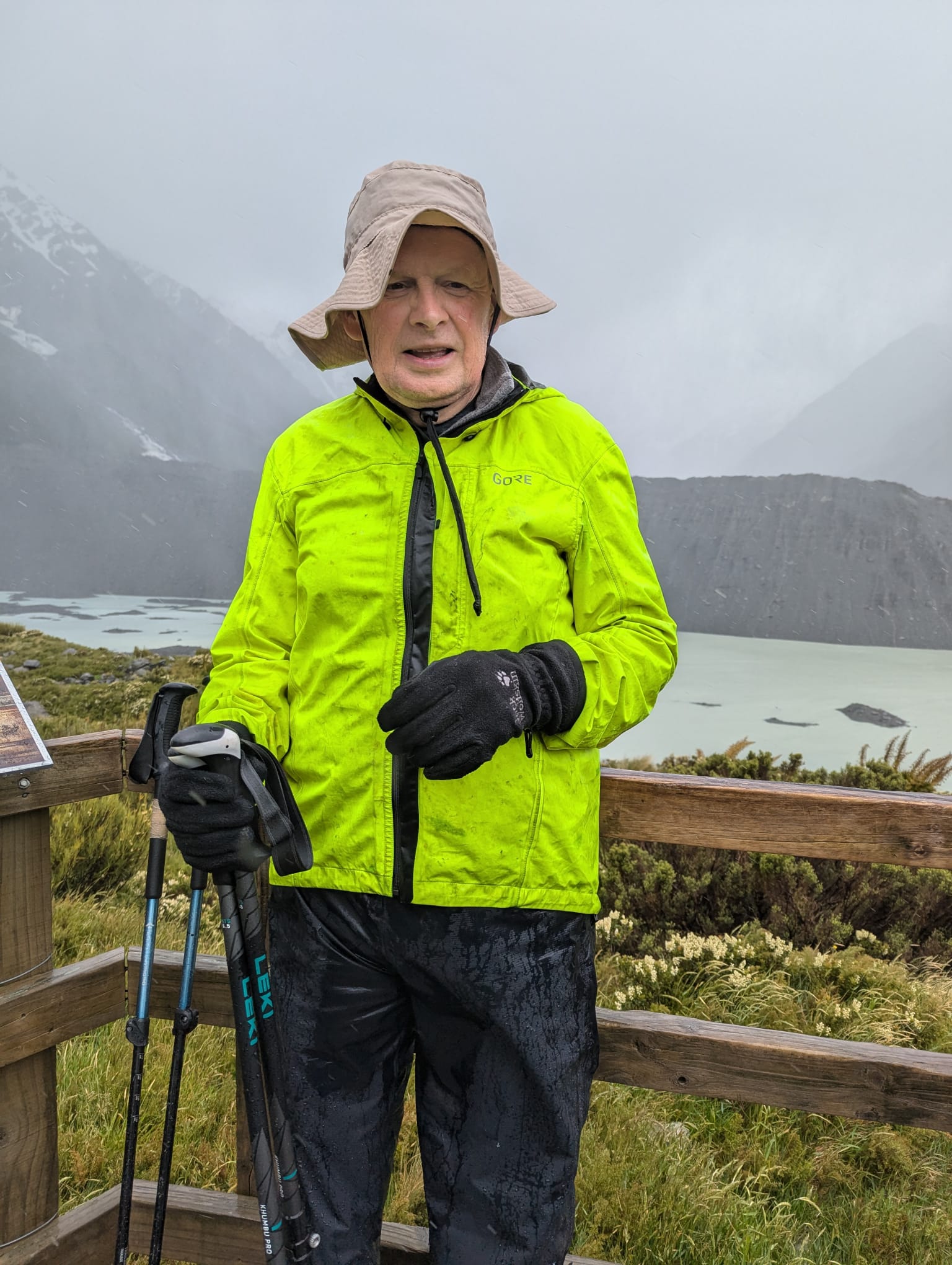
We were not intending to do anything that stretching and were only due to climb up to the Muller Ridge via Sealy Tarns but no one in their right mind would attempt the walk voluntarily in such weather.  So we settled for a half hour walk up to Kea Point, where we were blown away by the view which was supposed to be expansive views of the Footstool, the Hooker Valley, the Mueller Glacier Lake and Moraine, Mount Sefton, and Aoraki/Mount Cook.  In fact we saw the lake and a bit of the glacier but the rest was in cloud.  But we were blown away by the wind and horizontal rain.

Then back to the hotel for an hour to play cards whilst we waited for our room to be ready, and watched the rain on the windows.  It cleared up later in the afternoon and we went out for a walk for about an hour and a half – up the side of a valley overlooking the Murchuison valley.  By this point it had cleared and the forecast for the following day was not too bad, so we agreed with our tour leaders to strike out early and walk up to Sealy Tarns – so at least doing some of the day we had missed although we would not get all the way to Muller Ridge.