Tag Archives: photography

Return walk from Bushline Hut and Coastal Walk to Seal Colony

(David) The night was quite cold and the wind blew under our tent. I felt it blowing right onto an exposed patch of my body; one where the sleeping bag appeared to have no effective covering.  Adjustments to clothing mostly sorted this and eventually we both slept well – or fairly well at least.  We woke, ambled into the hut and were greeted by tea, coffee and breakfast!  We could get used to being catered for.
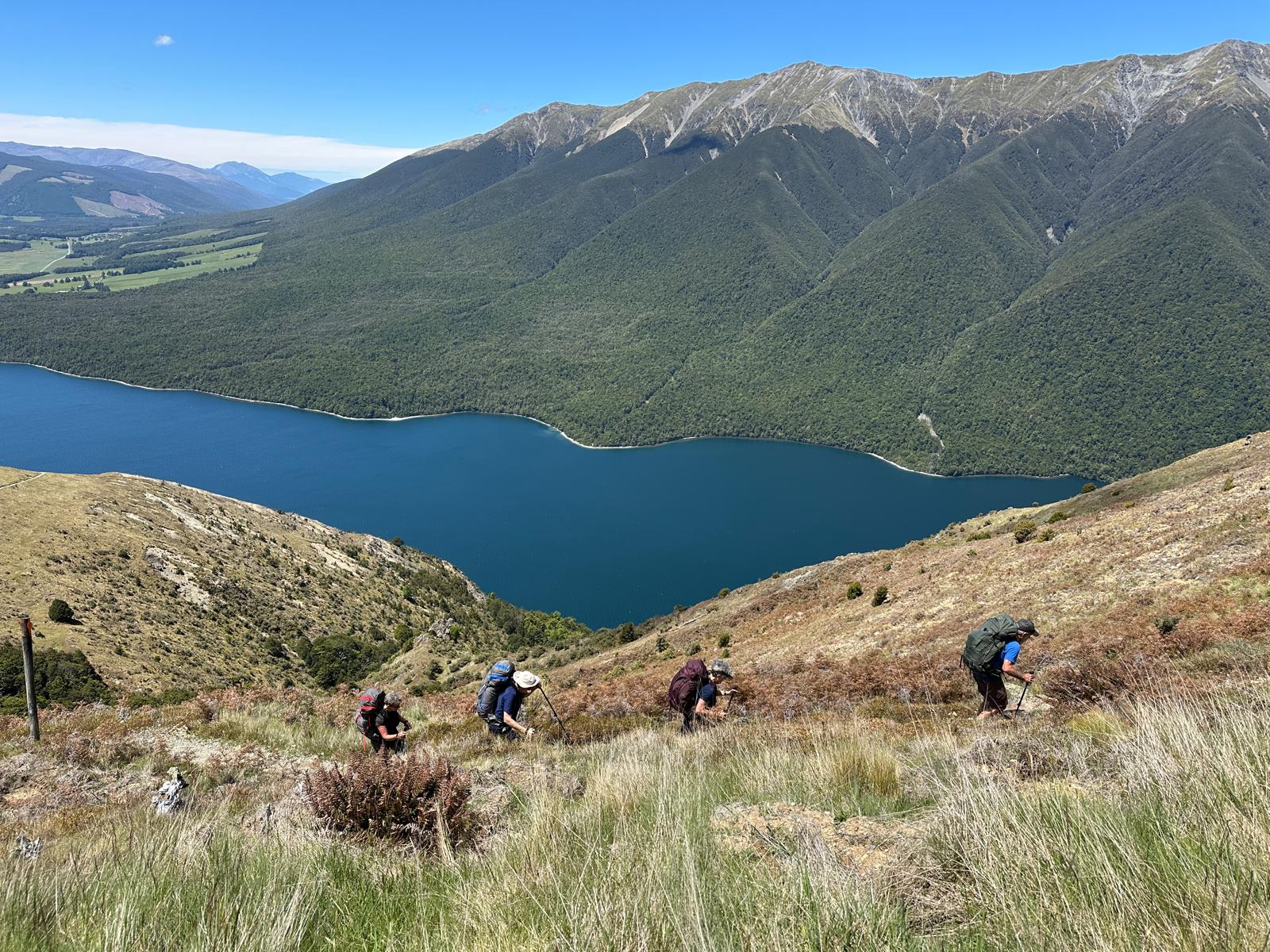
After breakfast we packed up and ambled down the mountain.  I have been resistant to out and back walks in the past but we have done quite a few this holiday and my resistance is crumbling.  The views are different going the other way, the weather is different and we see the mountains at a different time of the day.  It was a delightful hour plod down the hill, with great views of the lake and then back to the minibus.

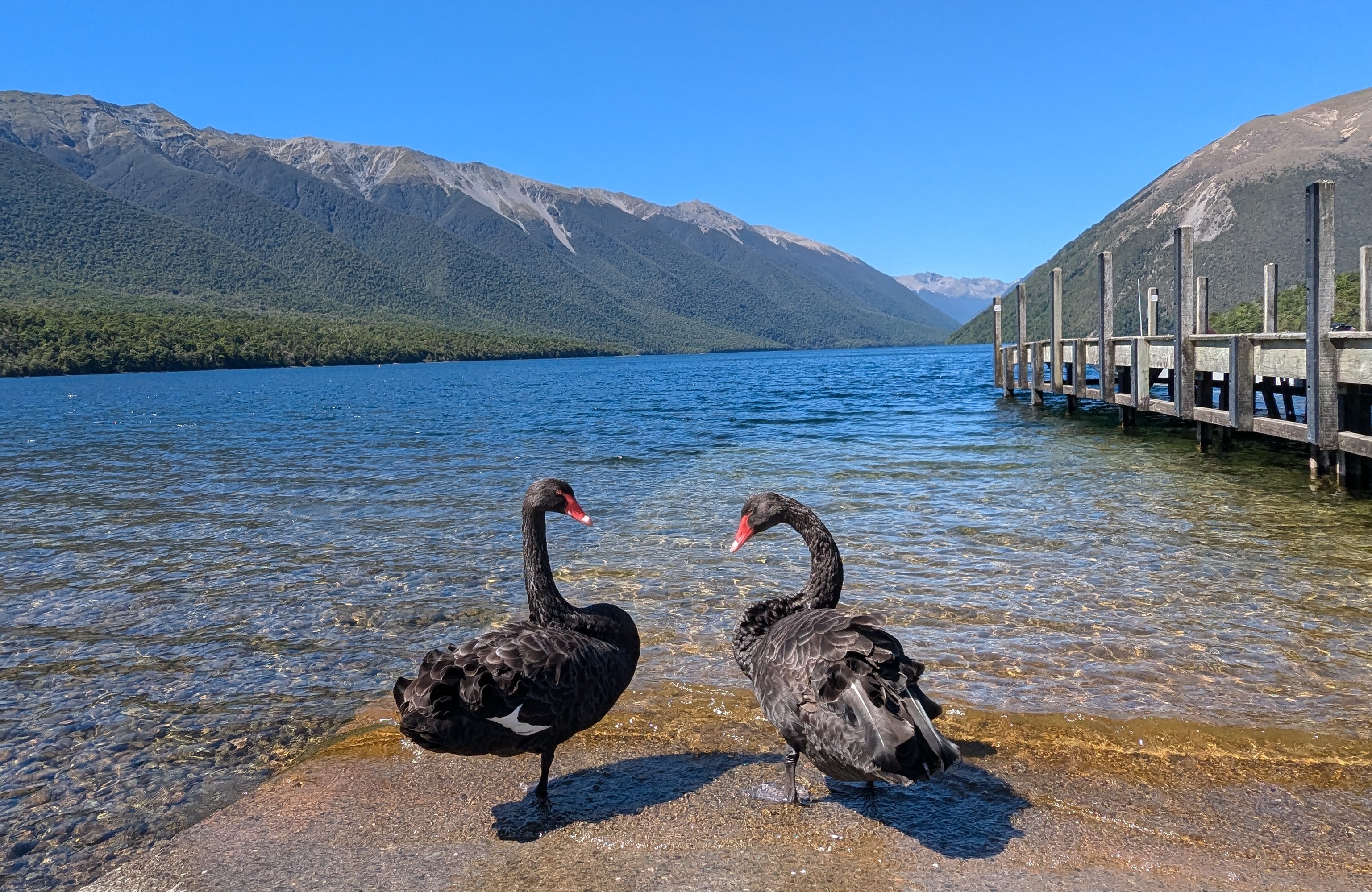
We put this in because it made us laugh!

We had a bit of free time at Lake Rotoiti again. We and saw again the long finned eels around the jetty and read about their incredible lifecycle.  The eels can live up to 100 years of age and only spawn once in their lifetime. Before spawning they leave the lake and head to the Pacific and swim 1000s of miles to near to Tonga where they mate, spawn and die.  The baby eels spend 7-10 months drifting back to New Zealand on the ocean currents and as they develop, swim upstream to the lake.
Leaving the lake we had  another (tedious) drive of a few hours, heading to the west coast, where we reached the wonderfully named “Cape Foulwind”.  We were booked into mini-cabins at this seaside resort.  The area was a former quarrying centre where granite was discovered as part of the cliffs, and so these were blasted away to make roads and the like during the C19 and early C20. 
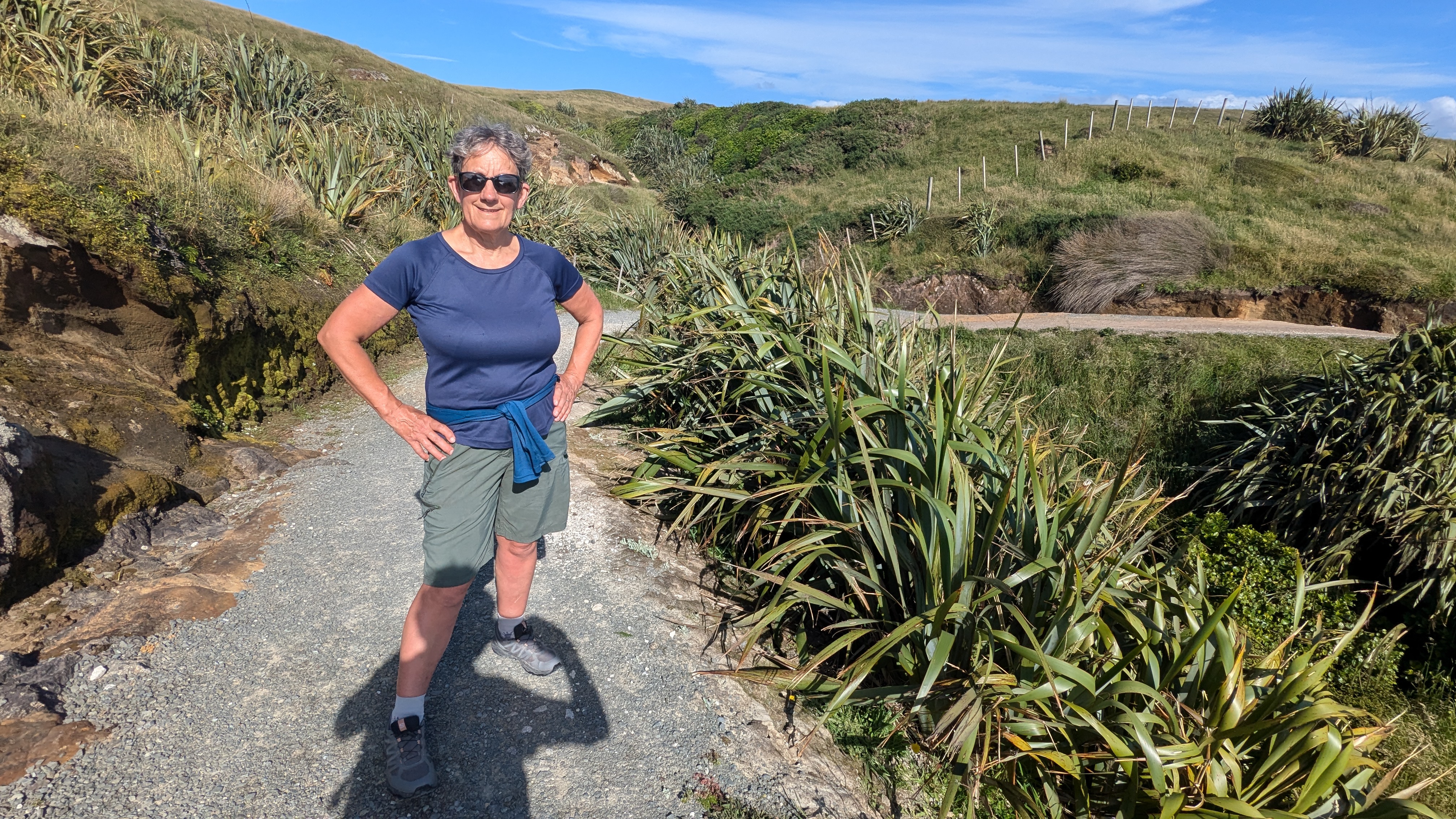
The stone was used in a concrete plant which operated here as late as 2016, but there is no evidence of the plant now.  Instead, there is a coastal area with some modern (expensive looking) houses probably being second homes for Christchurch’s elite.  We walked along the road and then joined a cliff walk at a lighthouse.  It was a great walk for a couple of hours to see a seal colony.  In typical DOC style, the path was well marked with barriers and signs preventing anyone being tempted to go too close to the cliffs. 
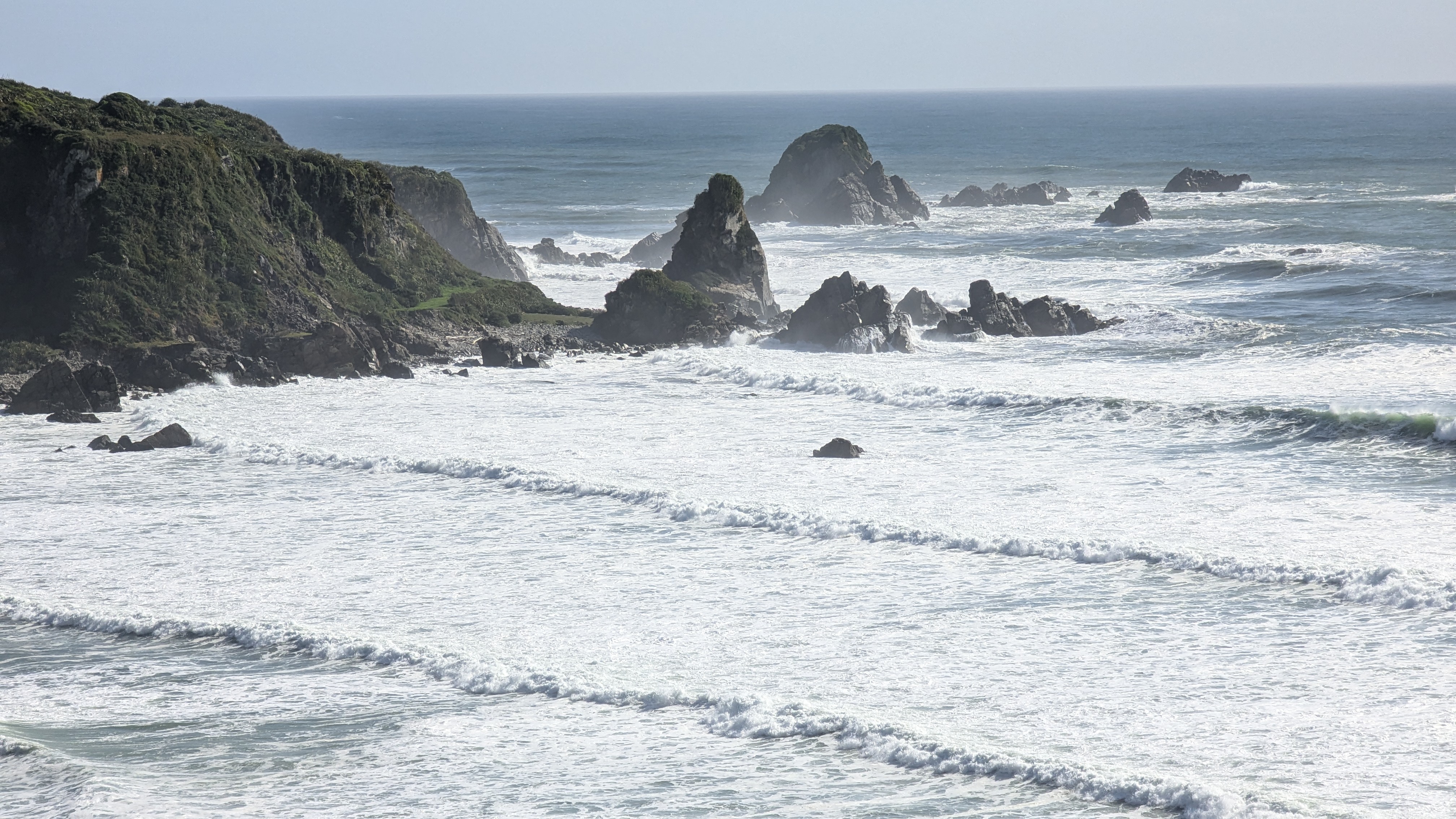
This was the Tasman Sea, with waves rolling in every few seconds.  It was a peaceful, sunny afternoon but the storms here must be impressive. 
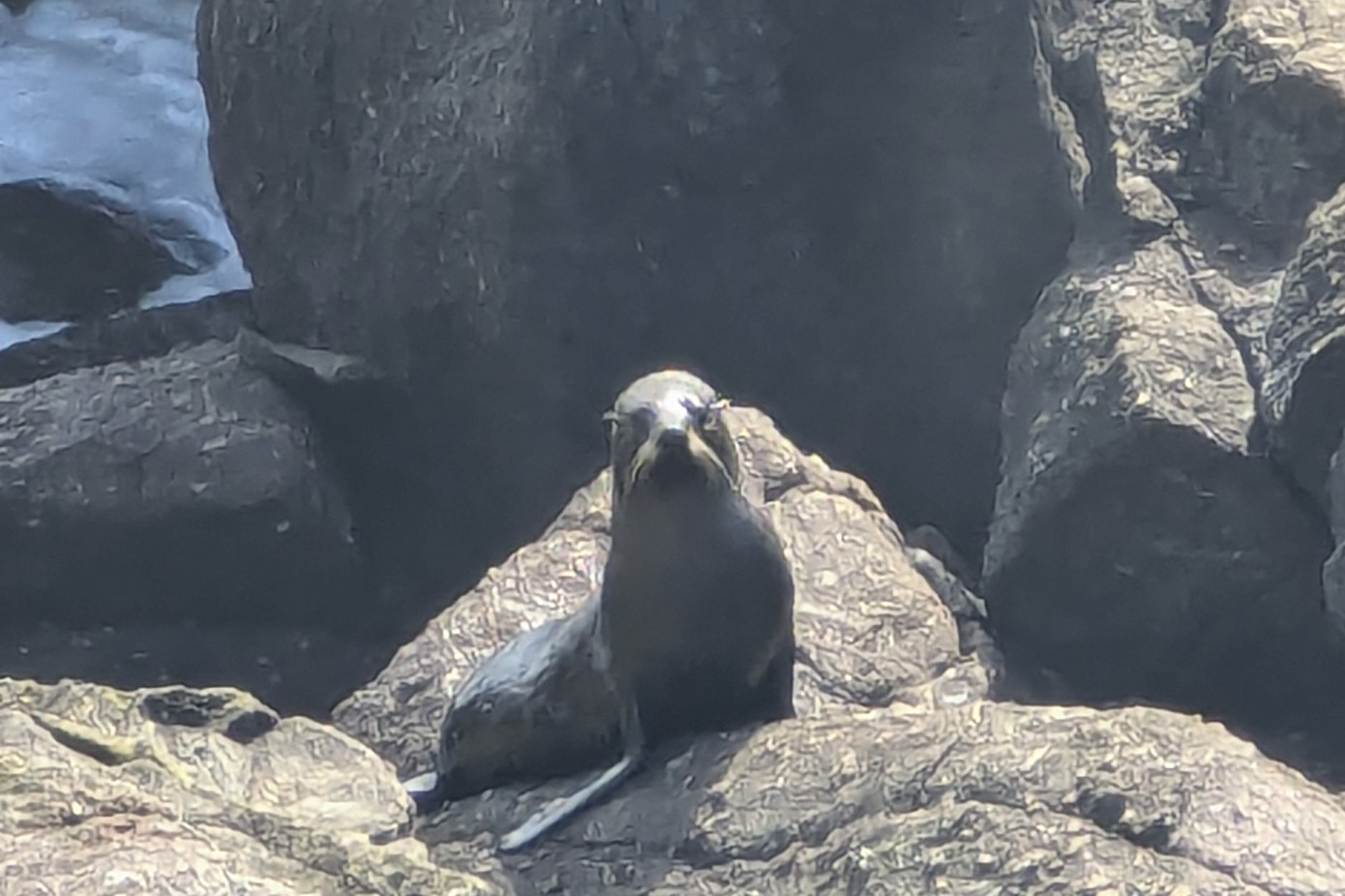
The seals were New Zealand fur seals (known as kekeno in maori).  They were lolloping about on the rocks, having an occasional spat and then gliding into the sea. 
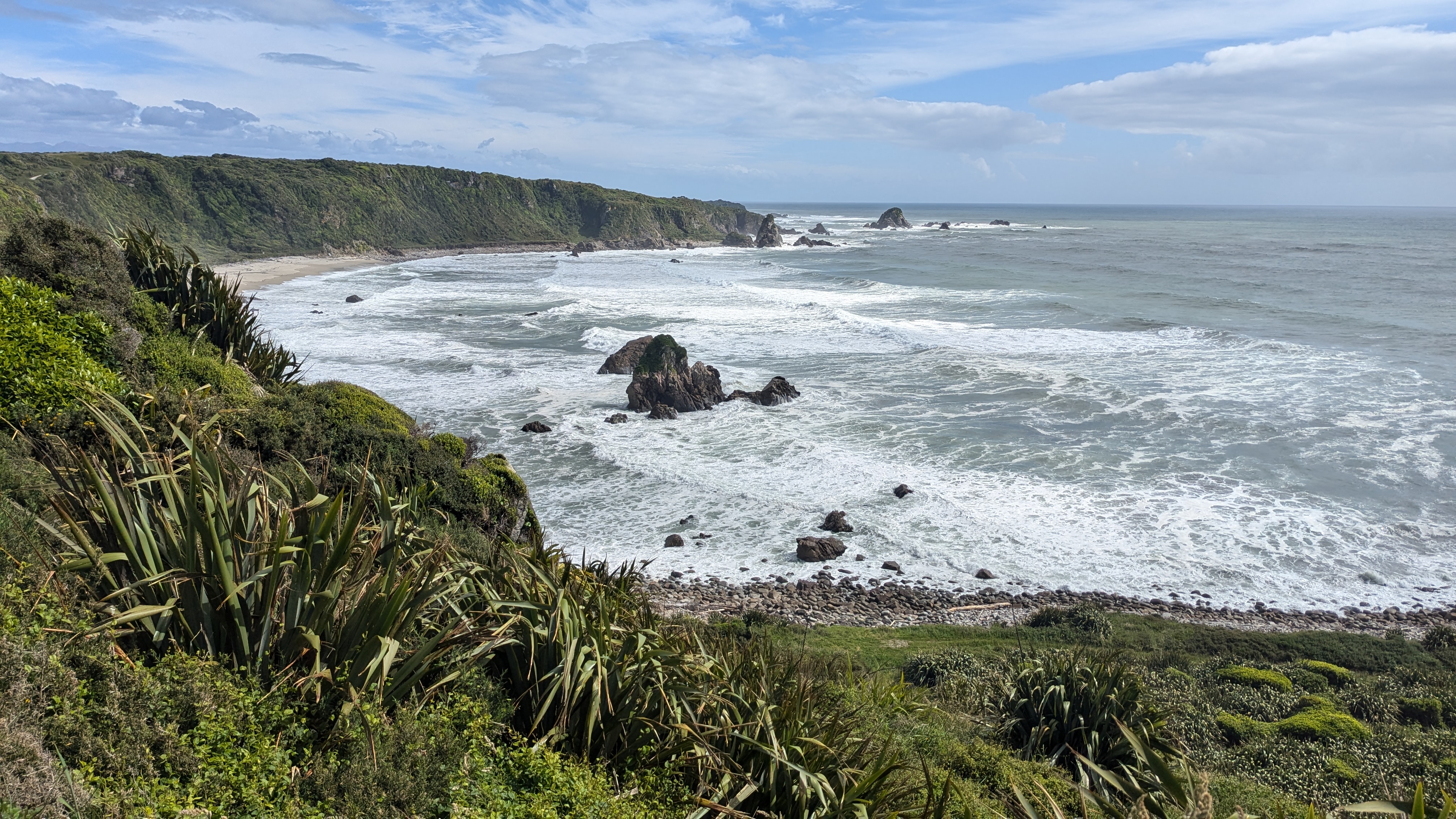
We ambled back to the accommodation feeling we had had a good day.
Kaikoura. Swimming with dolphins.

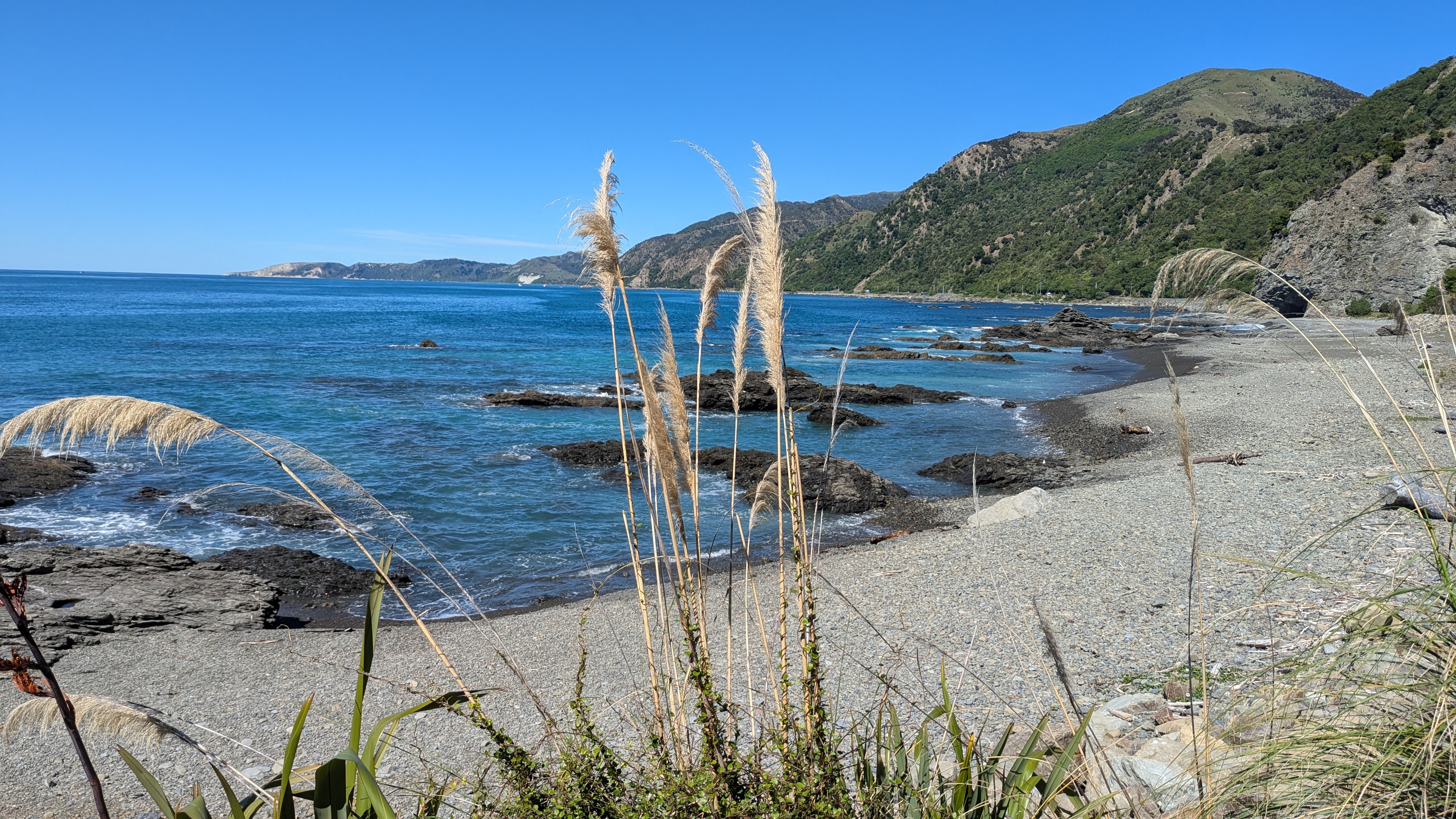
Today is not about cycling or walking but swimming. But a magical swimming experience in a beautiful setting. We trundled through the suburbs of Christchurch heading north. The road looped inland through green hills with a short stop in the pretty town of Cheviot. As we wound down the last hill the first views of the Pacific emerged, blue and sparkling in the sun.  The road hugged the beautiful rocky coastline – a road that had been closed for an extended period following the earthquake in 2009. Seals were basking in the sun, and we glimpsed a few dolphins close to the shore.

The town of Kaikoura straddles two large bays bisected by a small spit.  The area is home to several pods of dusky dolphins – so called because of their bluish/black backs. The dolphins are attracted to the bay because just a kilometre off shore is a deep sea trench that contains lots of good things to eat when they rise up near the surface during the night. This also means the dolphins feed at night and spend the day nearer to shore gambling about in the water.

The Dolphin Experience takes trips out where as a ‘swimmer’ (rather than a spectator) you can get into the water with the dolphins.  This came as part of our trip package and I felt a bit uncomfortable about the prospect; but we were assured that the dolphins remain completely wild.  They are not fed but dolphins are curious creatures and like to investigate what is going on when the boats arrive.  We were also warned that sometimes they don’t play ball and we may not see them at all. The boats go out with a licence from the Department of Conservation with strict limits on the number of boats, the number of people allowed in the water at any one time and the guides monitor the human activity to make sure it does not impact on the behaviour of the pods.

It was a beautiful sunny day. The waters can be very choppy and we were told sea sickness is very common but from a distance the blue waters looked calm.  Although closer up we found it was choppy enough.  I wouldn’t like to see what a windy day looked like. We were togged out with thick, very buoyant wetsuits, flippers and snorkels.  A short bus ride and then we joined a small boat heading out into the bay.  We were in luck and after a 30 minute glide along the coast, we were called up to prepare for our first swim. The boat is adapted with seats at the back almost in the water where you push off to swim.  When the boat stops and a horn blows – in you go. When the horn blows again you come back to the boat.

In all we had 5 swims, each lasting about 5 or 10 minutes and it was a truly magical experience. The pod of dolphins do exactly what they choose – they are in control.  They swim under us, and around us, sometimes got really close to us.  We were encouraged to make squeaky noises to attract the dolphins and soon we were all cheeping away into out face masks! When the pod wants to move on it does.  A couple of the swims I only saw a few dolphins but on a couple they were swarming round, including several mothers with calves.

After the final swim we clambered out of our wet suits and the boat gently chugged after the pod.  An estimated 200 dolphins then gave us an incredible display of swimming and acrobatics. They stayed around the boat for ages, happy to swim around and under the boat, rising and falling out of the water with some doing high jumps and twists and backflips. Dolphins come out of the water to breathe and we saw them spurt water out of their air holes, take a breath in mid air and then descend again. 

There are lot of theories about why the dolphins behave in this way but there seems to be evidence that they do it just for the joy of it, and it certainly looks that way to us landlubbers on the boat. At one point a seal appeared in the middle, flapping his flippers and the smaller dusky dolphins were joined by a larger bottle nose dolphin.  The guide explained that this was highly unusual but it first appeared with the pod a couple of years ago and reappeared a few weeks previously.  He said no one know why he has joined the wrong pod, but his behaviour is starting to mimic the behaviour of his new friends.  In the end it was the boat that had to turn and head for home as we were out of time, with the pod still splashing and churning the water.

As the boat was speeding back to the bay an albatross flew alongside the boat, probably for about 10 minutes. This beautiful bird with its large wingspan was almost as big a highlight as the dolphins.  We were told this was a young, small albatross but it flew at incredible speed with only the occasional flap of the wings, dipping and swooping along the water. A fantastic end to a memorable trip.

Day 4.  Tongariro Northern Circuit.

We had a much quieter night in our lovely campsite under the trees and woke to another sun filled day.  We packed up camp, had our usual porridge and coffee, and were on our way by 7.15.

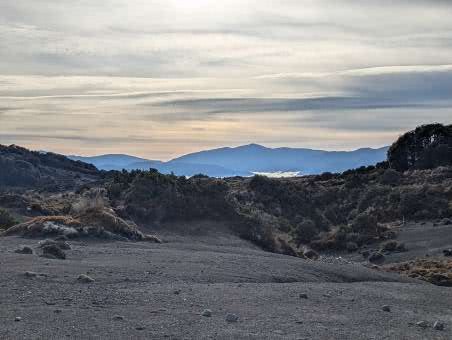
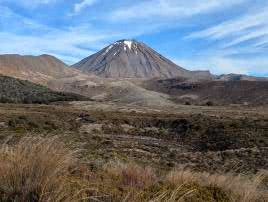
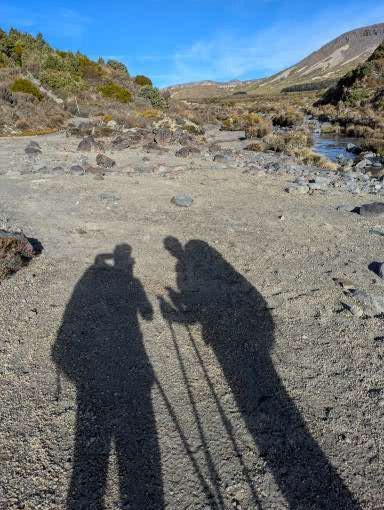
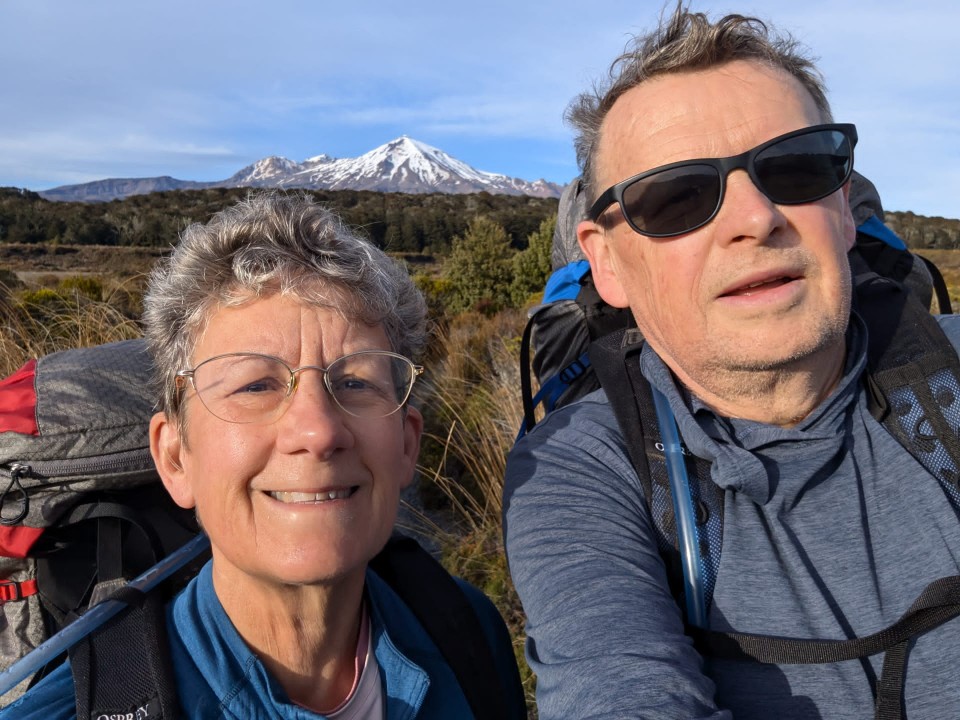
The morning walk was a gradual climb up to Tama saddle through low brush. On our right the mighty Mount Ngarahoe, walking around the southern aspect this time, still black and brooding even in the sunshine.  On our left the snowy Mount Ruapehu, gleaming white.  Awesome, beautiful, stunning – we have used all these adjectives many times already and need some new ones. As we set off we saw a lone walker ahead of us (going faster than us and so not for long) but then we saw no one else for the entire morning.  It felt wild and tame at the same time in this weather; much of the time I guess it feels wild and wilder as walkers are immersed in cloud.

We were walking really well and we seemed to reach the saddle in no time.  We almost wanted to walk slower to make the walk last longer.  There was a small side route which took just 10 minutes to the overlook Lower Tama lake;  a glistening blue backed by jagged rocking cliffs.

We decided not to add on extra hour there and back to the Upper Lake as we knew we had a way to go to reach Whakapapa village (Wh is pronounced Ph/Fh we later found out). We thought, after reaching the summit, it would be a gradual down hill all the way, similar to the way up.  But it undulated up and down with short but steep gradients.  Suddenly we began to feel the tiredness in our legs; largely psychological when you have to go uphill when you were expecting to go down. However over the last brow we could see the village ahead and a steady path down. We also suddenly started to see lots of people. 

The walk up the Tama lakes is a relatively easy day walk from the village, and more so at the Taranaki falls which is a 2 hour circular walk. We felt somewhat dishevelled, and probably a bit smelly, as we lumbered down the hill tortoise like with our worldly belongings on our back, as other skipped up fresh with gleaming white trainers.  Everyone had a cheery smile and some even an admiring (or possibly pitying) look.  No one quite said that we should not have left the old folks home but it was perhaps well hidden on their faces!

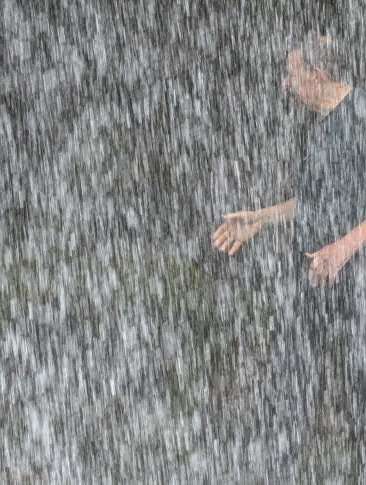
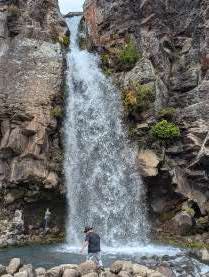
The Taranaki Falls was our last ‘feature’ stop. An impressive gush of water over a cliff, dropping about 30m to a pool before running off down the hill. David of course could not resist walking round the back of the falls and dipping his head into the water.  He came out looking rather damp but gained the admiration of a group of lads who proceeded to follow him – and got a lot wetter than he did!

The last hour of any walk, whether 4 hours or 4 days, always seems a drag, and so did this one as we reluctantly reached the village and could not extend the walk any further as we handed in our emergency beacon (unused!) at the Visitor Centre.  Then we had an excellent coffee and pie at the coffee-cart as we looked back up at the mountain and the route we had walked. Let’s be honest – we felt a tiny bit proud of our achievement.  It was not just walking around the TNC with full packs, carrying our own food, camping and tramping all the way.  It was that we had enjoyed ourselves so much.  We were left to wonder what the experience would have been like in fog, wind and rain, with endless climbing and nothing to see at the top apart from more cloud.  We were stunningly lucky and will have days ahead when the weather gods are not blessing us, but for now we were basking in the sunlight as we took a final look back at these wonderful mountains.