We started the day on the bus to get through before the road closed. There had been a landslip and the road was closing at midday – so we went early to pick up our boat at the mouth of the Haast river. We were directed onto the jet boat by our driver and guide – a formidable huntin’ shootin’ and fishin’ woman – for the 36km ride upstream. She described how she lived in the tiny township of Haast, proudly told us the entire population numbered 259 and that the nearest supermarket was 2 hour drive away in Wanaka. She said the locals were hugely self-supporting and largely made do with what they could hunt or forage from the sea – mainly fish and crayfish. She said she could take her boat home and in half an hour put on her dive stuff and come back up with 6 crayfish and 10 abalone (a type of sea snail) – the allowed daily quotas. These were not crayfish as we knew them but in her photos looked like enormous lobsters. She told us that she could also shoot dear from her from gate. We decided she was not to be messed with – but she was also informative and great fun.
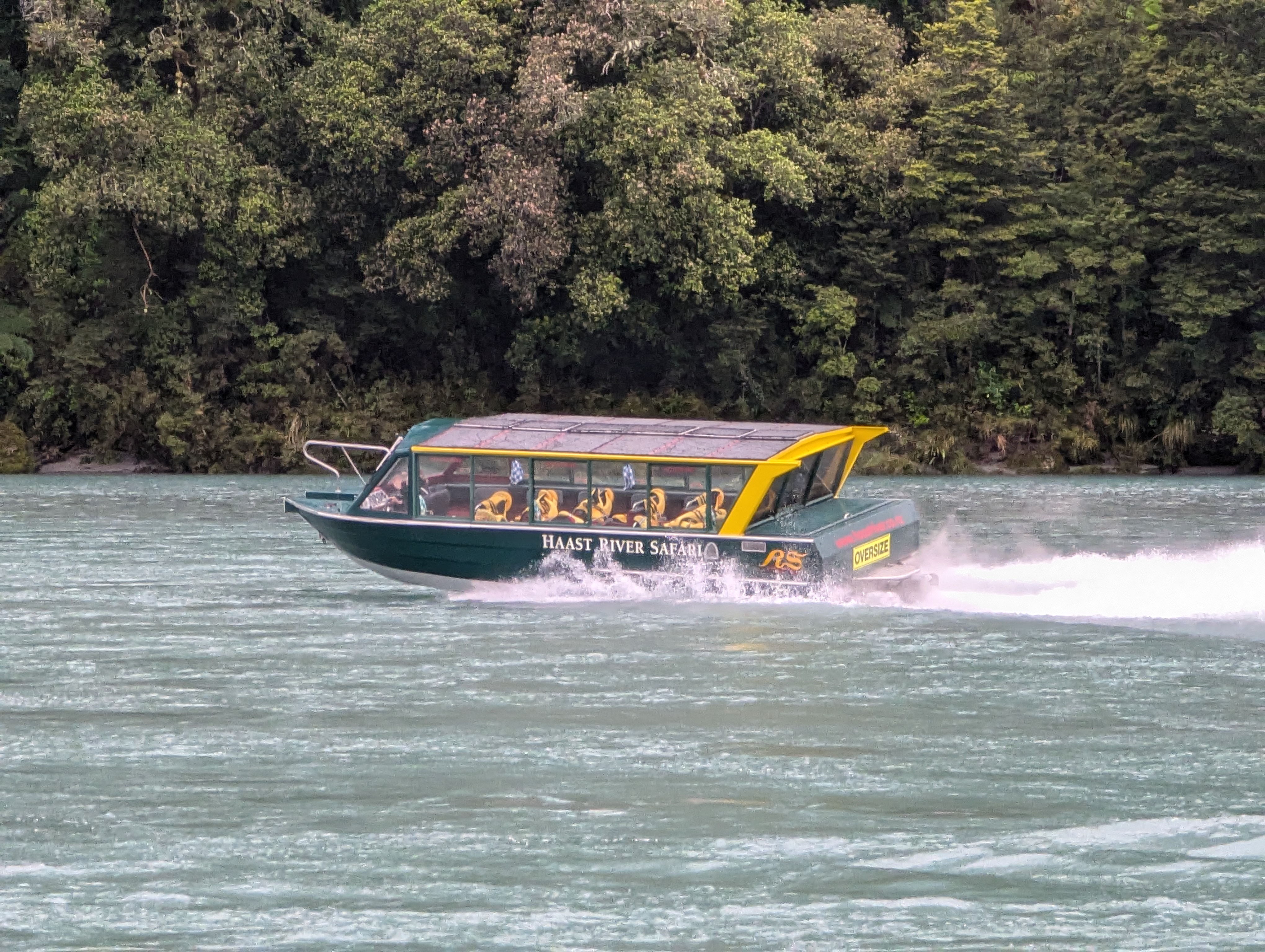
The Haast is a braided river – a glacial river formed of many channels. The jet boat was invented in New Zealand she claimed to allow navigation through the sometimes very shallow channels. When the boat is at full speed and rising above the water, she only needed 4 inches clearance (she also said the Japanese had stolen the idea to develop jet skis). The river channels can change after every rainfall and we marvelled at her skill as she wove through the river threads at considerable speed.
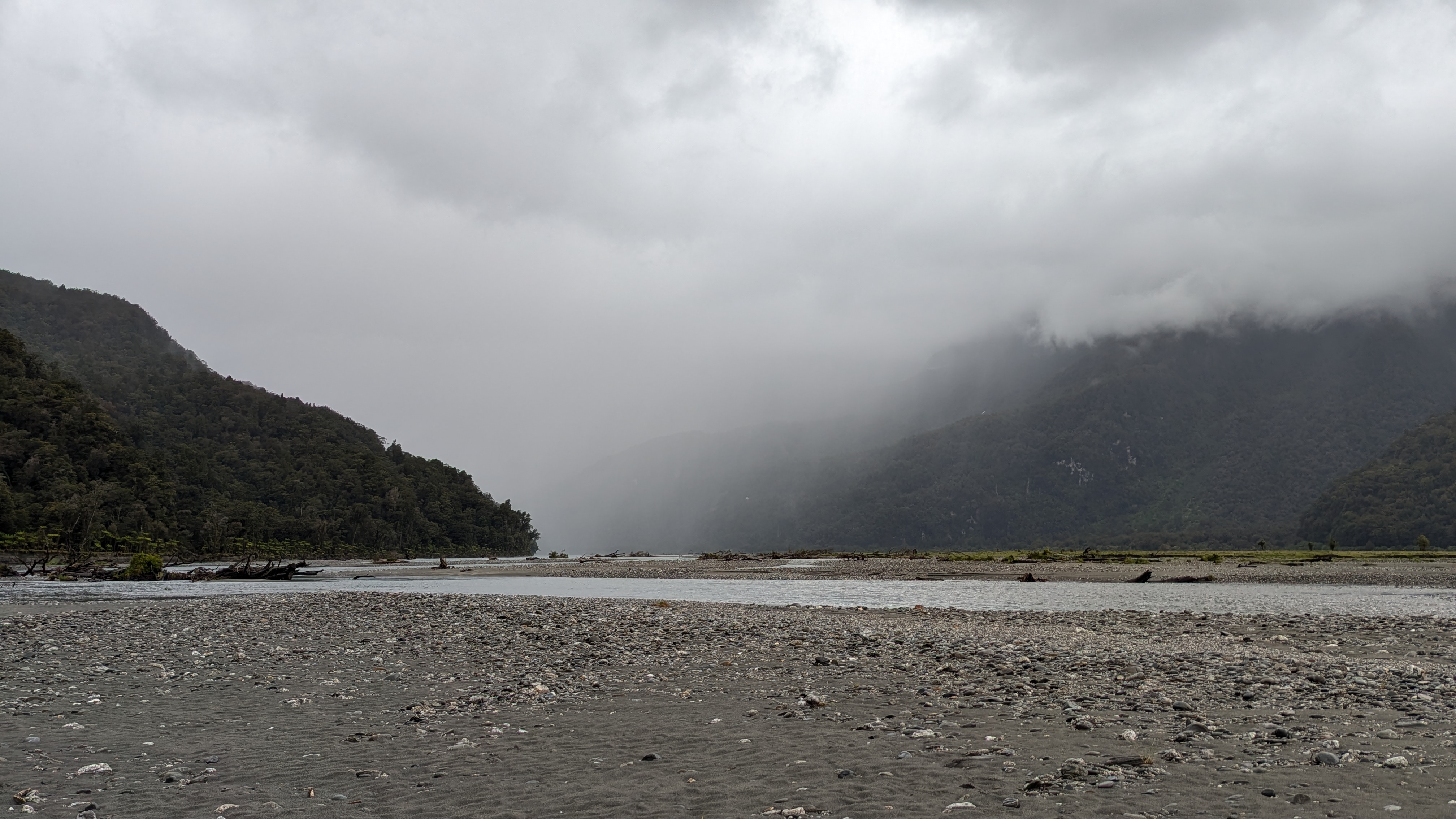
The Haast river is located along the Alpine Fault, where the Pacific and Australian tectonic plates clash against each other. These plates are responsible for forming the Southern Alps. We were shown the valley where the Pacific plate is on one side and the Australian plate on the other – a rare event on land apparently. They appeared quiet as we passed over.
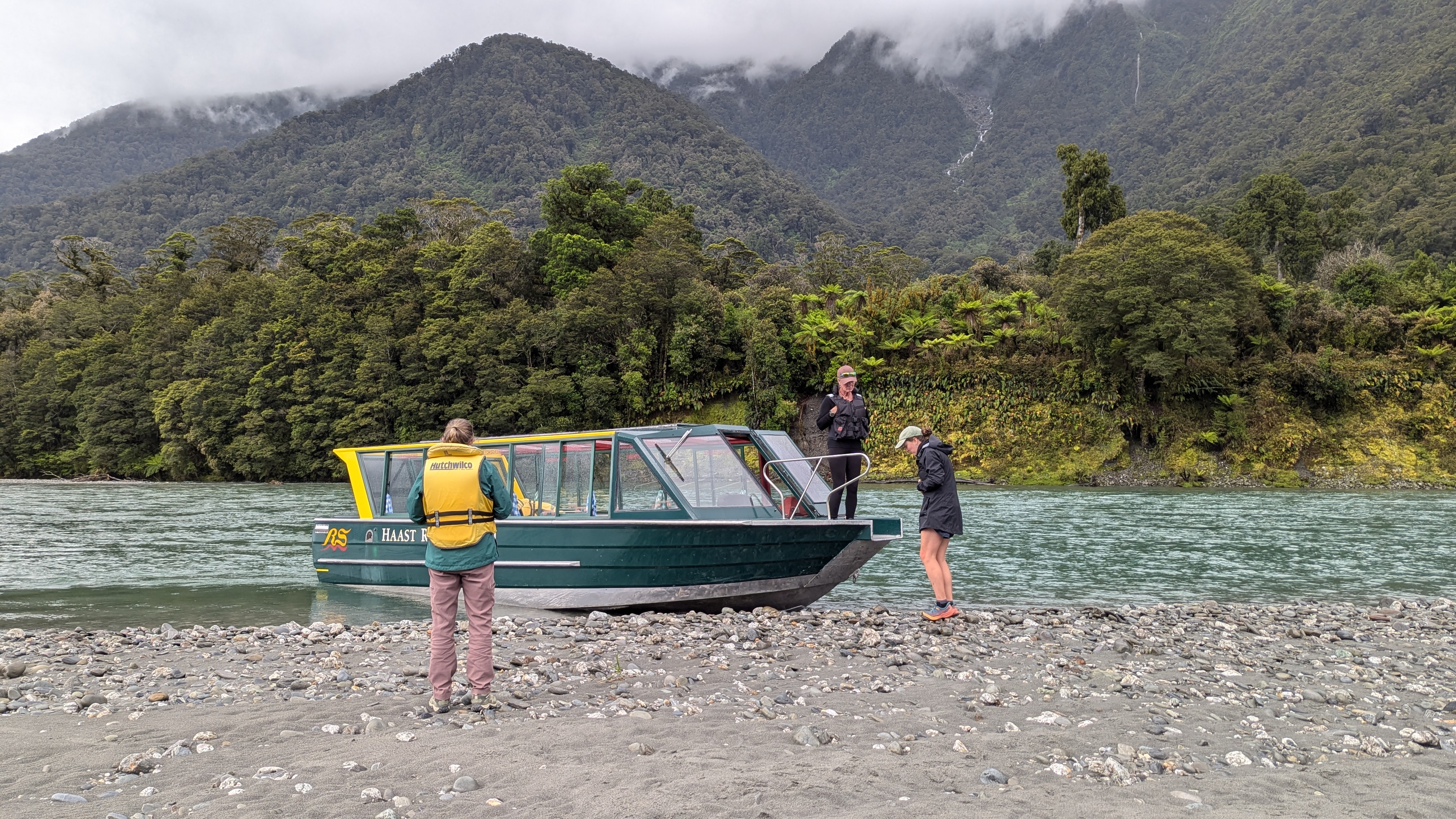
She stopped the boat after half an hour or so to land on a large stony sandbar, and invited us to disembark to look for Douglas Jade – a rare form of the green stone that is famous in NZ. Needless to say none of us made out fortune by finding any real jade, but we did find a lot of pretty stones!
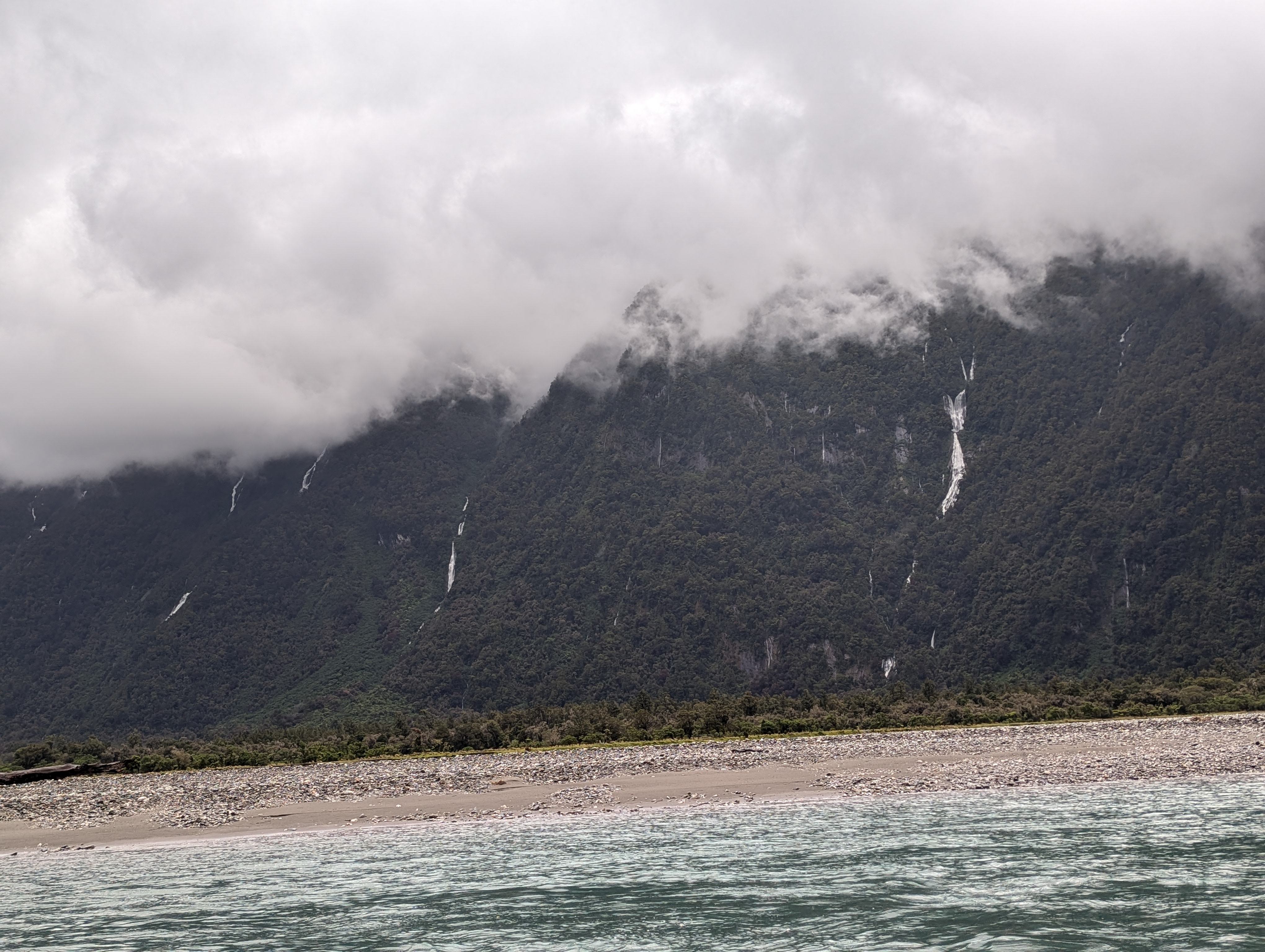
We got back on the jet boat and zipped up the river, passing numerous waterfalls which formed whenever there was recent rain. ‘Do you want to spin’ she said? As “no” didn’t appear to be an acceptable answer, we were told to hold on tight with both hands and after picking up speed she did the equivalent of a handbrake turn, which had us all squealing like kids on a rollercoaster (with much the same feeling). After four of these, the final turn brought us up opposite the largest waterfall – and with some relief the journey was over!
We continued up the narrowing river valley in the minibus and over the Haast pass. We stopped for a short, wet walk through the forest to a lookout point – but it was rainy and foggy and not much was seen.
We ended the day at the Wonderland Lodge on Lake Makarora – a complex of toy-town like A framed houses. The clouds were clearing so we could see the mountain tops from our bed. Our guides cooked us a delicious barbeque to end the day.
 The Slow Cycling Blog