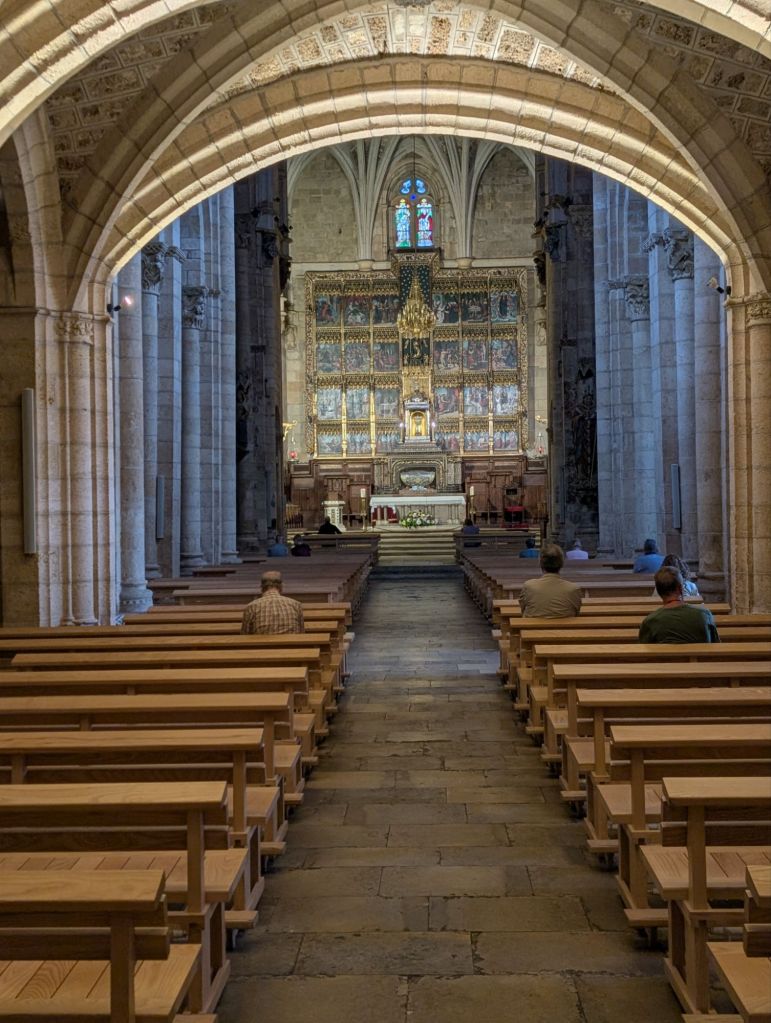
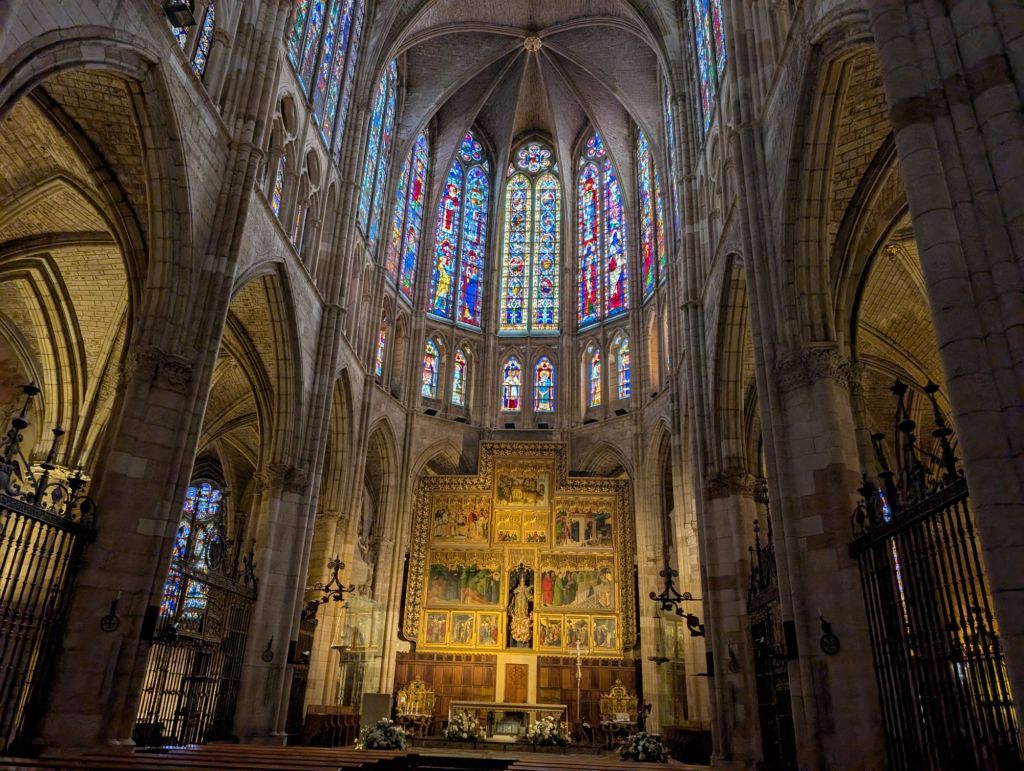
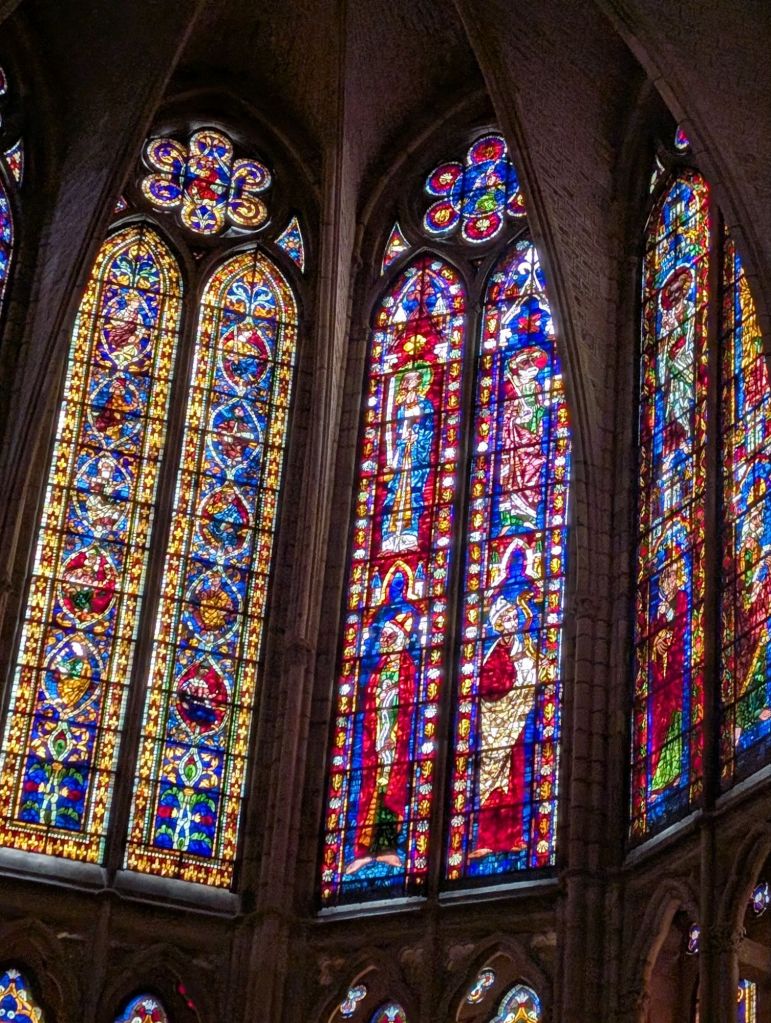
It was good to have a day off to rest our legs before our final push through the Cantabrian mountains in the next few days before home. Our apartment is literally a stone’s throw from the cathedral (if you have a strong arm) and a couple of stone throws to the Plaza Mayor (if you are a test cricket bowler) so not too much tramping about was required today. I thought I could be getting a bit jaded on the cathedral front, as Leon would be our 7th cathedral visit on this trip. However Leon truly excelled. It is a magnificent building with wondrous stained glass windows.
The excellent audio guide explained how new architectural techniques perfected in France in around 1120 allowed for lighter construction (look up ribbed vaulting), and as a result larger, brighter buildings could be built. That meant the early gothic period of immense lofty building with huge windows of stained glass began, taking over from the chunkier Romanesque style which did not allow space for windows and hence lacked internal light. It seems that this change in architectural understanding set off a huge ‘I can do better than you’ competition across Europe. Around 200 cathedrals were built in the following 150 years, each making use of the new gothic building techniques and all letting in light. It must have been a great time to start a stained glass business.
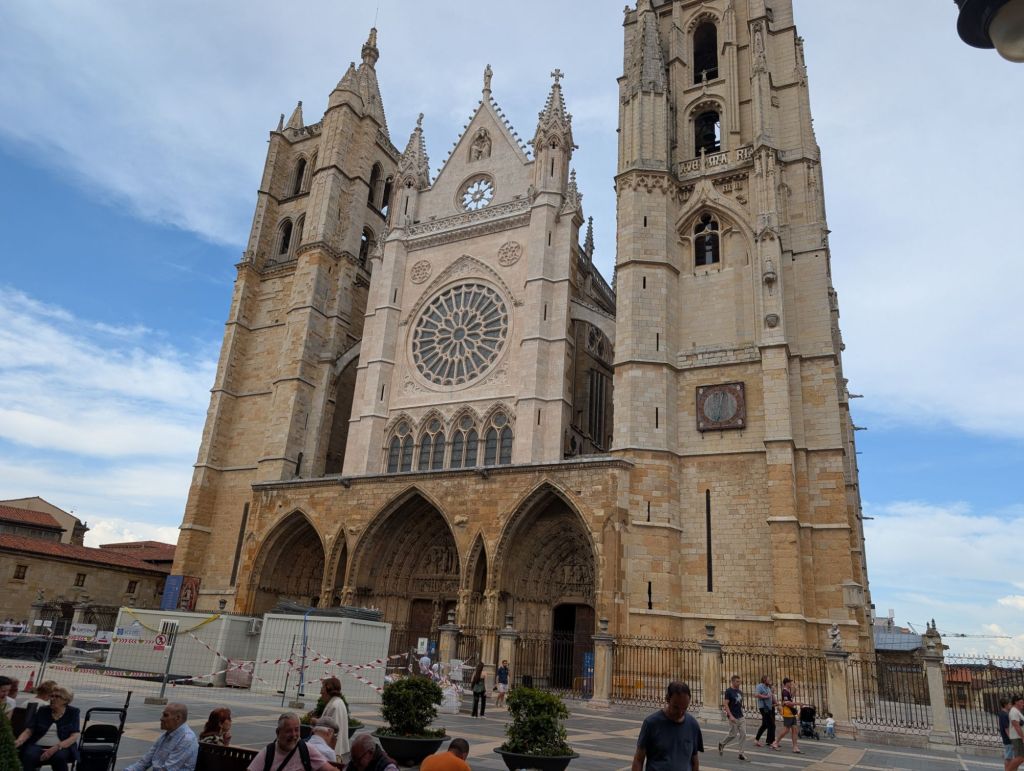
At the time Leon had a population of 5000 and was a small town on a hot dusty plain; but somehow money was put together to commission the cathedral in 1205 and it was completed under 100 years later. It contains 1800 square meters of stained glass, with brightly coloured panels lighting up as the sun moves round during the day. The sheer size of the buildings of this massive temple to both heavenly and earthly rulers makes it amazing and beautiful.
The Renaissance period of course had to add it’s additions. Not too many fortunately but a huge ornate alabaster choir screen dividing the church which, to our eye, ruined the wonderful simplicity of the structure. A new dome was also added but this added such stresses to the building that it began to crumble in the 17th century but was saved when the dome was removed and huge parts of the cathedral were rebuilt.
A further massive renovation in the 19th Century included taking out all the stained glass and saving it in individual boxes to reinstall and rebuilding all of the key structures, with wooden scaffolding installed to protect the building whilst it was renovated. That stopped it being used as a church for 50 years.
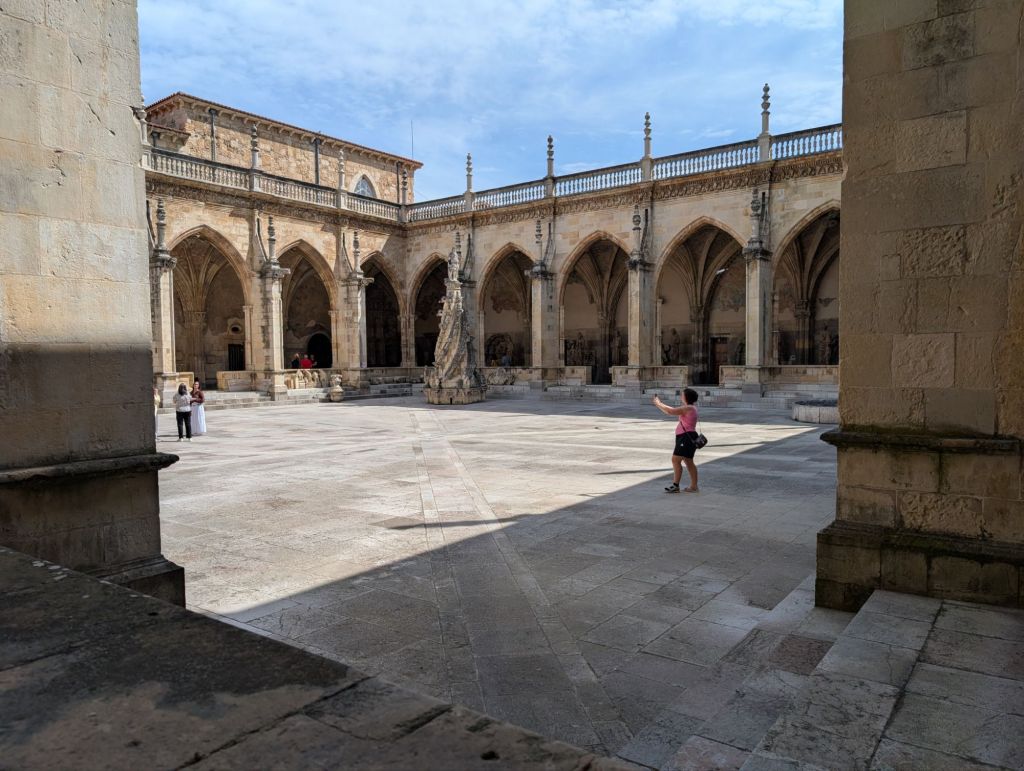
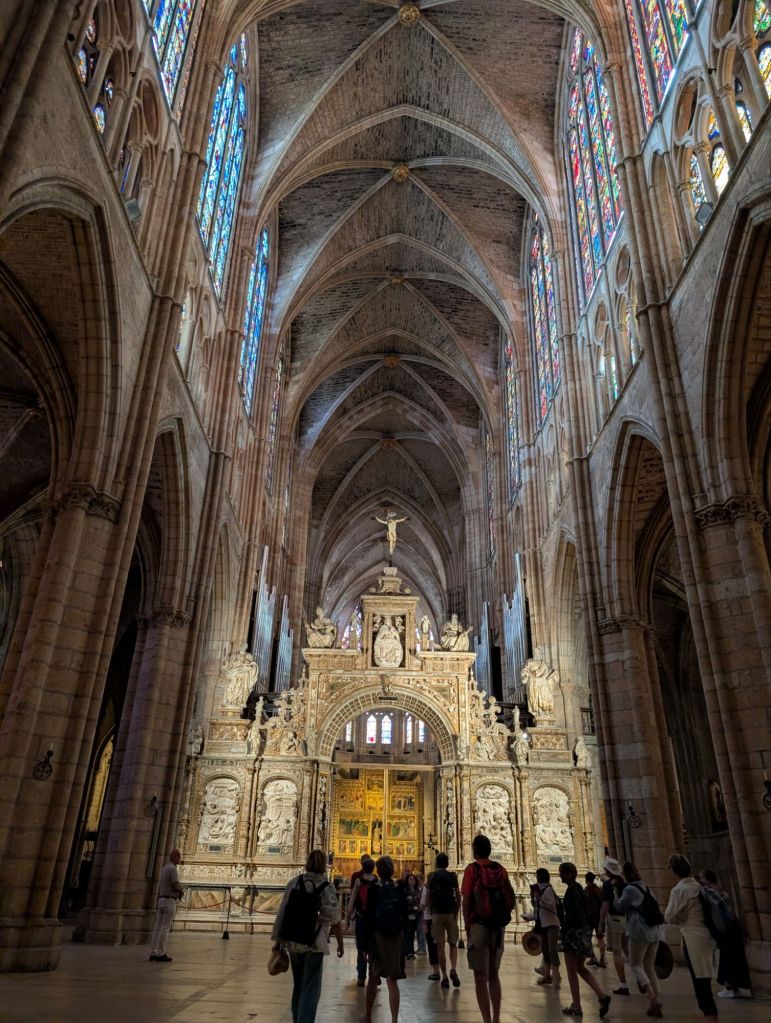
A number of renaissance features were removed to get the cathedral back to its gothic splendour – it’s a shame they didn’t decide to remove the choir screen too. It’s still a magnificent building with an incredible history. It is hard to imagine how there must have been a collective intake of breath when the huge scaffolding was finally removed in 1901 and the bishops, clergy, faithful and the wider community saw whether the architect’s calculations (all done without a computer) were right and the building could once more withstand its own weight. They were right and it did; but it was some gamble!
After that splurge of culture we spent a bit of time doing bits of shopping that we needed to see us through the rest of the holiday hopefully. After the heat of the afternoon we ventured out again but found the disadvantage of sightseeing on Mondays as many places close on Monday. One museum that the guidebook indicated was open on Monday certainly isn’t now. So we decided to try the Gaudi museum – but all tickets sold out. Nothing for it but to give up on culture and sit in a cafe with a beer and play scrabble (3:2 to David now!!).