(Bernie) Today was a rest day and an opportunity to see the sights of Kutaisi, Georgia’s second city, and it’s surrounding area. After a lazy start our first port of call was Bagrat cathedral. This 10th century cathedral was sacked several times over the centuries and was left a a ruin overlooking the city until recent years when it has been restored to its original architecture, as far as can be established. Using some reclaimed old materials and largely re-put together with new materials it also added clear modern aspects to the building so as not to pretend to be something it wasn’t. Maybe not to everyone’s taste (the guide book slates the new green roof – but it is based on the original colour from fragments found), I thought it was quite well done and it has an impressive position overlooking the city below.Restored cathedral – new sections on left hand sideInternally reconstructed part – reaching up to the heavens
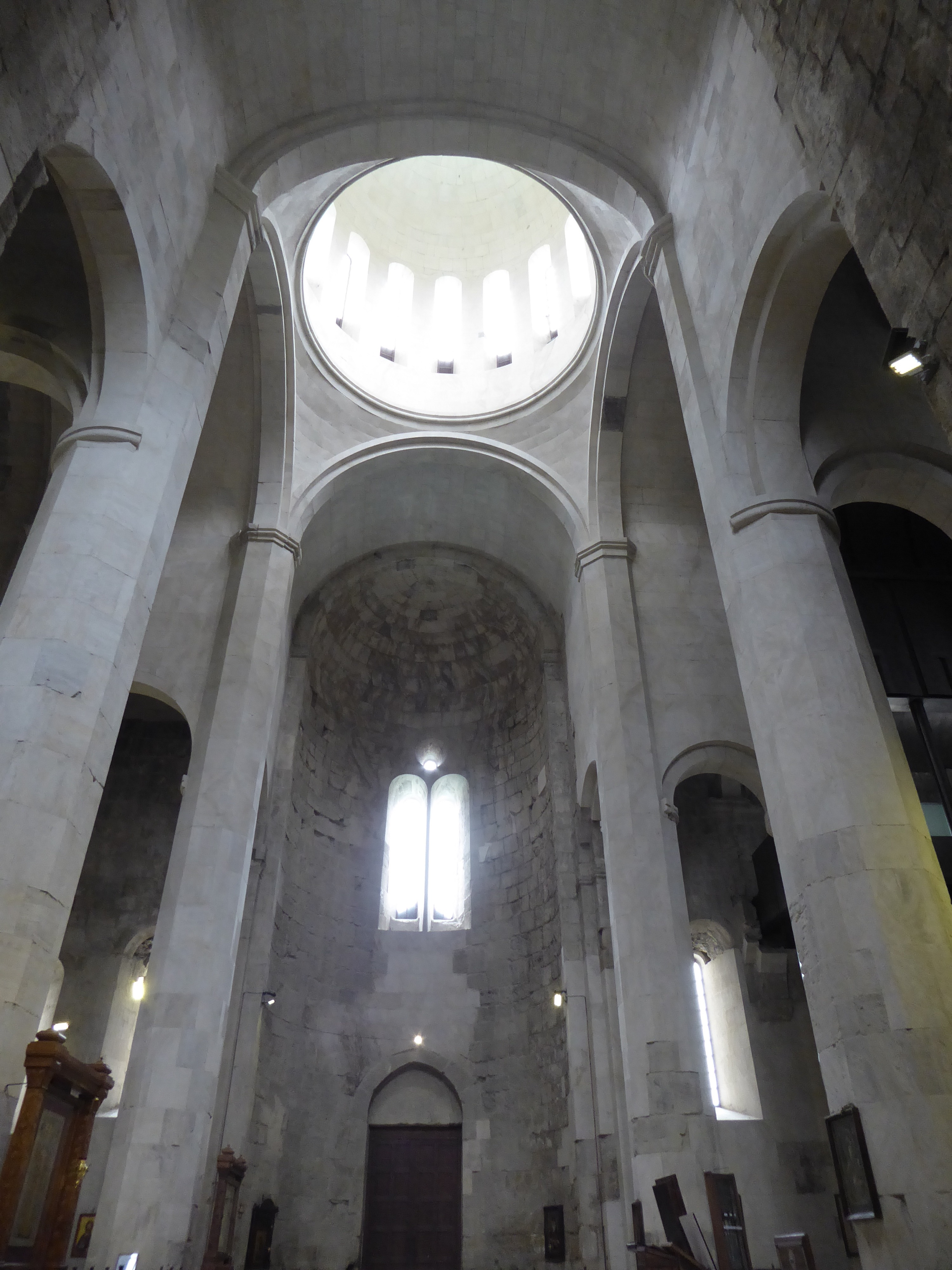
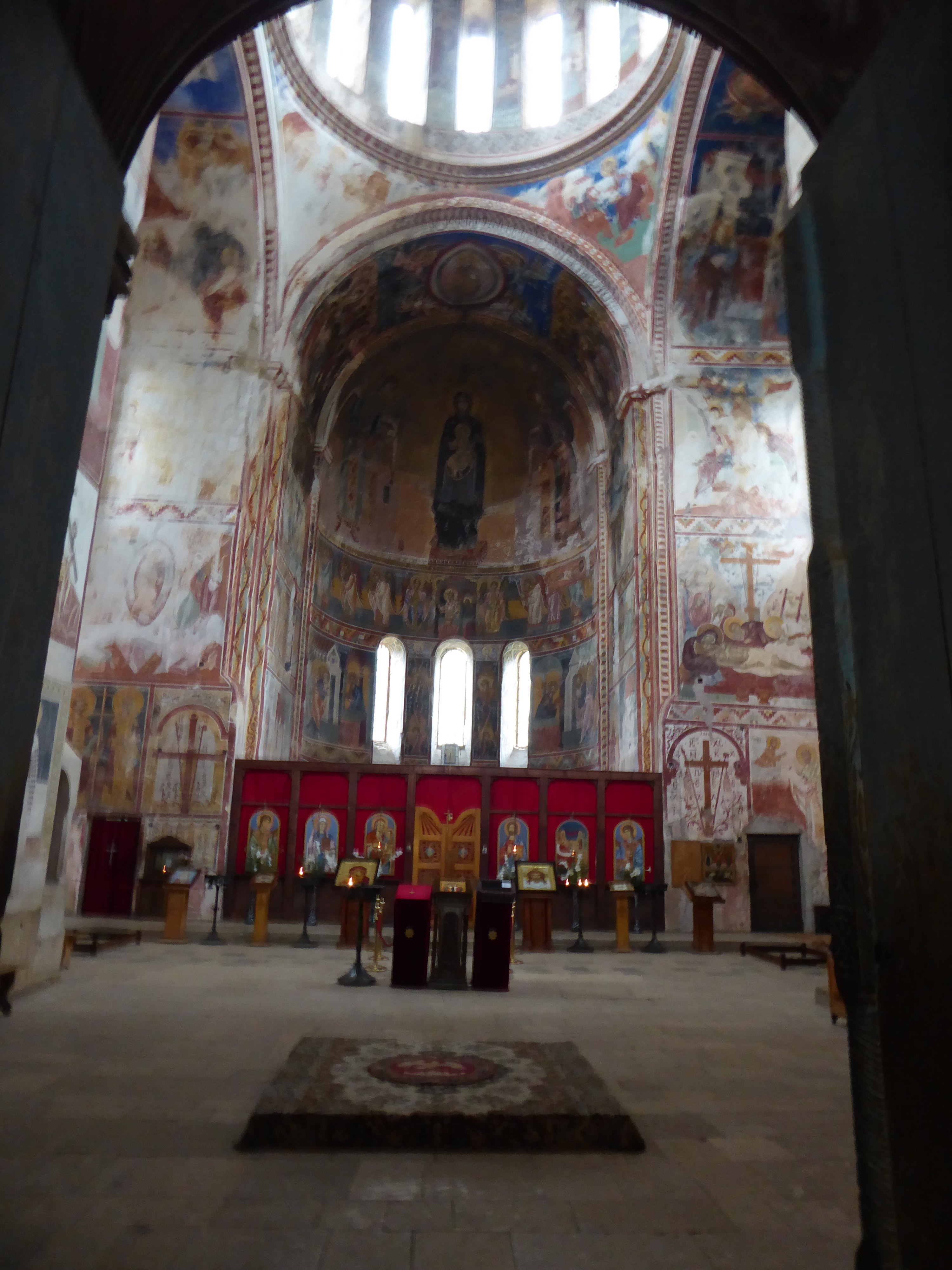
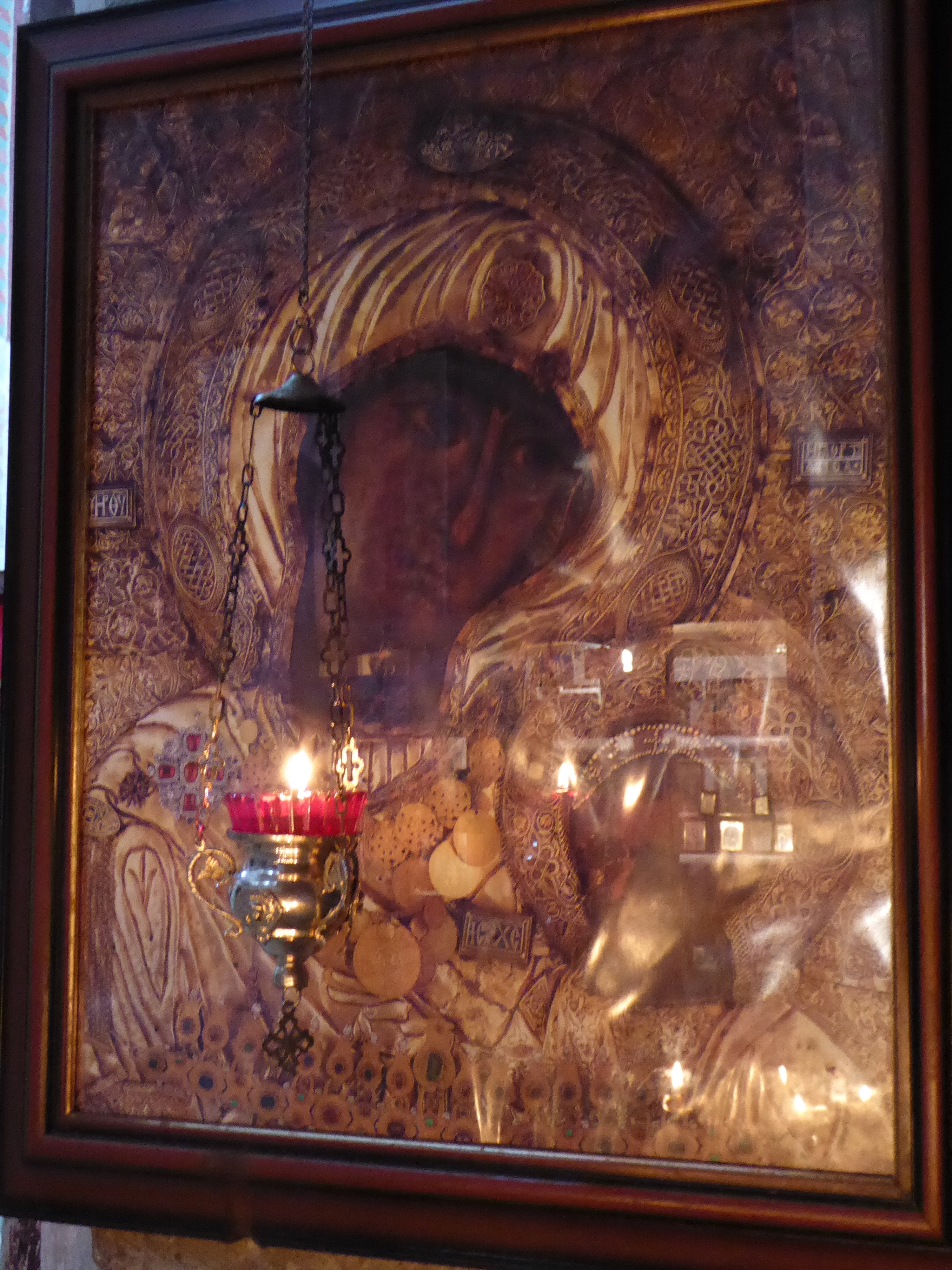
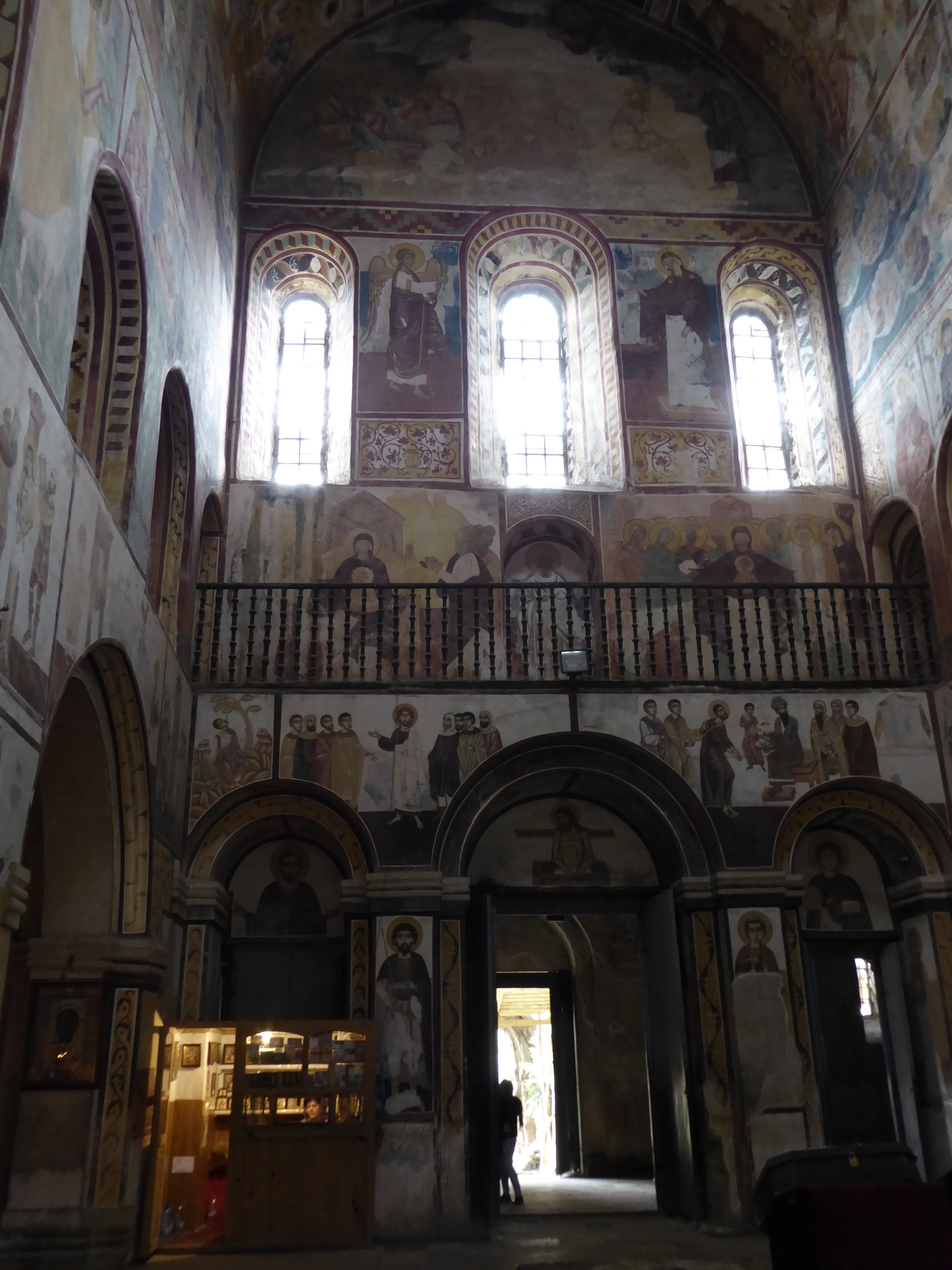
We then decided to cycle out to Gelati Monastery (nothing to do with Italian ice cream). Described as being in the hills behind the city it did not quite describe how steep those hills were! In the 22km there and back we climbed 650m! However it is much much easier without any luggage and we cruised up the last very steep 2km as minibuses passed us and stared. The monastery has a central church with fantastic frescos dating from 10th-16th century. It is said to stand in one of the most beautiful spots in Georgia and on a clear day you can see the Black Sea Unfortunately it was cloudy and drizzly rain while we were there so I would not rate it quite so highly. We mingled with several school groups but at moments when they had left, the church was quite serene.
Wonderful frescos at the monastery church
We pedalled back to base at the hotel to put our feet up and wait for a call from Pippa about her exam results. We felt quite tense as we tried to relax but the call came through and she had passed! We were really delighted for her and relieved. It was great news and means she can leave for her volunteers trip to South Africa on Saturday. Next up England were playing Wales in the European cup. We had misread the times and missed the first half but watched the second half at the hotel and were pleased that England won (2:1).
Georgian driving school – lesson number 1
Time to stroll out for supper. The hotel was near a park that had a recommended restaurant. It was still raining so thought we would try it as it was near by. The top of the park was a little fun fair with Ferris wheel, roundabouts and dodgems. The restaurant was right by the dodgems and our meal was serenaded by the laughing and squeals of children as they bashed into each other!. Next to us was a group of men out for an evening and dishes and dishes and drinks and drinks were brought out to them. I think the waiter thought we were rather puny only ordering 2 main dishes and 2 salads but we had discovered that portions are very generous and the salads were enormous. I had ordered mushrooms with cheese , that came along and were delicious. David had ordered Garlic Chicken – eventually a huge dish arrived with all the bits of a chicken apart from the meaty chicken breasts smothered in a field of garlic. Unfortunately we did not find this so delicious and we tried to make it look as if we had made a good stab at eating it but the waiter again was rather mystified at out inability to eat properly or even accept taking the left overs in a doggy bag!
Meanwhile the table of men next to us had ordered us 2 glasses of wine that the waiter brought over as a ‘gift’. They were of course enormous glasses and perhaps not of the finest vintage as we toasted and thanked our neighbours. I managed to surreptitiously pour some into my beer glass so as to appear to have made a good stab at drinking it, otherwise I fear I may not have been able to stagger home. All in all it was one of out more unusual meals!
Back at the hotel we saw that Jo Cox MP had been shot and killed which ended a day that had been a day of good news with rather a pall. A terrible tragedy.
(David) Not that we knew it at the time, but today we reached 7000km from when we started in Bewdley (our own “Le Petit Depart”) in July 2014. It seems a very long time ago and a long way to have travelled. However we have a great deal more to go if we are ever to reach Australia, let alone do it in a decade.
We got up early and met Madam’s son (we assume) who also left early for work. She slept on a couch in the sitting room, and was asleep when we breakfasted. However she got up to see us off – perhaps to statisfy herself that we really were as mad as we appeared to be. Even without a common language, it was clear that travelling by bike across her country was way out of her range of acceptable things to do. Lots of mystified shaking of heads but smiles as well as we departed.
The early morning air was cool and dry, and traffic was light. We sped along knowing we had a long day and that it would heat up. We had a few climbs but nothing of note but observed the Georgian countryside as we passed. There are lots of large houses here – vastly larger than in Turkey. There must have been a time when rural Georgia was thriving and everyone was building their own homestead, with large rooms and gardens. But the buildings were somewhere between unoccupied, derelict and ramshackle. There were abandoned factories and it was clear that the good times were long gone. I suspect, finished long before the collapse of the Soviet Union in 1989 but were a symptom of the decay which led to the collapse of communism rather than its cause.
Decaying wrought ironwork was everywhere and paint was not renewed. But there are also signs of thriving economic activity. Lots of cars were not Ladas but old (and sometimes new) Mercedes and BMWs. For some the new economy is delivering the goods
The average Georgian male appears overweight, bald and wears a black Tshirt with sunglasses. They look like archetypal gangsters but, of course, this is not true. There have been serious problems with organised crime in the past but whilst the image may not have changed, the reality has (so we are told). But whenever we have asked anyone looking like a gangster for directions or advice, they are friendly, helpful and want to welcome us to their country. So we need to put aside our prejudices and treat people as they are, not as we perceive them to be.
There are contradictions everywhere because this is not a country where feminism is overt, but it has had a series of high profile female politicians and had the highest proportion of women in parliament anywhere before 1989. Yet women appear to do most of the drudgery work, with chubby men sitting around smoking and talking on their mobiles.
There are few really obese people but the “average” person has a distinctly rotund appearance, tending towards the heavier end of the scales. In many societies, extra weight symbolised success in life and that culture appears to be heavily represented in Georgia. The only slim women I have seen are young women in the cities, who are clearly following lifestyle trends from Western Europe.
People are really kind here, and welcoming without the reserve we saw in Turkey. We have had lots of genuinely friendly waves from cars, horn toots and encouragement as we struggle up hills. The Georgians appreciate “sportive” greatly, even if it is from the perspective of a car seat at the moment.
All these thoughts occurred to us (well me at least) as the morning heated up. As the heat and humidity rose, so a headwind got up and it was more difficult to make progress. After 70km we made it to Vani for lunch. There are Roman ruins here that get a write up in the guidebook, but honestly we were too knackered by the humidity and the wind to make the 5km trip out of town to see them. We recovered in a cafe, drank copious quantities of water and braced ourselves for battling the wind again
The next 20km were pretty rough – slightly uphill and into a strong headwind. We made progress in an easterly direction at about 14kmph at best, and, in the heat of the day (around 40 degrees C) , resented every centimetre. But all bad things come to an end and we then followed the road north towards Kutairi. Out of the wind, with the afternoon clouding up and temperature falling and after drinking several litres of Fanta, life seemed a whole lot better. Fizzing and farting, I made my way towards to 100km mark for the day (Bernie – thank goodness I was leading at this stage and not behind!)
The clouds burst about 10km outside the city. We happened to pass an empty car wash and so dived into the covered area as the heavens opened. 10 minutes later the cloudburst seemed to have passed but the rain was merely steady. We followed the road through a wonderful old forest that goes right up to the edge of the city.
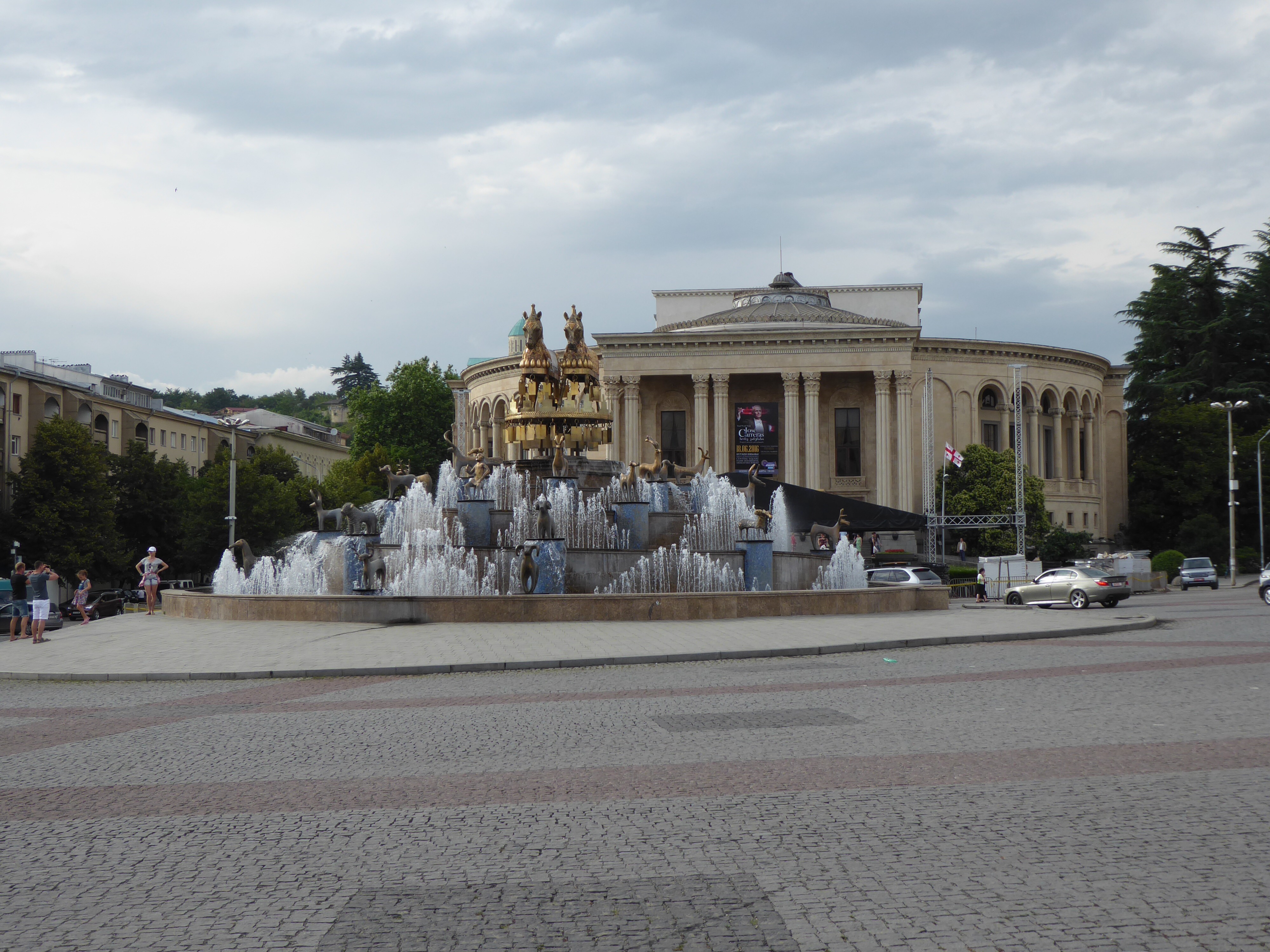
Then we got hopelessly lost in the rain soaked city streets, but eventually found the centre where – to our astonishment – posters boldly told us that Jose Careras was due to perform at the opera house this Saturday. We shall be long gone by then but the central square had a lovely fountain with wide open streets. This is a country of endless contradictions.
We planned to stay 2 nights so booked ourselves into a decent hotel but, once we found it after winding up the cobbled backstreets, there was no one at home. Had we booked into the Marie Celeste of the hotel world? Eventually we raised an overweight middle aged male (with cigarette) who summoned women to see to our our needs (a pattern we had observed before).
We were the only guests at that point but several tour groups turned up later and so we are not alone. A lovely meal in the centre (which cost next to nothing) and bed after 114km was all we could manage. But after a beer the tough part of the day faded from memory, the aches and pains in our legs receded and this did not seem such a stupid way to spend time after all.
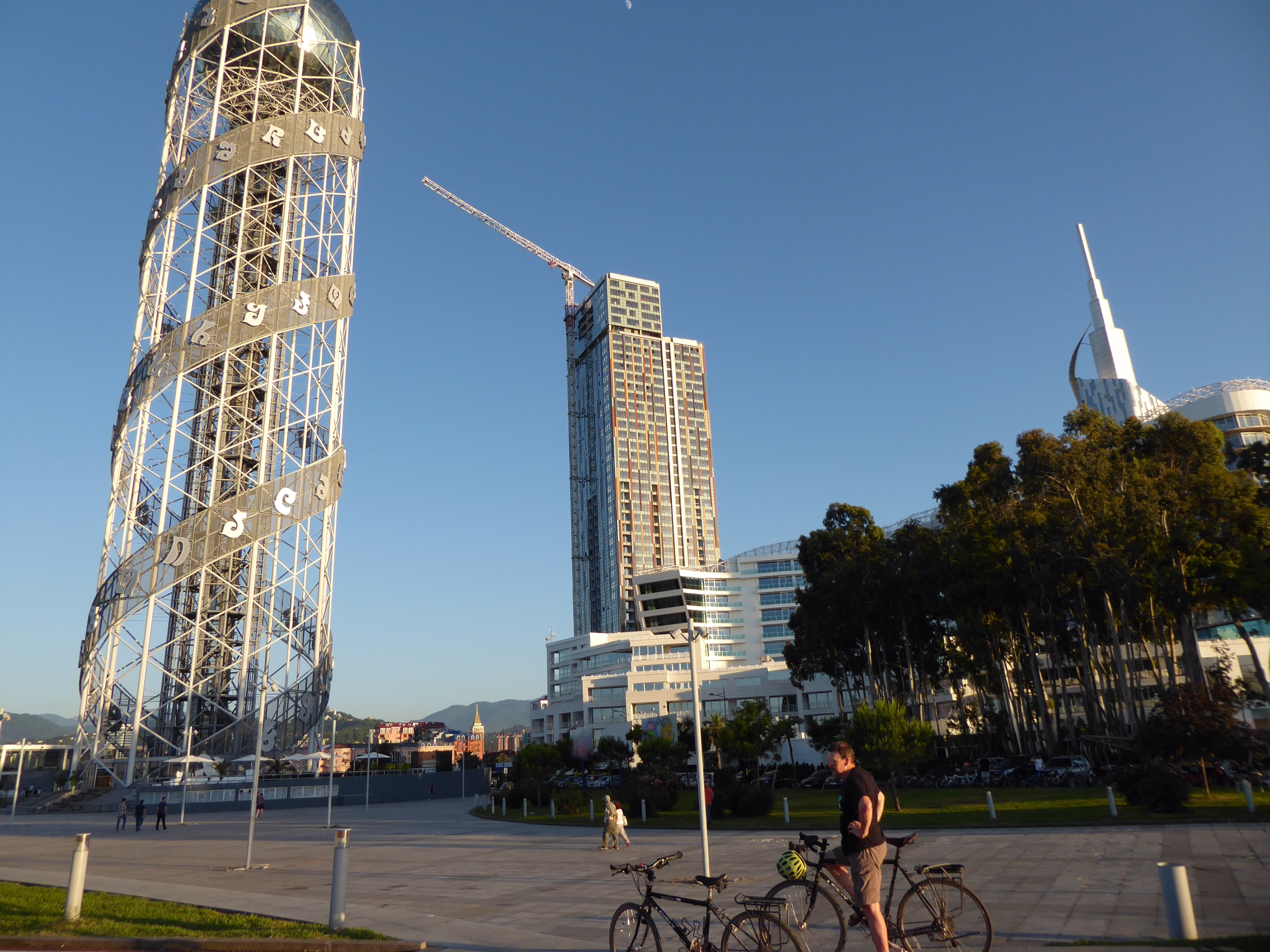
(Bernie) Today we set out for our first proper day in Georgia. Batumi was fun and like seaside resorts everywhere with a pleasant seaside promenade, silly towers, candy floss (yes I did see it), lots of kids playing. We didn’t partake of the other side of Batumi with its numerous casinos, which probably accounts for the number of flashy cars beings driven around. Away from the sea, it was a pleasant bustling city and not nearly as tacky as the guidebook had led us to believe. Central Batumi: Lots of investment
So after a lazy morning sorting ourselves out we set off about 11.30; and found ourselves straight into the intense heat of the day. The cycle out of the city was mad with cars, lorries, buses, minibuses coming from every direction. We had not had traffic like this since leaving Istanbul but it was certainly no worse than cycling in London. A cyclist needs 15 eyes to see in every direction, but we somehow managed safely with two.
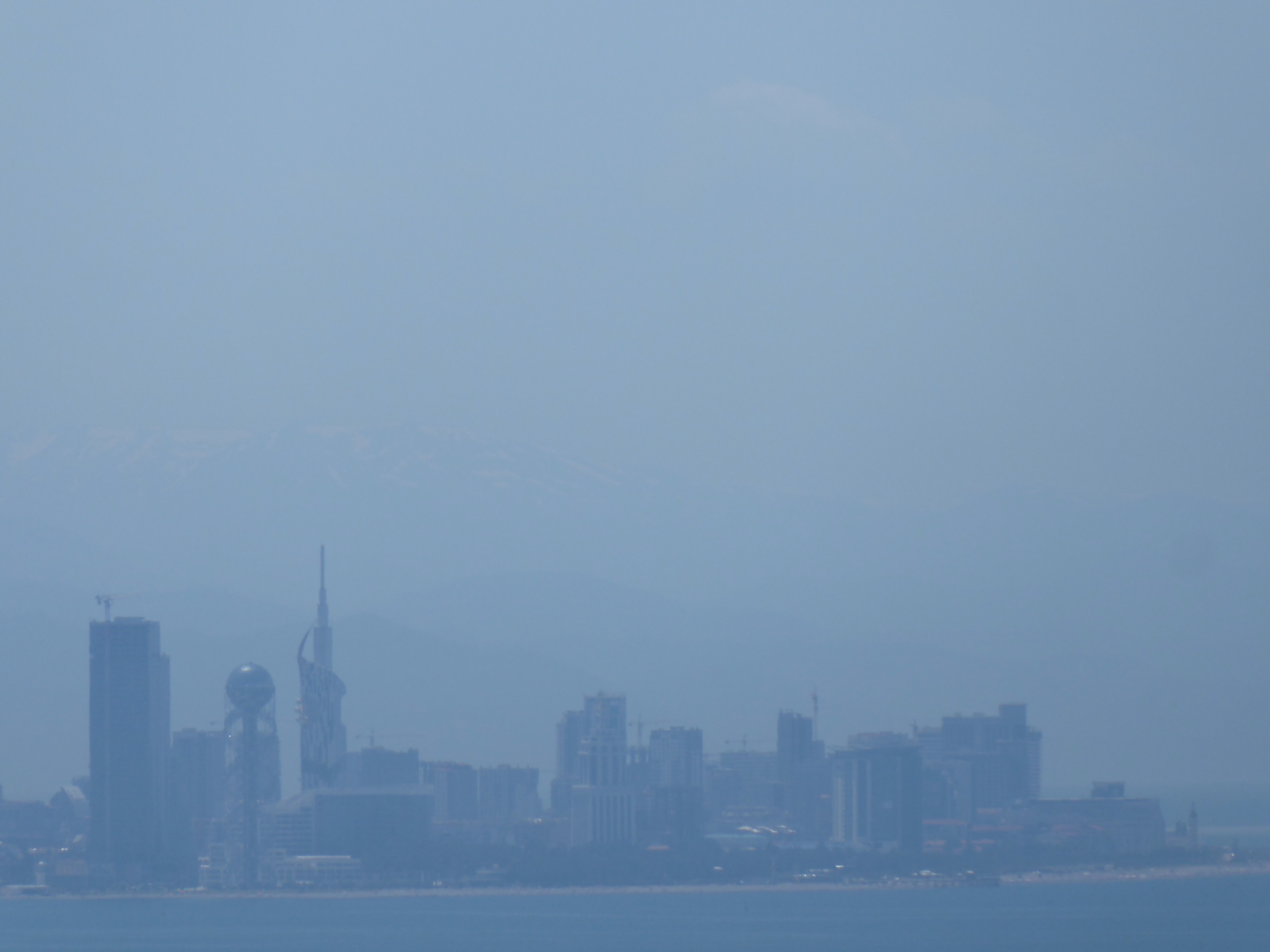
Batmi in a heat haze
The road up the coast was also very busy. It is just an ordinary size English “B” road but has all the traffic coming up from the border and on to Tblisi. To our right were high mountains so there was no other place for a road to be. So we learnt to live again with lorries and buses whistling past our ears. The road was green and lush, which also meant it was very hot and humid. Mount Mtirala, rising above us, is the wettest place in Europe as the water soaked clouds coming in from the Black Sea deposit over 4m of rain a year on its slopes. There was still snow on the upper slopes, and as we battled through the heat we could have done with some of it.
Most of the road was flattish but we had two sharp climbs that had us wilting and wringing wet with sweat. It was over 45 degrees on the road and in the mid 30’s in the shade, but it is the humidity that is really sapping. What a change from the high mountains when I was moaning about being too cold
About 30km up the coast we came to the seaside resort of Kobuleti. We cooled off in a cafe with a cold drink and had a picnic under trees in the park. We left the main road and took a road that from the map purported to be through a nature reserve but in fact it was ribbon development all the way along but at least had some shady trees.
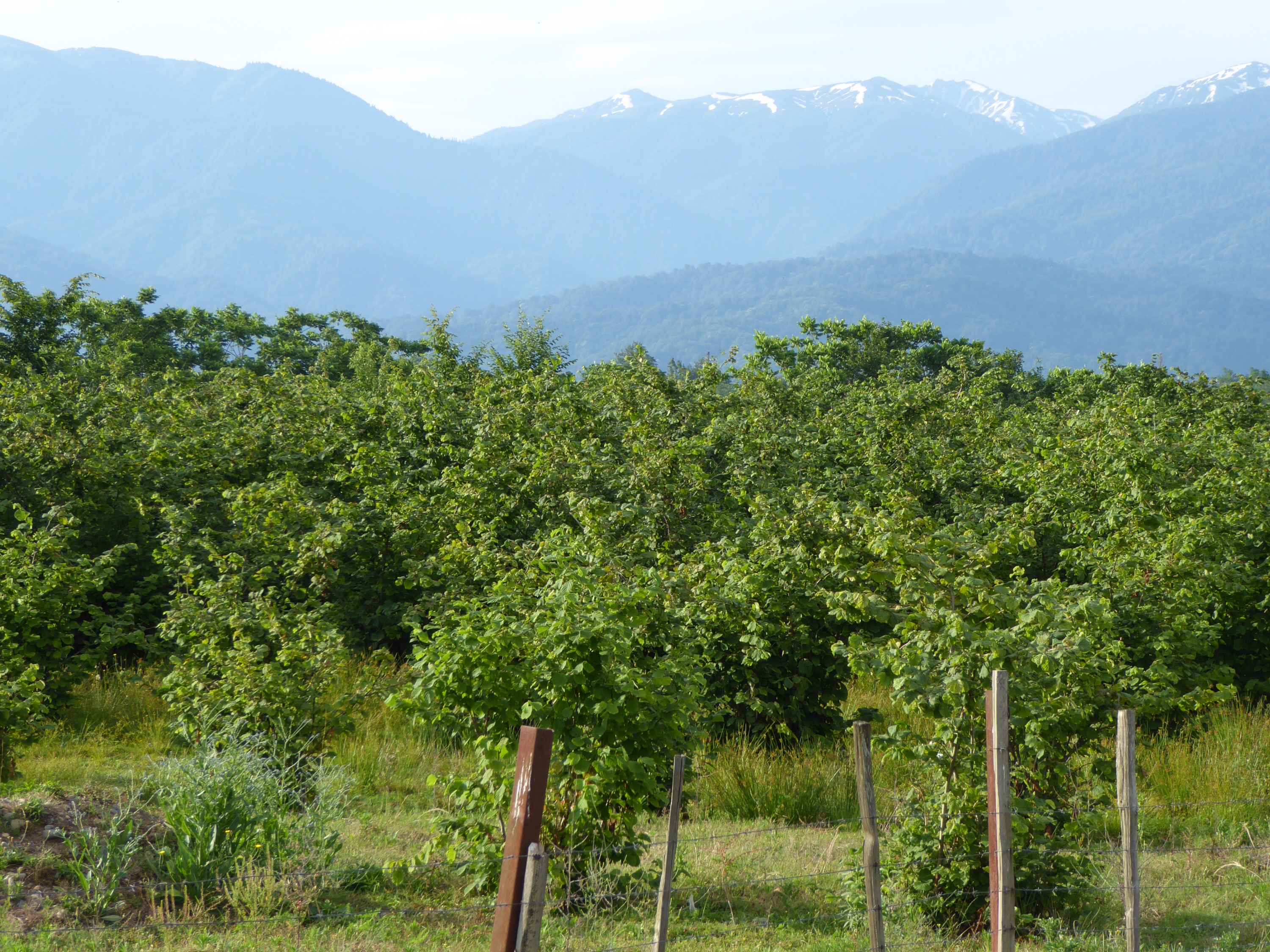
Most of the road was flattish but we had two sharp climbs that had us wilting and wringing wet with sweat. It was over 45 degrees on the road and in the mid 30’s in the shade, but it is the humidity that is really sapping. What a change from the high mountains when I was moaning about being too cold! Rural Georgia with mountains – looking south
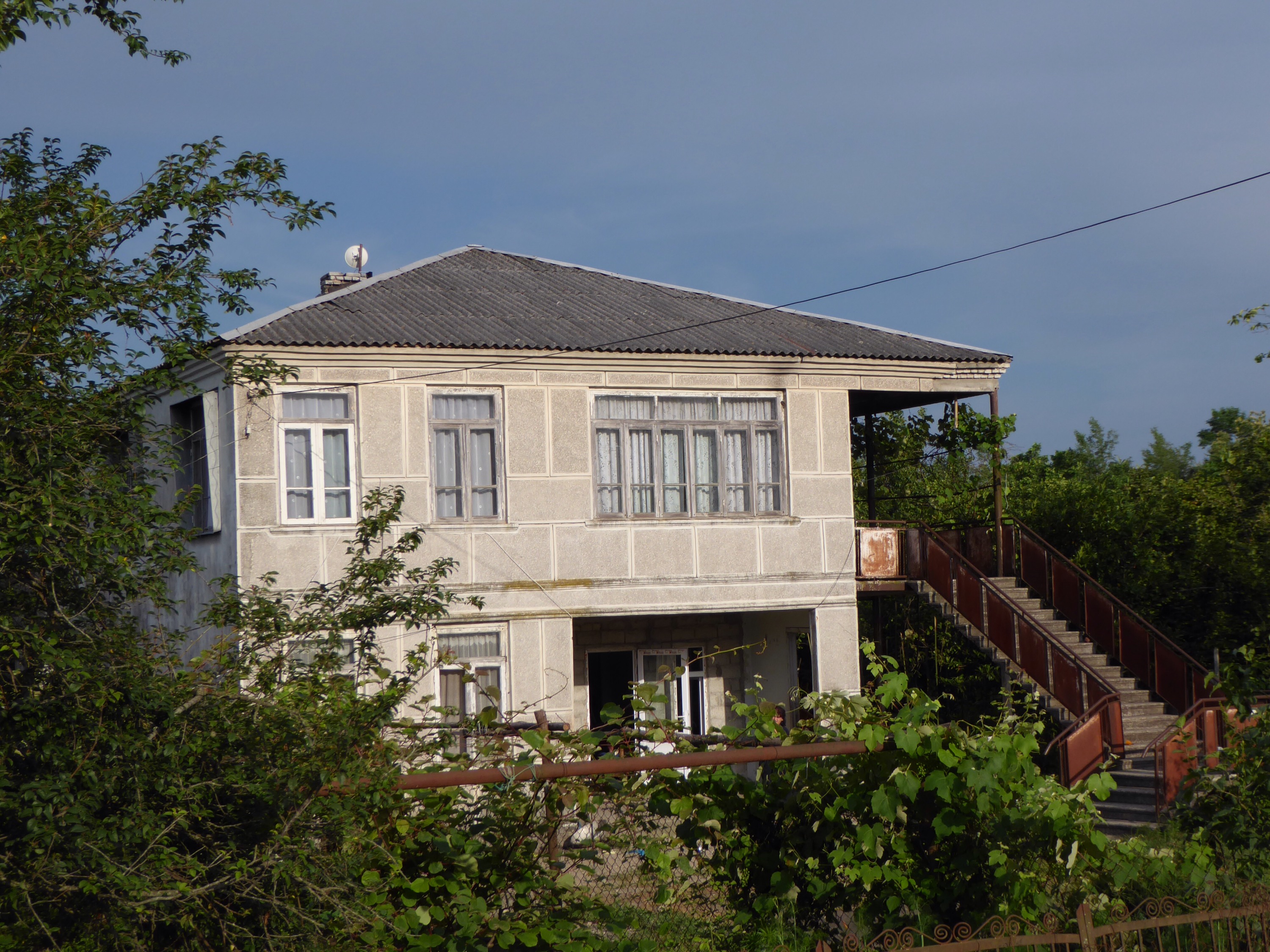
Then, turning off this road, we suddenly felt in Georgia proper as we took a pleasant if minor road inland and passed through a series of villages. Cows and goats roamed free along the road. Cars seemed to be expert at swerving round the cows with hardly a drop in speed as the beasts ambled unconcerned across the road. Typical Georgian farm house – large and slightly delapidated
By now it was about 4.30 and was still very hot, even if not quite as stinging as earlier. Although we had done a short day we felt exhausted and started after a while to look for somewhere to camp. There was lots of flat ground but no water that was obvious as we neared the industrial town of Ozurgeti. We thought we would have to find a hotel in town, if one existed.
A bridge then crossed a descent looking river with areas of flat ground where kids were playing which looked ideal for camping. So we back tracked to find our way down to the river. The little road we took came to a dead without any sign of the river, so we turned round and tried to ask some men sitting in their garden “river” and “camp” in our best google translate Geogian.
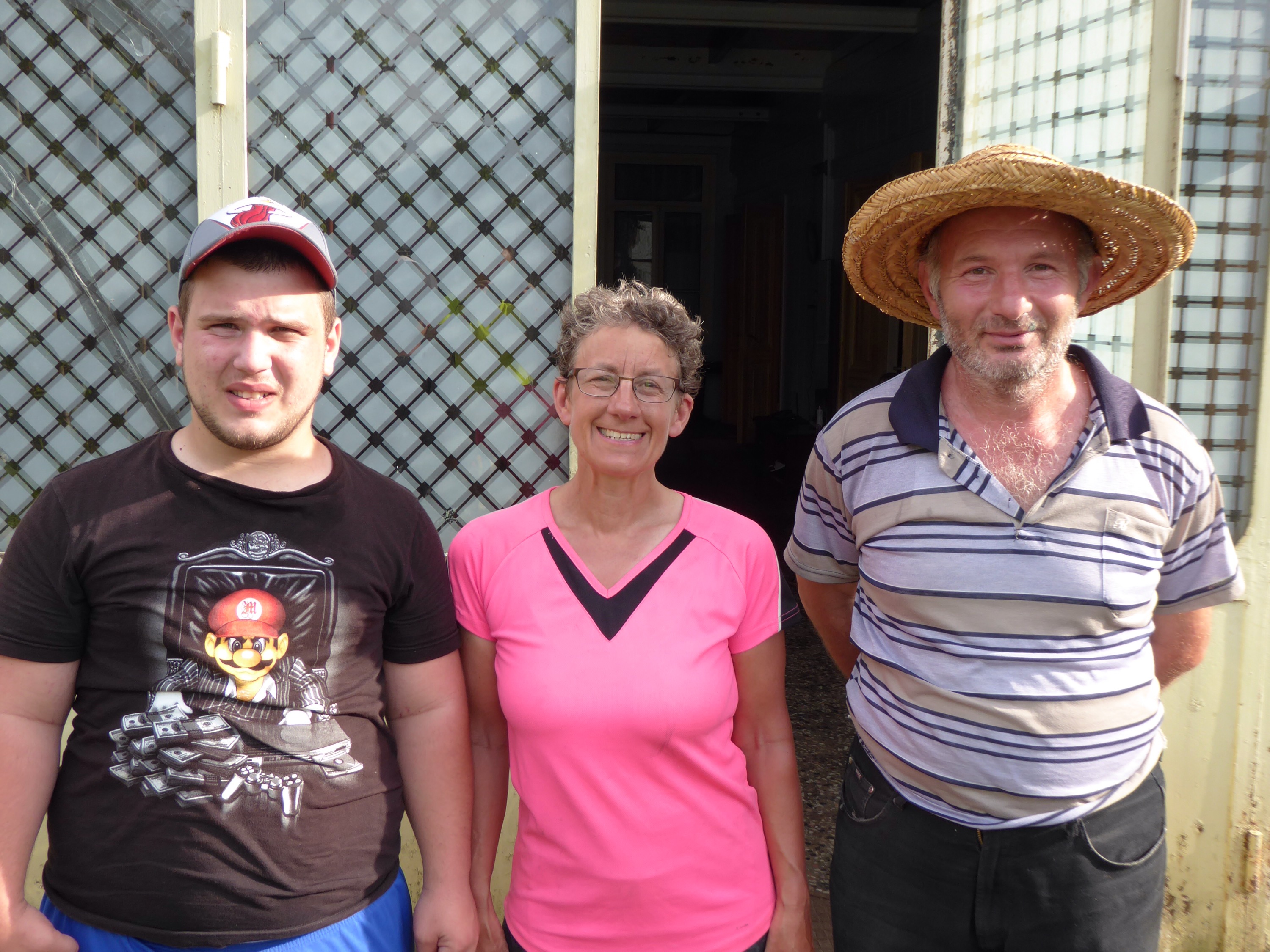
“David”, Bernie and our local guide
This was met with completely blank looks but they called up the road to a young man (whose name was David!) who came over and could speak pretty good English. We explained that we wanted to camp by the river but he was very concerned about foxes and snakes (albeit non-toxic ones). Debate went on amongst the men and David asked if we wanted a ‘home hotel’. I had read about home-stays being very common in Georgia and this seemed an ideal solution.
We were walked up the road to a large house where one of the men walked in and clearly persuaded the elderly lady there to let us stay in one of her rooms. David clearly felt the initial price was too much so he settled on 20 lari for 2 – about £7! He gave us his number and said we could ring any time at any hour if needed help with translation. He really was incredibly kind and helpful.
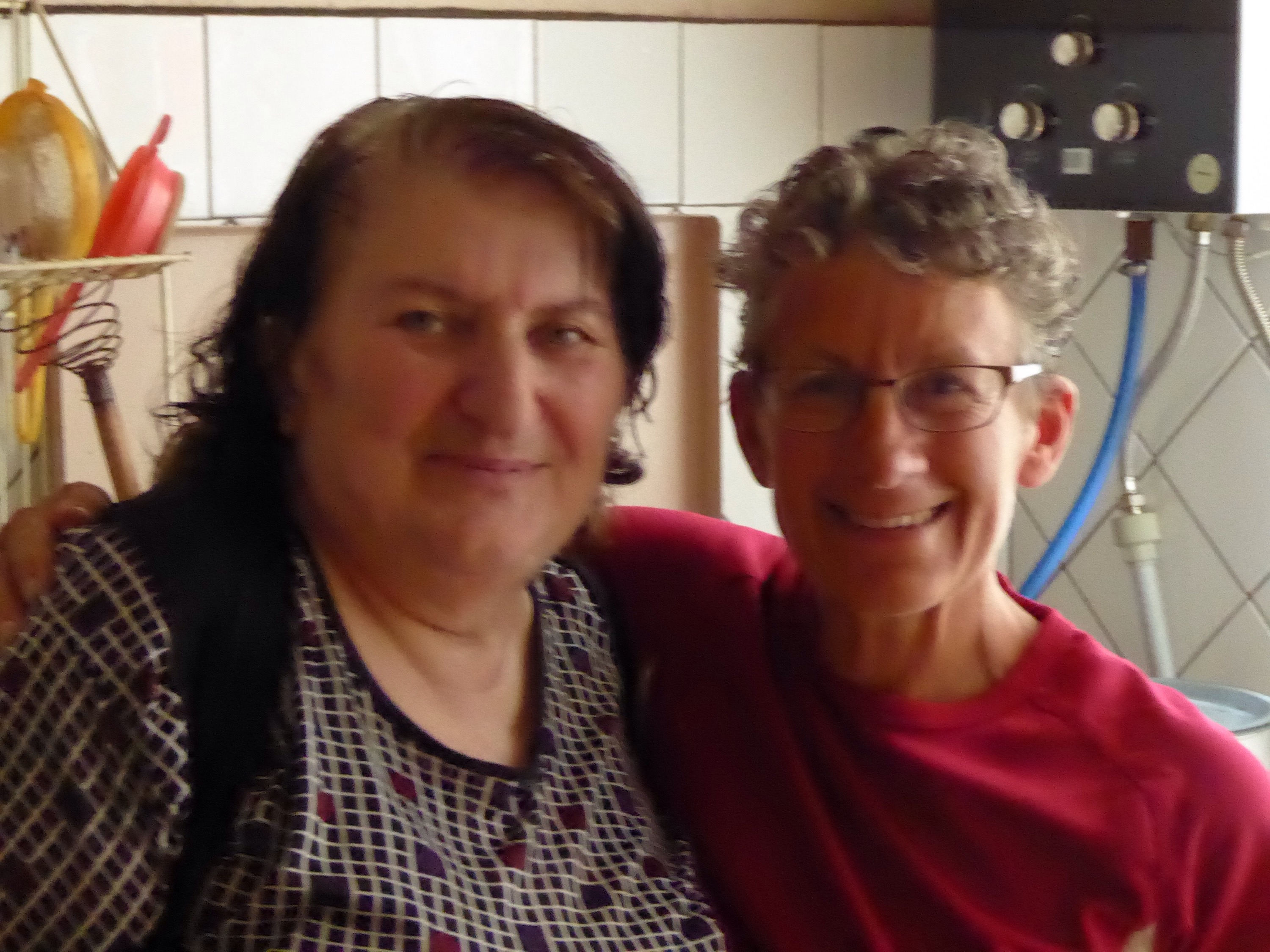
Bernie and our host
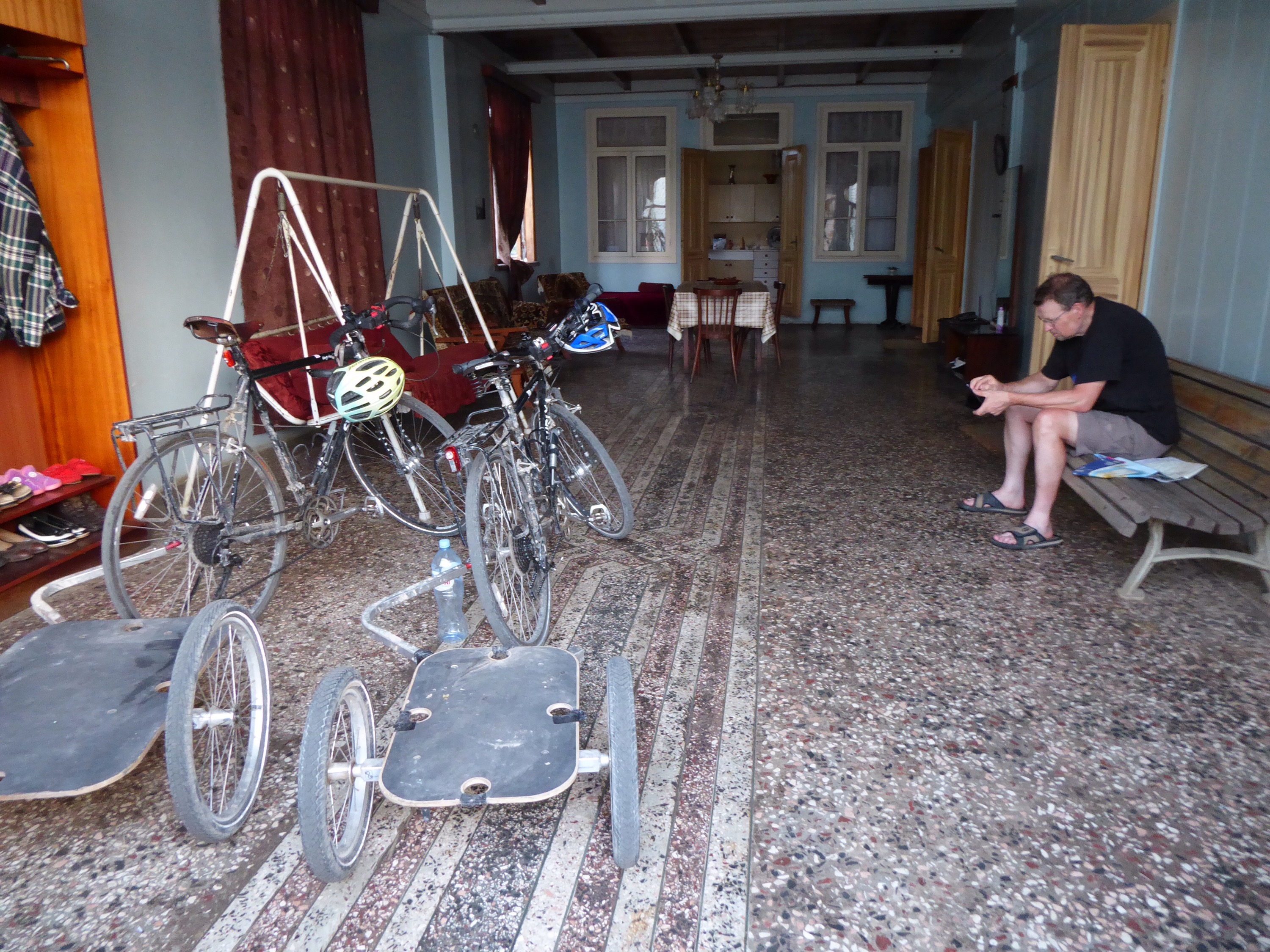
The house is large and rather decaying with a feel of the 1950’s but the lady (whose name we do not know) allowed us to cook in the kitchen, with me looking completely blank every time she said anything. But we seemed to get on well enough and she was pleased to have her picture taken. It was still hot and humid just sitting and eating but now we are finally cooling off in the large hallway with a cool stone floor – it all feels a far cry from the glitz of Batumi but we are very glad to be here – having fallen on our feet once again due to the kindness of strangers.
(David) Today was fine until 11.28 and then potential disaster struck and I just managed to avoid getting arrested for assaulting someone. By 5pm the crisis was largely resolved thanks to the integrity and ingenuity of the Georgian people and, exhausted by the whole process, we collapsed in a bed in a new city and new country. We then had a lovely meal out and a form of equilibrium was restored.
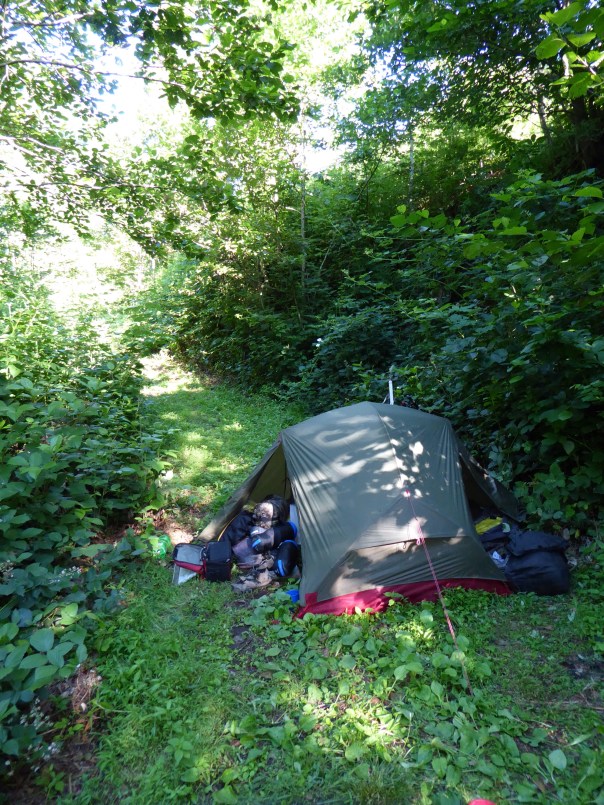
Our little camp site on a disused trackWe started the day on our tiny campsite, just off the road half way up the hill towards Hopa. We camped at about 350m and stormed up the last 350m – or a “Clee” as a climb of 350m is known (the height of the club up Clee Hill near Bewdley) as if we were cycling on the flat. The morning air was cool, the mountain views were fantastic and we were in the groove.
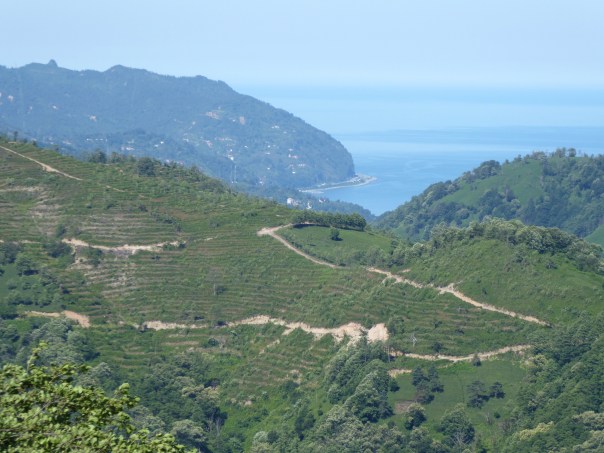
View across to the Black Sea – looking blueThe top was 700m and gave us a lovely view to the sea – which we have not seen since leaving Istanbul. This was the Black Sea which I have never seen before (but it strangely looked like any other sea from this vantage point). The 15km of descent, good surfaces and lots of corners to swing around at between 50 and 60kph. It was a great descent – even though the road was occasionally a bit crap making it like a roller coaster without a safety certificate
Hopa is an industrial port where any manner of metal bashing is available – a sort of Turkish Tipton with a beach. There was not a great deal to commend it and it’s not no1 on my my places to return for a seaside holiday. We had proper Turkish coffee in Turkey for the last time and started thinking about the border.
It was 15km to the border – main road, lots of traffic and lots of tunnels. Not great cycling but just had to be done. With a bit of luck, we thought, we would be in Batumi for lunchtime and then have a half day off
But luck was not with us. First, there was a problem with leaving Turkey. Our Turkish visas were electronic and there was only the stamps on our passports. The border guard needed the electronic visas to sign us out of the country. We were looking on the iPad for the visas at the kiosk when a pickup truck which was next in the queue attempted to queue jump (as of course we had just done under instructions from the security guards). A middle aged man got his angles wrong and ran his truck over my trailer wheel, crushing it out of shape.
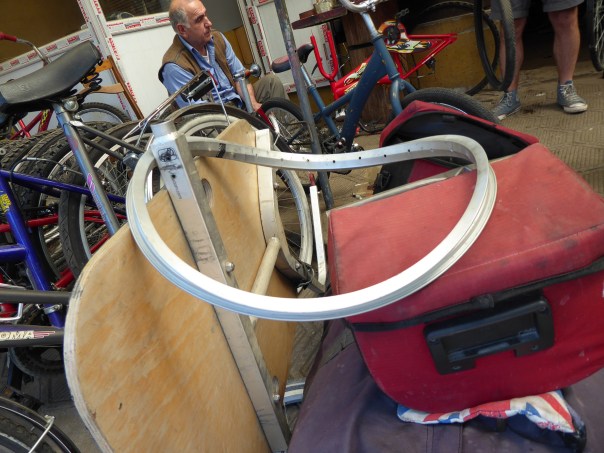
The shape of the wheel after Fred’s truck had hit it!
Pandemonium broke out at this point and, of course, the entire queue stopped. No one spoke English and so it was all done with gestures. However the assembled men all agreed that it was this man’s fault and, as a matter of honour to visitors to their country, he needed to sort it out. To be fair to him he accepted responsibility and it then became a matter of how it should be sorte
The hub of the 20” trailer wheel is very special as it fits into the trailer hub. I knew that the wheel was irreparable but that we needed to get a new wheel, and then get the hub worked into the wheel with spokes – a job for wheel builder at a specialist bike shop. I think our new “friend” (who I shall called “Fred” as it that seems to describe him) just thought someone with a hammer could knock it back into shape!! The consensus was that we should go back to Hopa and get the wheel fixed. I tried to say that this was impossible but failed. So we ended up putting our bikes and luggage in the back of Fred’s truck to take back to Hopa. Next problem – that meant undoing the exit visas we had now just sorted as we were going back into Turkey.
This was done on the computer and then striking through the marks on our passports. But Fred could not turn around as there was no way out behind him, so he progressed forward, with a view to turning around when he could. That meant going into Georgian space and – of course – the next problem happened in that he got pulled over by Georgian customs. Roughly translated, the conversation between Fred and the Customs staff was as follows:
– “Stop here… What have you got in that truck”
– “A couple of mad English cyclists – I have just driven over their trailer wheel – but don’t worry I don’t want to go into Georgia because I am on my way back to Turkey. How can I turn around?”
– “You cannot. You are in Georgia now mate and we are going to look into your truck!”
– “This is the wheel”
– “Boy you are made a mess of that” … Much laughter. “You had better get it sorted properly”
– “I’ll do that but in Hopa”
– “You’ll never get that fixed in a one horse town like Hopa, take my advice and go to a proper bike shop in Batumi – that’s your only chance of getting that fixed”
– “No Hopa will be fine, they’ll just bash it back”
– “No way, Batumi or we pick your truck to pieces – this is my uncle who runs a bike shop and here is his address”
– “OK I’ll go to Batumi and try get it fixed”
– “Good man – off you go
So we proceeded to Georgian customs and, of course, faced the next problem that our passports did not sign us out of Turkey. That took another half an hour of difficult conversations. We were still in Fred’s truck and no one spoke English, so we could not explain. Meanwhile we held up the queue again and some of the vehicles behind us got quite irate. We just shrugged our shoulders and apologised – pointing out it was Fred’s fault for driving over our trailer wheel in the first place.
The substantial female border guard, who and acted looked suspiciously like Miss Trunchpole in Matilda, was very suspicious of our passports. Eventually she brought a colleague who spoke some English, the wheel was produced and the story told (again) and she gave authority to stamp our passports and let us into Georgia despite the fact we had never left Turkey
So there we were – in the back of a truck with Fred who spoke no English in a foreign country with a duff wheel. Fred stopped at various money changing spots and had long conversations about what to do next. He was a “car” man, not a bike man, and so stopped at various auto repair workshops. Lots of shrugging of shoulders as his plan to hammer the wheel back into shape was repeatedly discounted. Each time I tried to explain that only a bike shop could do this and eventually he got directions and we arrived at bike shop road in Batumi, the next large town after the border and our destination for the day. This road had multiple small bike shops. He parked up and Bernie stayed in the truck with our stuff.
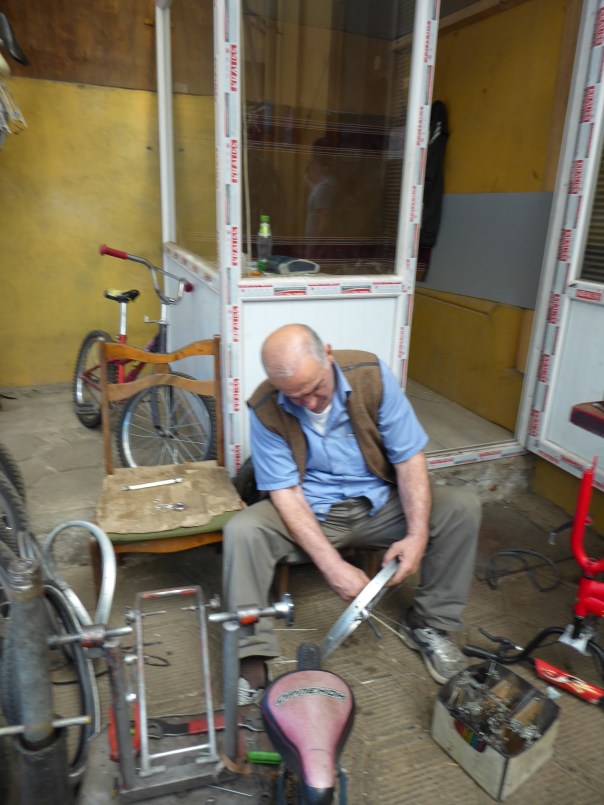
Our wheel being rebuiltNext we had a prolonged series of debates about how to fix the wheel. A discusion in the international language of “bike repair” between me and an elderly bike mechanic sort of reached a consensus about a new wheel, new spokes and the existing hub. Then they tried to make me pay $200 for a new wheel and we had a stand off as I told them in no uncertain terms that Fred was paying. He kept suggesting that a decent hammer would sort it but was persuaded – after much debate – that this was not going to be a way of making good on his faults.
This took hours of course because time is not a precious commodity. Eventually – walking between multiple shops – we found a rim that would be just about OK (not the right number of spoke holes but just about OK) and a man with the spokes and ability. Money – about £20 in total I think – changed hands for the wheel and it was then taken to the wheel builder, who set to work.
Then we unloaded all our stuff from Fred’s truck and off he went, leaving us in the hands of the wheel builder. It was then a good hour before the wheel was ready. We tipped the wheel builder and thanked him profusely. I just hope this will get us to Tblisi. We will have to be careful but at least we are back on the road
In England, Fred would have given us his insurance details and left us to sort the problems. Here he caused the problems and so he took responsibility for sorting it – even though it took several hours of his time. That was expected and required, even though he knew he would never see us again.
The bike shop negotiated hard to get a good deal, then used a good deal of skill and ingenuity to solve a problem when they did not quite have the right materials. They were more flexible than many in England. So we got back on the road when, perhaps, in England this would have not been possible.
We had booked an apartment and found it without difficulty. No water or wifi to begin with but both these problems were solved and we collapsed. All manner of options had gone through our minds during the day but we had more or less got back to normality.
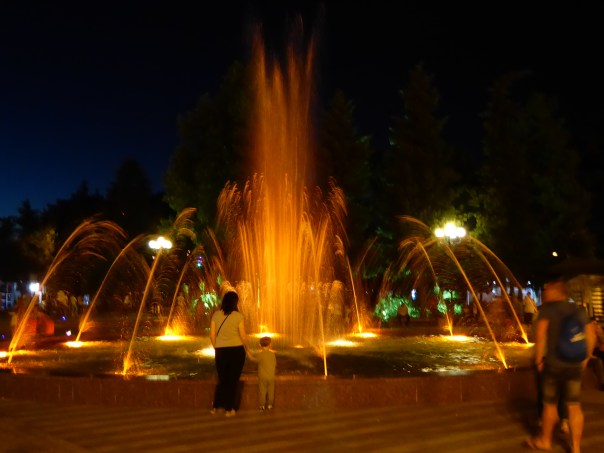
Butumi fountains at nightBatumi exists to serve the needs that are not permitted in Turkey and Iran – gambling casinos abound and other temptations for instant gratification are well catered for. Few women wear headscarfs and this feels like a slightly shabby Mediterranean resort. Money has been spent in the city and there are some impressive buildings, but there are also lots of underdeveloped areas. It’s all lots of fun as long as one does not look too much below the surface.
We went out for a lively meal in a lovely city. This place is very, very different to Turkey. I will leave descriptions for another day as this blog is already too long, but a couple of beers and back to bed.
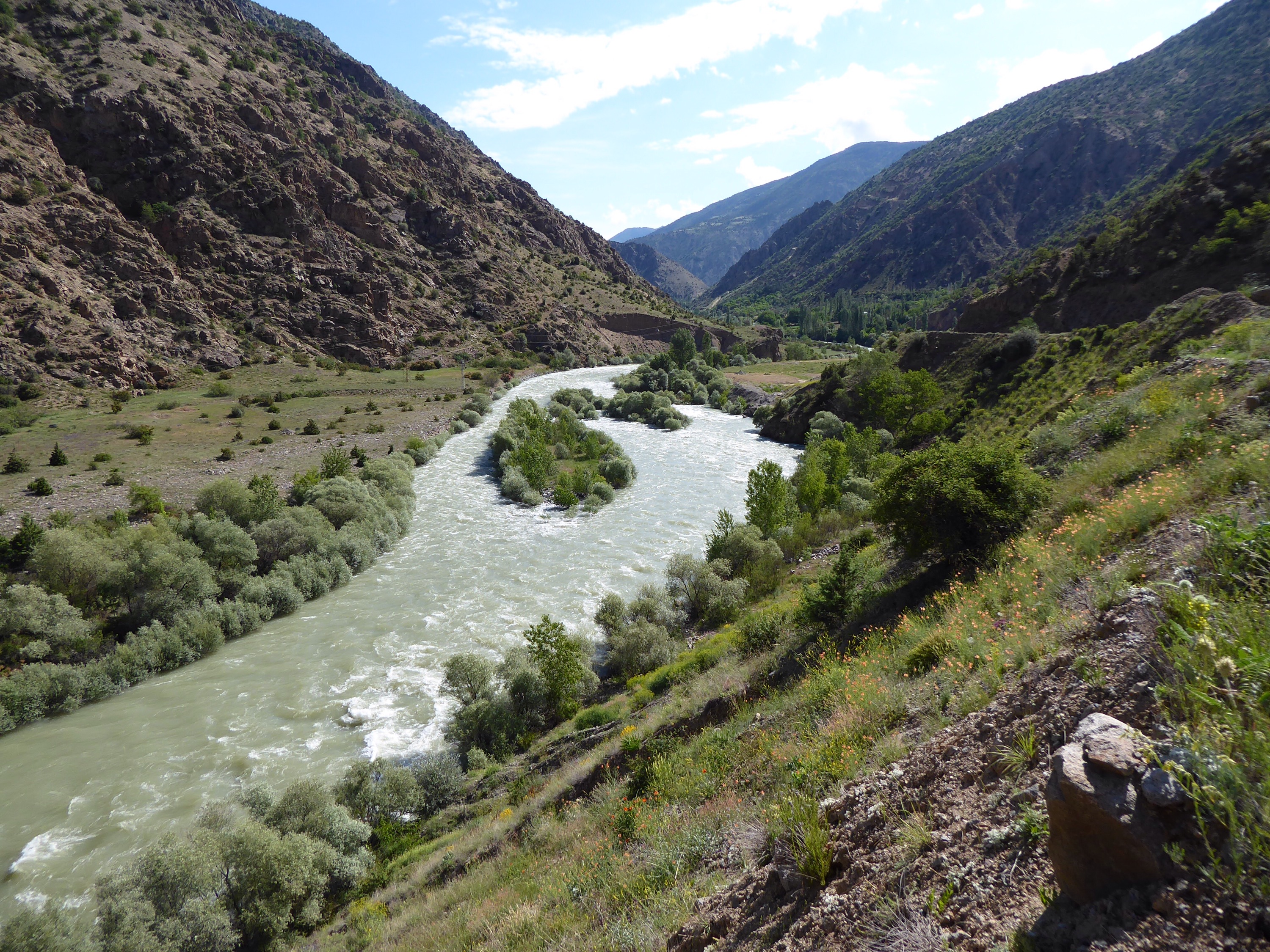
Today was definitely a day of 2 halves. Our first 10km followed the churning Curah river, exhibiting why it is one of the best white water rafting rivers in the world.
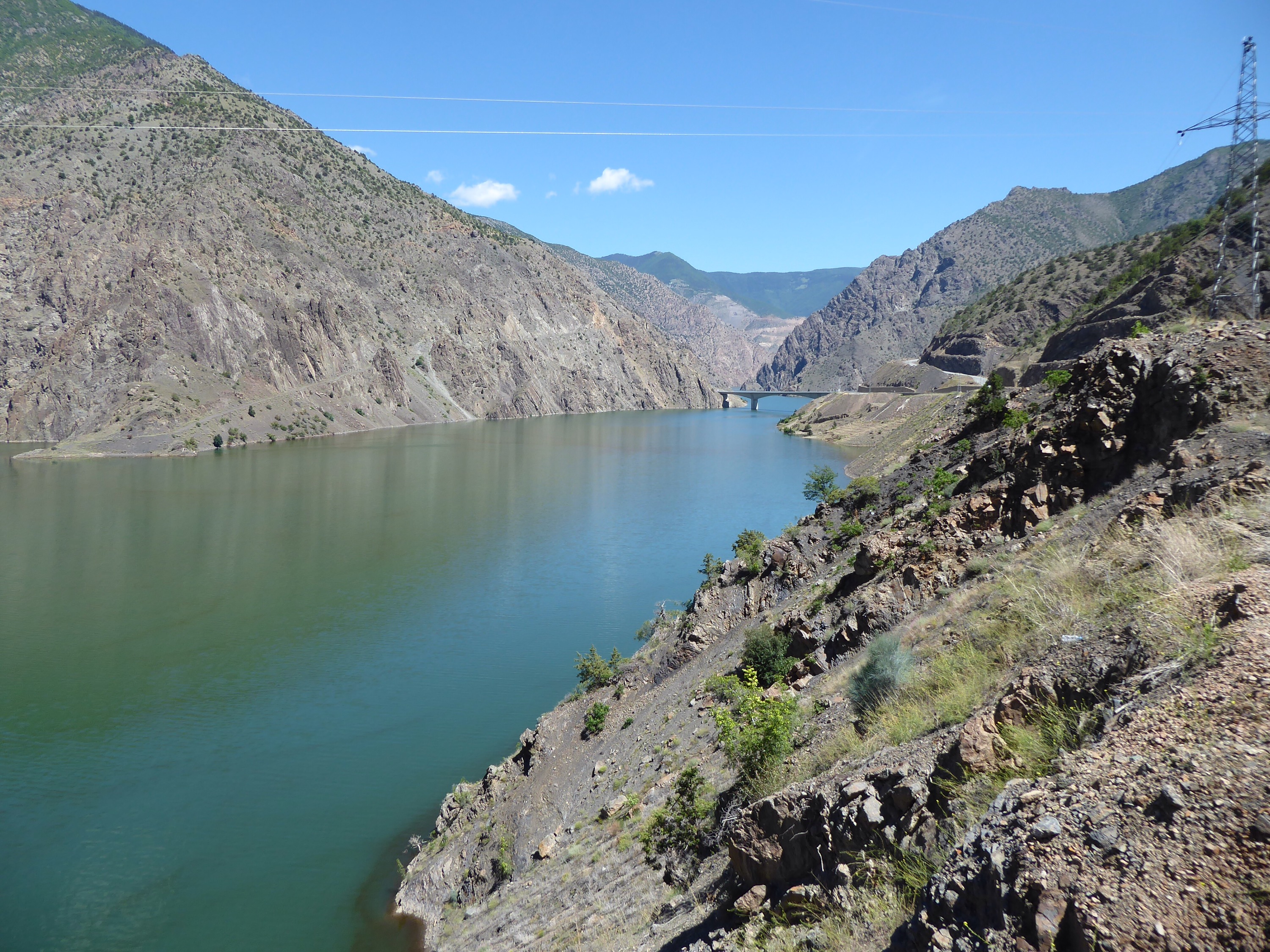
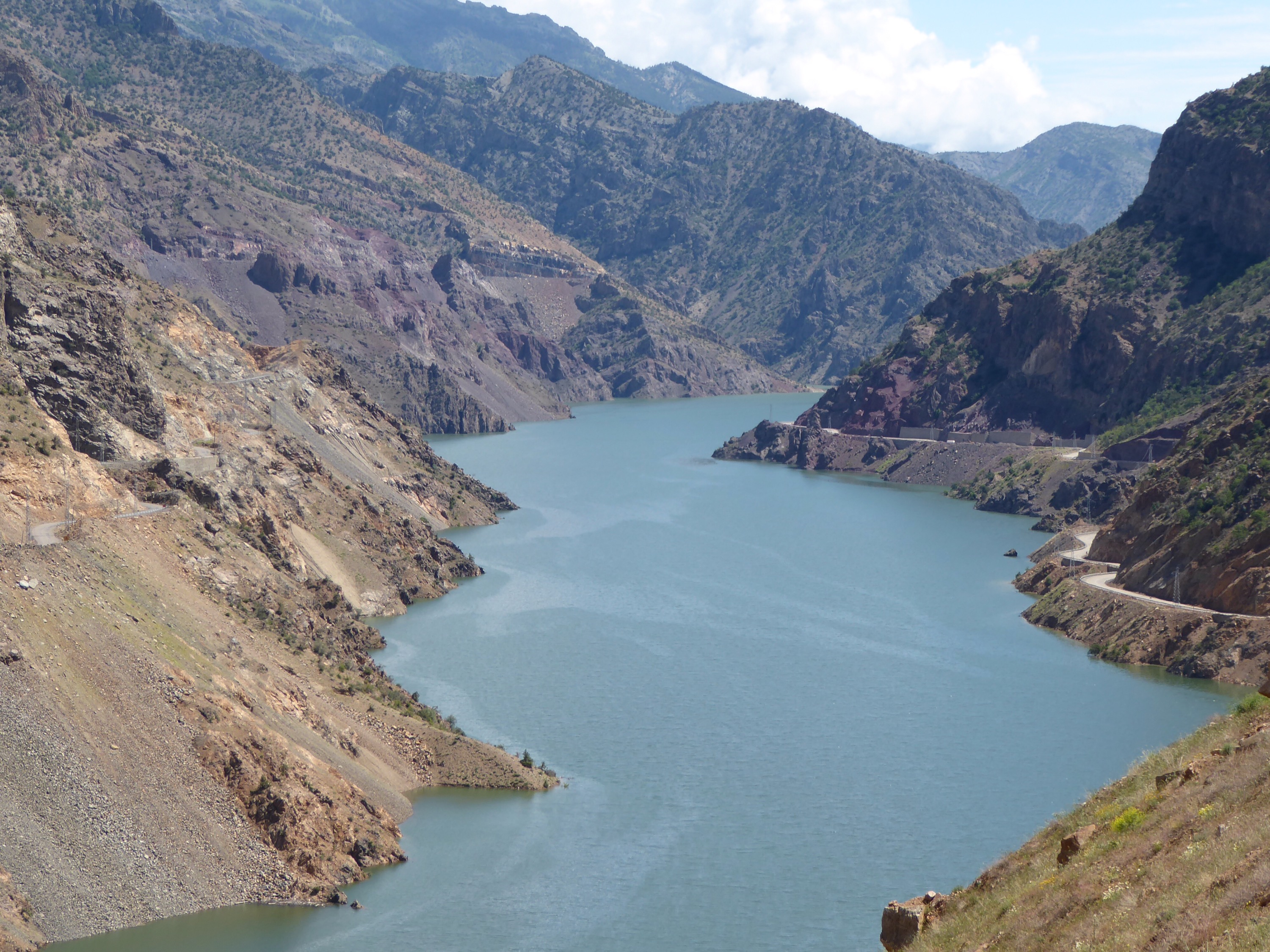
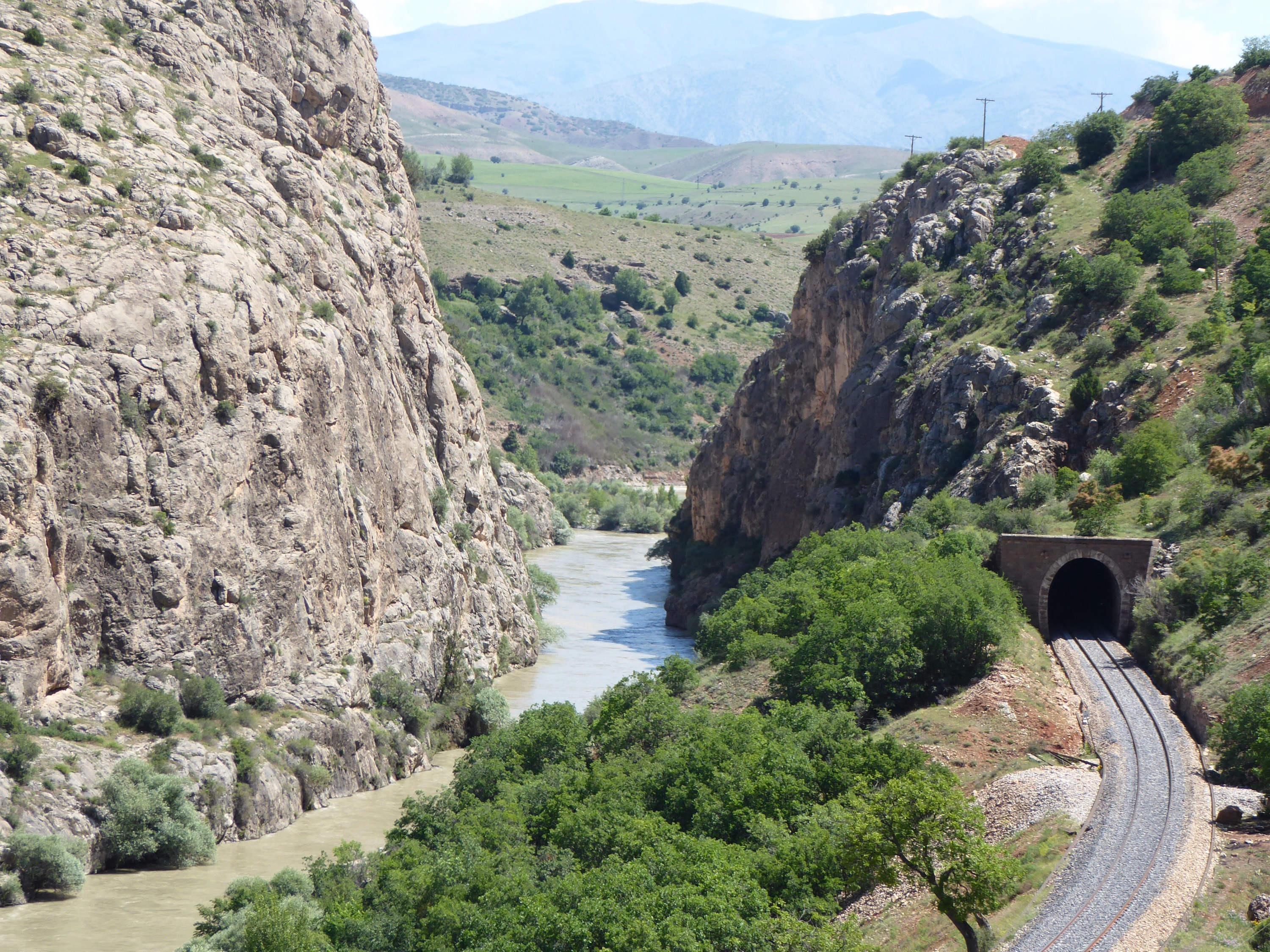
We then reached the point where the massive system of dams backed up and the river widened to a turquoise reservoir again, as we had seen before. The old road sank beneath the waters and we turned into our first tunnel. Having lost the old road, the road builders appear to have taken a direct approach and just blasted the road through the sheer walls of the mountains.
We passed through tunnel after tunnel, one leading almost directly into another and lasting a few hundred meters to a couple of km each time before glimpsing sun again.
The tunnels were well lit and we had full sets of lights. The worst thing for cyclists abut tunnels is the incredible noise reverberating round, Even a motor bike sounds like a combine harvester is descending upon you. Luckily the road at this stage was quiet and so mostly there were no vehicles or only one as we passed through each tunnel. It was like travelling through a massive engineering project. We read that there were more than 40 tunnels but towards the end there was evidence that we were going through new tunnels so over 70km there were probably 50 tunnels.
After about 30km we saw the first dam. Beyond there were signs of massive works still going on and we saw a digger perched precariously high on a steep hillside, digging out more tracks. We saw a bit more of the reservoir as the valley widened out more and saw the signs of half sunk villages, the practical result on peoples lives of these enormous projects.
There were sporadic bits of roadworks and evidence of yet more tunnels being built to speed the traffic along. By one workers compound we heard frantic barking and I was just thinking “I hope that dog is chained up” when it flew out of the gate. David had just gone past and as I veered round the dog with a completely instinctive burst of speed that would have made Usain Boult proud, the dog took a lunge at my trailer and I felt it topple over. I managed to stay upright and come to a halt and luckily the dog was so surprised it also came to a halt and although it kept barking it kept its distance. David got my trailer upright and we beat a hasty retreat. This is the only dog incident we have had on our trip so far. Of course the occasional dog has barked (our dogs still bark at the postman very day after all) but we have had no chasing or snarling. I was just so relieved it lunged at the trailer and not my leg or it might have been a different story.
Just before Artvin we saw the main dam – it was HUGE, an incredible engineering job. Having seen the beauty of the normal mountain river with its varied habitat I can see how these dam projects are complete heartbreak for environmentalists and have a lot of sympathy. But I can also see the incredible hydroelectric potential, which after all provides relatively clean energy, and realise I can’t consume energy without consequences. Strategically Turkey needs to be more self sufficient in energy and less reliant on its eastern neighbours in Russia and Iran so I can see why the die was cast in the way it was.
At Artvin we had done 70km by lunchtime. We pulled over to a cafe near the bus station which in spite of Ramadan was serving food and tea. We had a heavenly Tost (toasted sandwich) – the ‘special’ of the house – or rather we said yes to everything that could possiby go into a toastie (and more). It was delicious!
That set us up well for the second half of the day. The valley was much greener and full of trees – we were after all now down to an elevation of 200m. It was a warm cloudless day with bright blue sky. Before long the effects of the next dam were evident as the river again widened to reservoir. We were now on a much mainer road- a main route from the east to the black sea coast. The serface was good, which was a real treat. It should have been marvellous except that there was a ferocious headwind, the first of this holiday. At times the gusts almost brought us to a standstill. So the next 25km to Borcka was like constantly going up hill and very tiring.
We still reached Borcka in good time. Here our road left the Curah river and we had one last pass over the mountains to reach the Black Sea. That was to be done tomorrow but looking at the map we could see the road followed a smaller river so carried on out of town to look for a camping place by the river. Unfortunately the valley was narrow here and every slight flat piece of land was occupied by a building, or the road had been built up beside the river and we could not get down to the water. Km followed km and we were starting to wonder whether we would end up in the tent in a small layby!
A small picnic area came up with a tap. No where there but opposite was a small grassy track. David explored and as the track turned the corner it was flat enough to pitch a tent. No one seemed to have
The stats make this seem a fairly easy day. After all we were following a river downstream for less than 50 miles! But there are times when stats are misleading – this was mega tough but also cycling amongst some of the most brilliant scenery I have ever experienced. So overall a good day – one to remember when I am sat at my desk back in London.
We woke in our lovely campsite and strolled around packing up. We thought it would not be too tough and so ambled in our packing up.Then off about 8.15am and the first 20km were delightful – gently downhill with the occasional rise. Steep cliffs on either side of the valley.
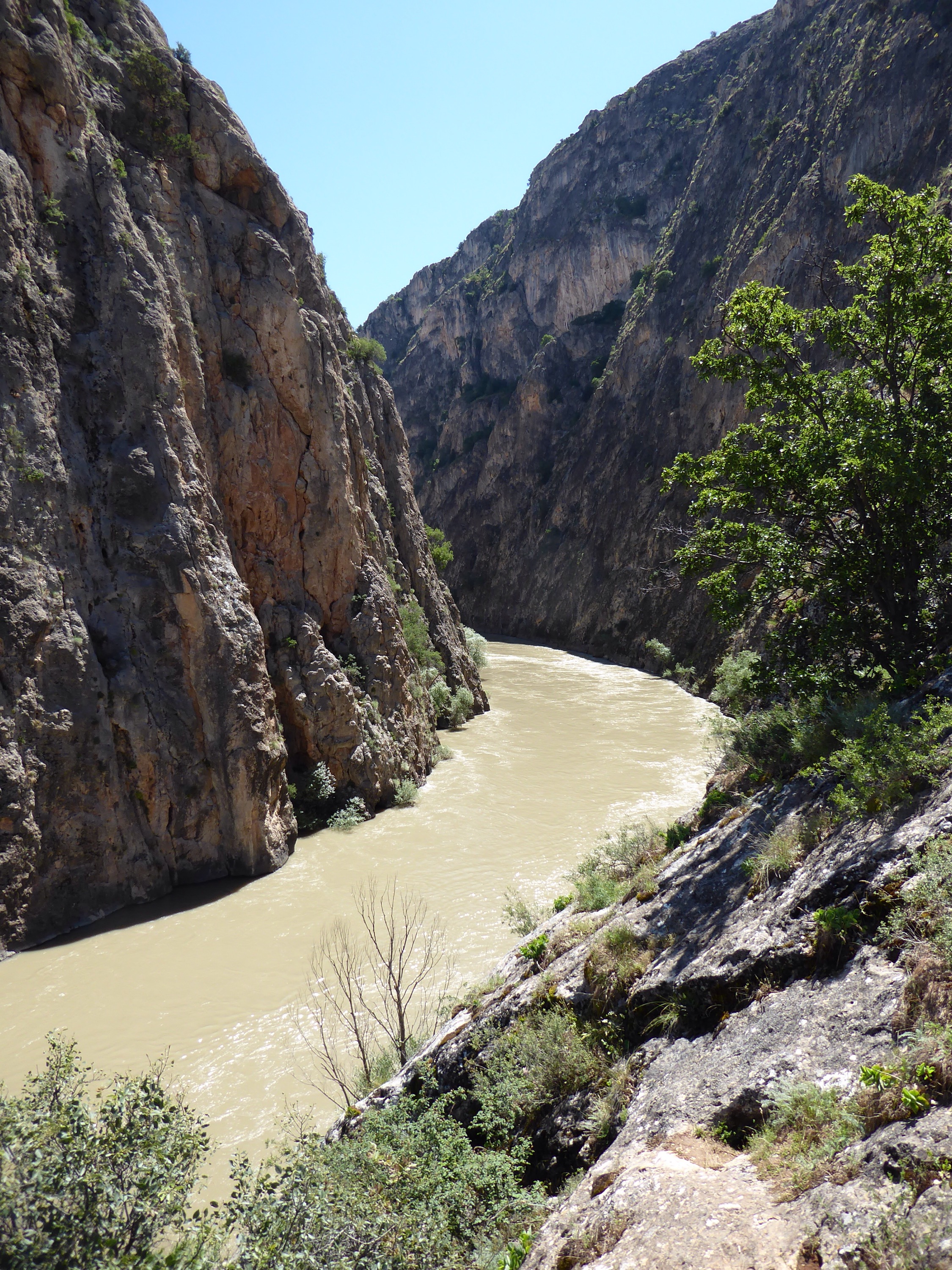
Then we reached a part where the road on the map and the Garmin indicated a route under water. The valley had been flooded and a new road was partially completed on the side of the road. At one point the new road rose up the side of the valley, reaching a point 100m higher than we had camped (30km upstream). The ups were steep and the brakes were needed on 10% descents on a dubious surface. But the rock faces on each side were stunning.
We eventually reached the dam and saw a huge wall of white water falling from the top in an artificial waterfall.The electricity generation potential is huge.
But the real challenge was yet to come. We were back on the old road now and followed it as it clung to the side of the valley. “Road” is probably an overstatement. Part was paved but a good part was not and of hugely variable quality. Some were hard tracks and other were soft mud. The steep climbs were often on a UK mountain bike type track.
However, unlike a UK mountain bike track, there was often a precipitous drop off one side and always the possibility of a lorry coming the other way, slightly out of control. The mental aspect of cycling such a road is as demanding as the physical aspects. It is slow, tough on the bikes and trailers and exhausting. But the scenery was stunning and made us wonder how many cyclists had ventured this way.
The answer is probably (a) very few, (b) mostly on mountain bikes and (c) perhaps never with trailers. The majority have it on the sanity stakes but, having “conquered” the road, we felt we earned a beer or two (although that may have to wait until we get to Georgia as this part of Turkey is de facto “dry” despite the rain).
Eventually we got to Yusafelli, which is a hiking centre for the Karkar mountains, although we are not yet in hiking season. We booked ourselves into the Greenpiece Pansion – the “i” avoiding intellectual property issues I suspect – and collapsed.
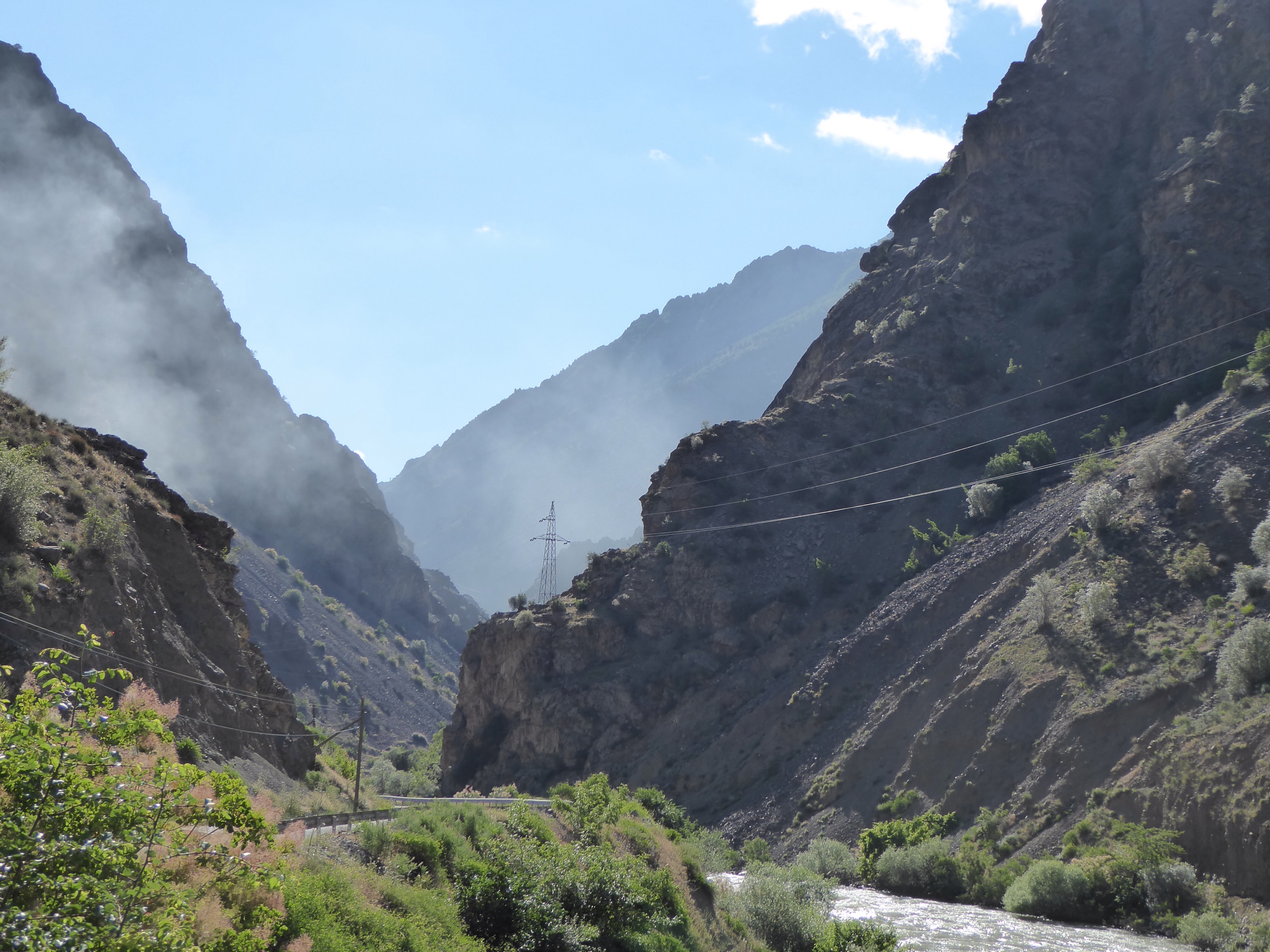
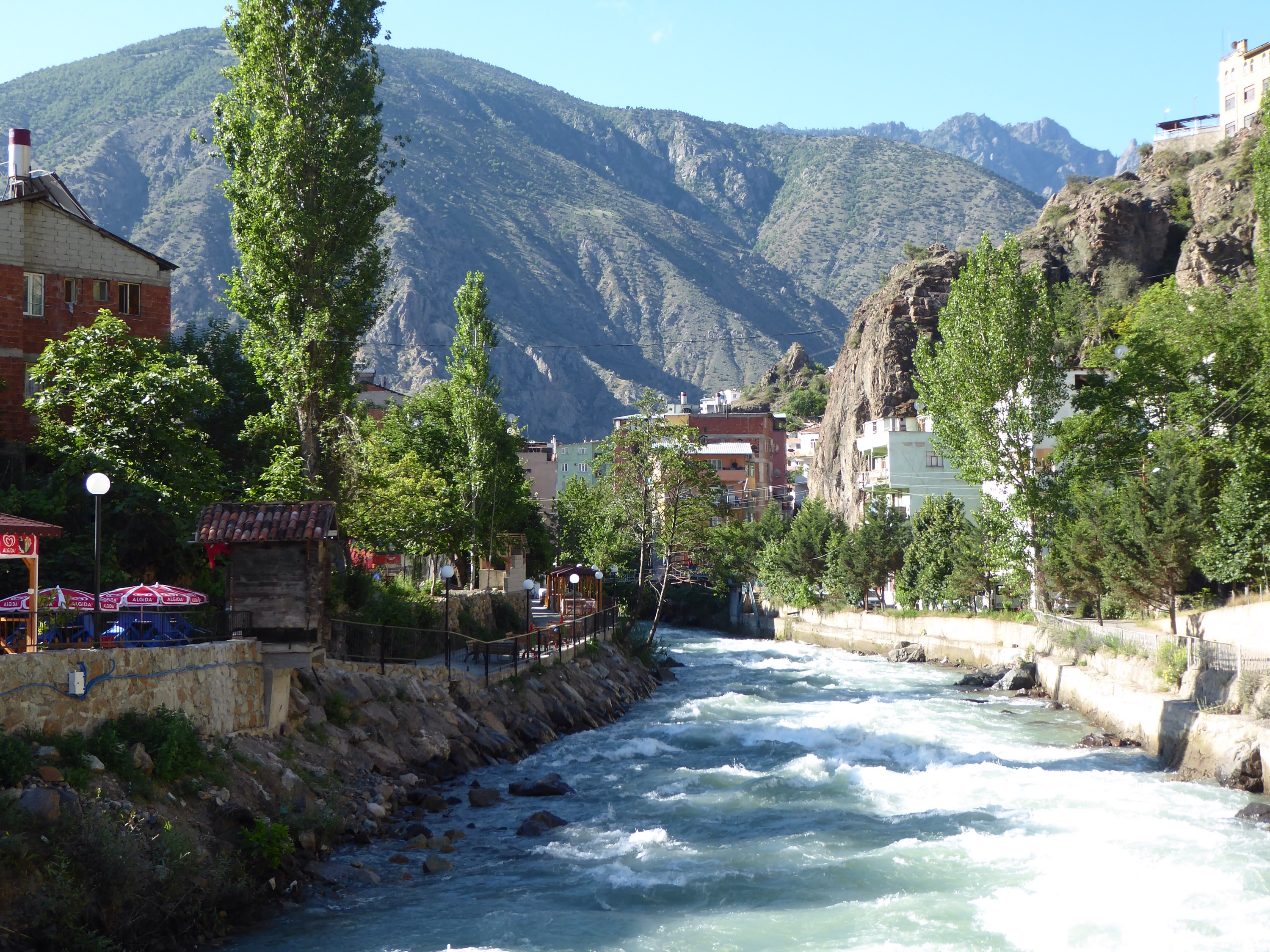
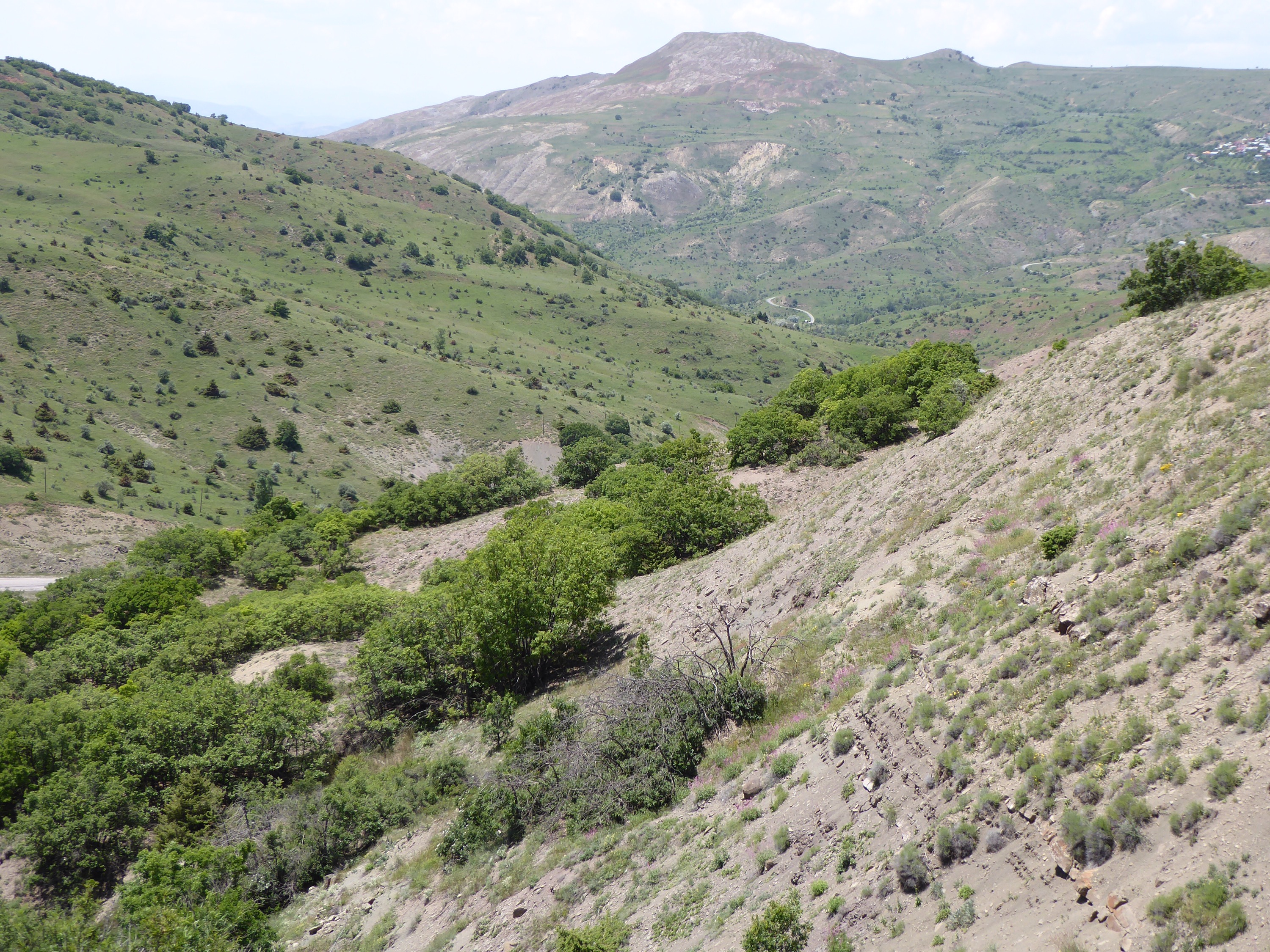
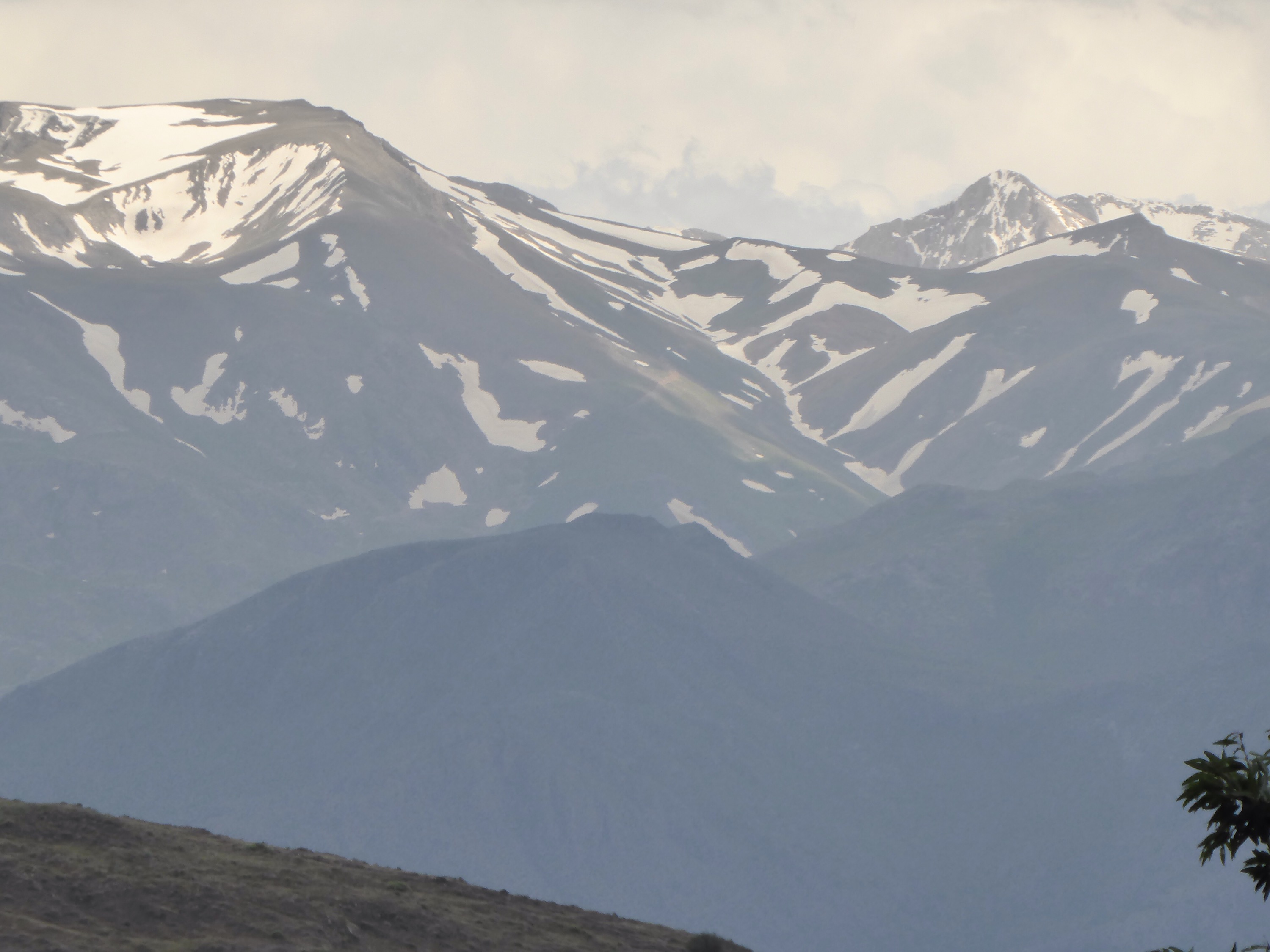
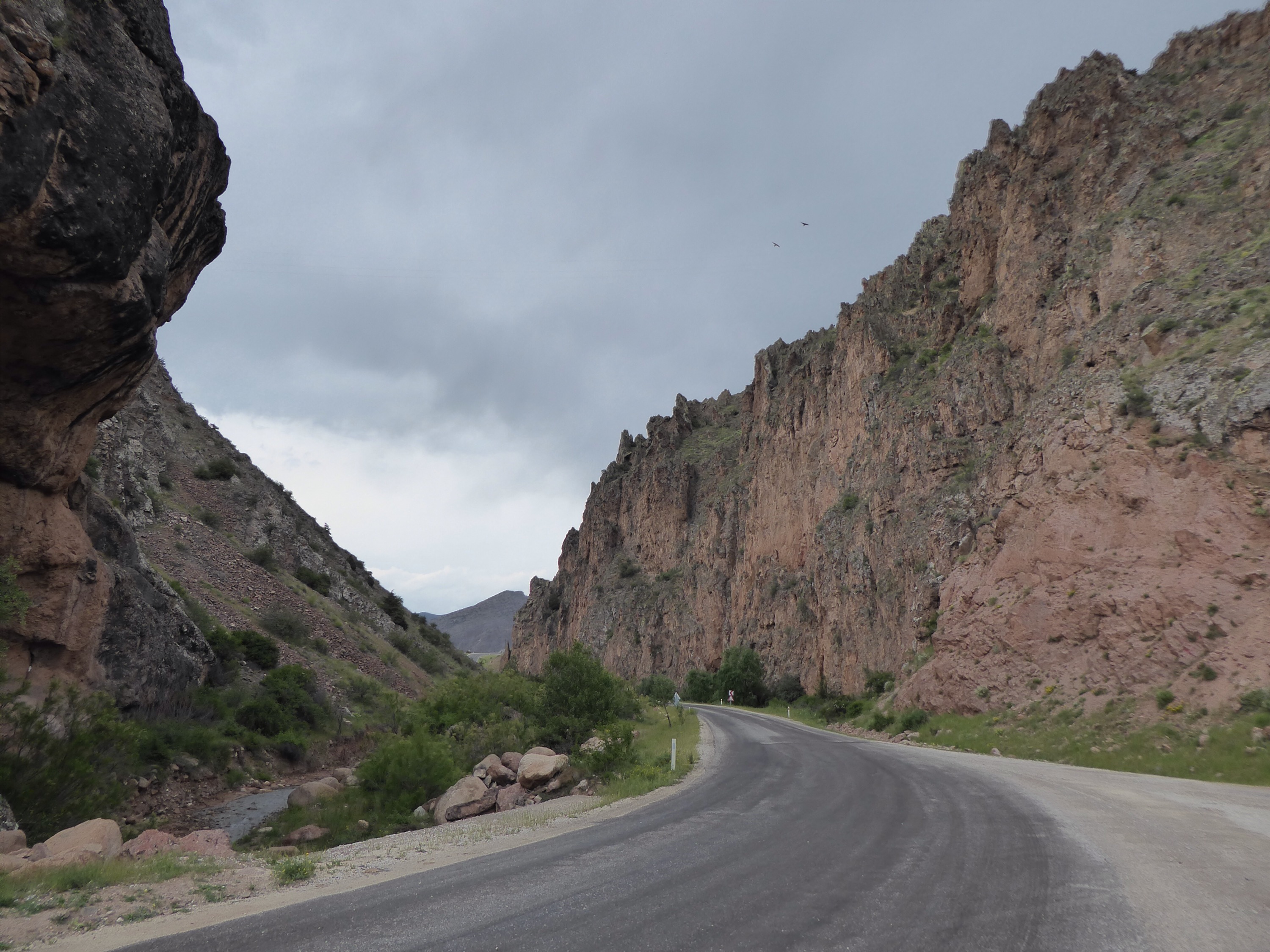
The photos will tell the story of the scenery and our legs feel the effort of getting here.
(Bernie) What a difference a day makes. Yesterday I was fed up with bikes, fed up with mountains, fed up with being cold and wet, fed up….well you get the gist. Today…well it was one of my favourite days so far. The scenery was fantastic – we will hopefully let the photos tell the story.
After a good meal at the hotel the previous evening as the sun went down (7.50pm and even the staff who had been fasting sat down to eat then, which was nice) and a good breakfast we were ready to go after our unschedule half day stop yesterday. Cloud soon broke up to a sunny day as we took the road out of town beside the Curah river, which we will be following for the next 3 or 4 days downstream. The river turned a sharp right eastwards and into a beautiful green valley. Again hardly a car on the road as we gently cycled through pretty villages.
Bernie – attempting to thow herself into the river
The river then plunged into a gorge and the road had to divert going up and down very steeply but affording magnificent views. We stopped and brewed up coffee by an idyllic mountain stream before battling up two more steep hills – the last so steep at the bottom we had to get off and push for the first time this holiday.
The road then plunged back to meet the river and this time, as it entered another gorge, the road stayed alongside, still with some short sharp ups and downs. Just as I was saying my legs were feeling empty and in need of lunch there appeared, as if a mirage, a little picnic place by the road complete with table, benches with cushions and even a shed with a toilet, if you were brave enough to open the door, which we were not. Even a light sprinkle of rain did not deter from the lovely spot.
After our picnic, the skies cleared to a beautiful afternoon, the valley widened out so the terrain was easier, although still beautiful. We joined a more major road. On the corner was what would have been a very timely cafe, It was full of men who gave us a good stare, but being Ramadan no one was drinking or eating anything. So although we very briefly toyed with asking if they had tea, we decided it would not be appropriate to sit there drinking, even if we were offered some. Next we came across an incredible road widening project. The road alternated between amazing new tarmac and bumpy churned up mud but it was almost all gently downhill following the river so we did the last 15km to Ispir in good time.
At Ispir we left the more main road again, still following the river. We stocked up on provisions and headed out of town to find a camping spot. The road and river immediately entered a steep sided ravine with towering walls. The river was more of a lake so there was clearly a dam somewhere and certainly not a flat spot to camp on in site. After a few km the dam came into view and after a tunnel (the first on this trip) the river trickled back to a normal size river. The ravine walls were still huge but after another couple of km we passed a perfect camping spot, a small track down to a grassy expanse with easy access to the water.
We pitched the tent while watching the last rays of sun light up the cliff walls which still surrounded us. A stunning setting to end a stunning day.
Today was the day that we admitted we were nearer to aged 60 than 30. The night was interrupted by rain showers and, at one point at about 4am, I wondered if our visitors had been right and it would have been better to have moved to higher ground. However the rain was not that heavy and it would have needed a biblical type flood to remove us, so I went back to sleep after a flood inspection.
When we woke about 6.30am it was light and the rain had eased off. We were dry and in a good mood although the ground around the tent had large puddles. So we drank coffee and packed, then set off with the first aim being Bayburt, 60km away.
The sky was threatening but it was not actually raining. That soon changed. Most of the ground between Kosa and Bayburt is a high altitude plateau, between 1650m and 1700m. It was fairly flat after the initial climb up to the plateau, but then the rain came down in torrents. We had rain jackets, over trousers, gloves and were still soaked to the skin. It was cold and the wind swirly around, but mostly seemed to be blowing the rain into our faces.
It was like cycling through a rainstorm in a cloud for 50km – and that was because we were cycling through a rainstorm in a cloud for 50km. There was nothing much to see because of the clouds and lots of passing vehicles that sprayed up surface water into our faces. If I give the impression that this was not the best morning of the trip then you get the picture.
By the time we got to the town of Bayburt at 12.30am we had had enough. We’d covered 60km and were feeling our ages. So we stopped at the first hotel (exorbitantly priced by Turkish standards) and gave up for the day. If we had been 30 again we would have shrugged our shoulders and pressed on, but life has taught us some basic rules and credit cards are not called flexible friends for nothing.
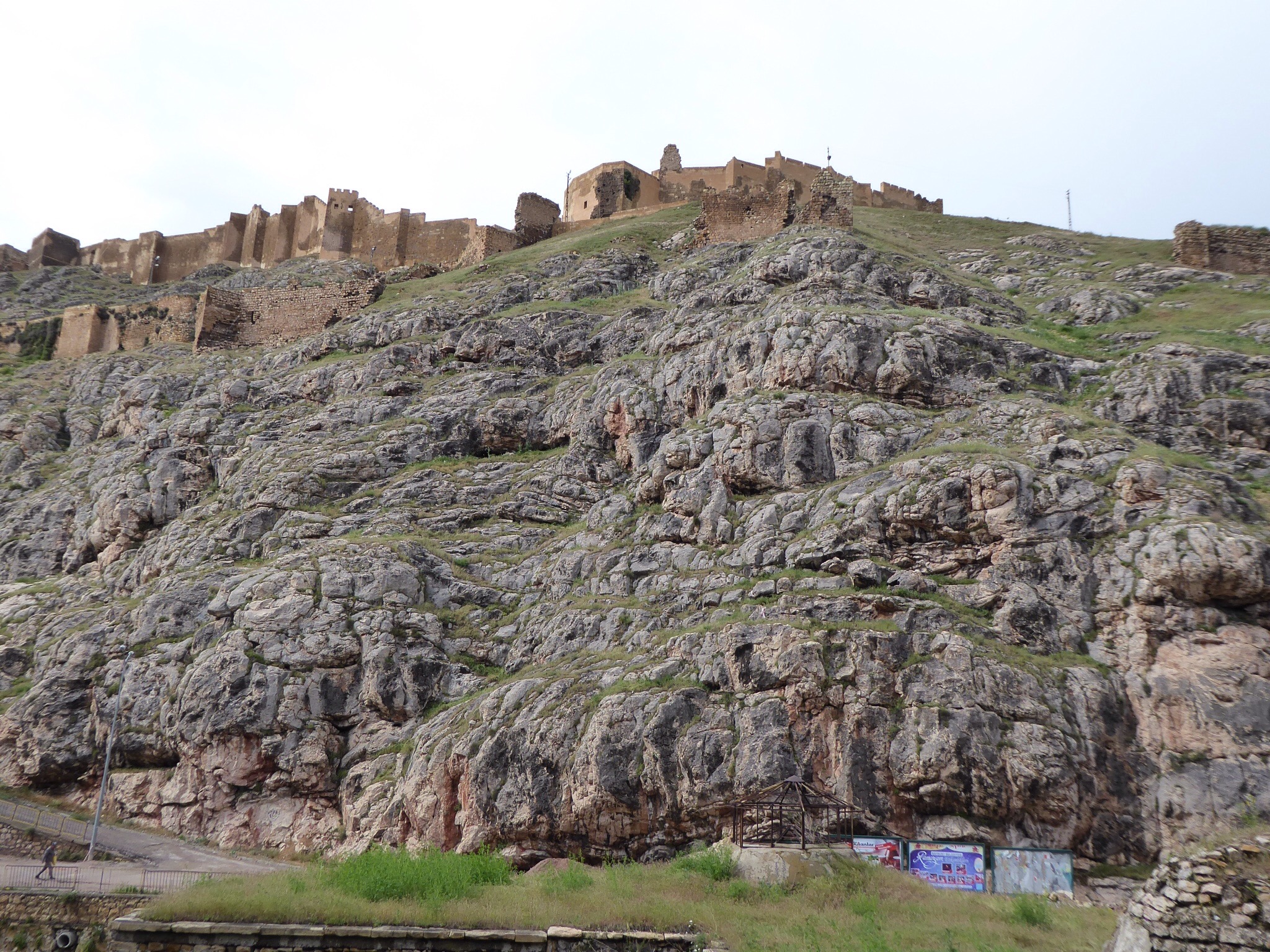
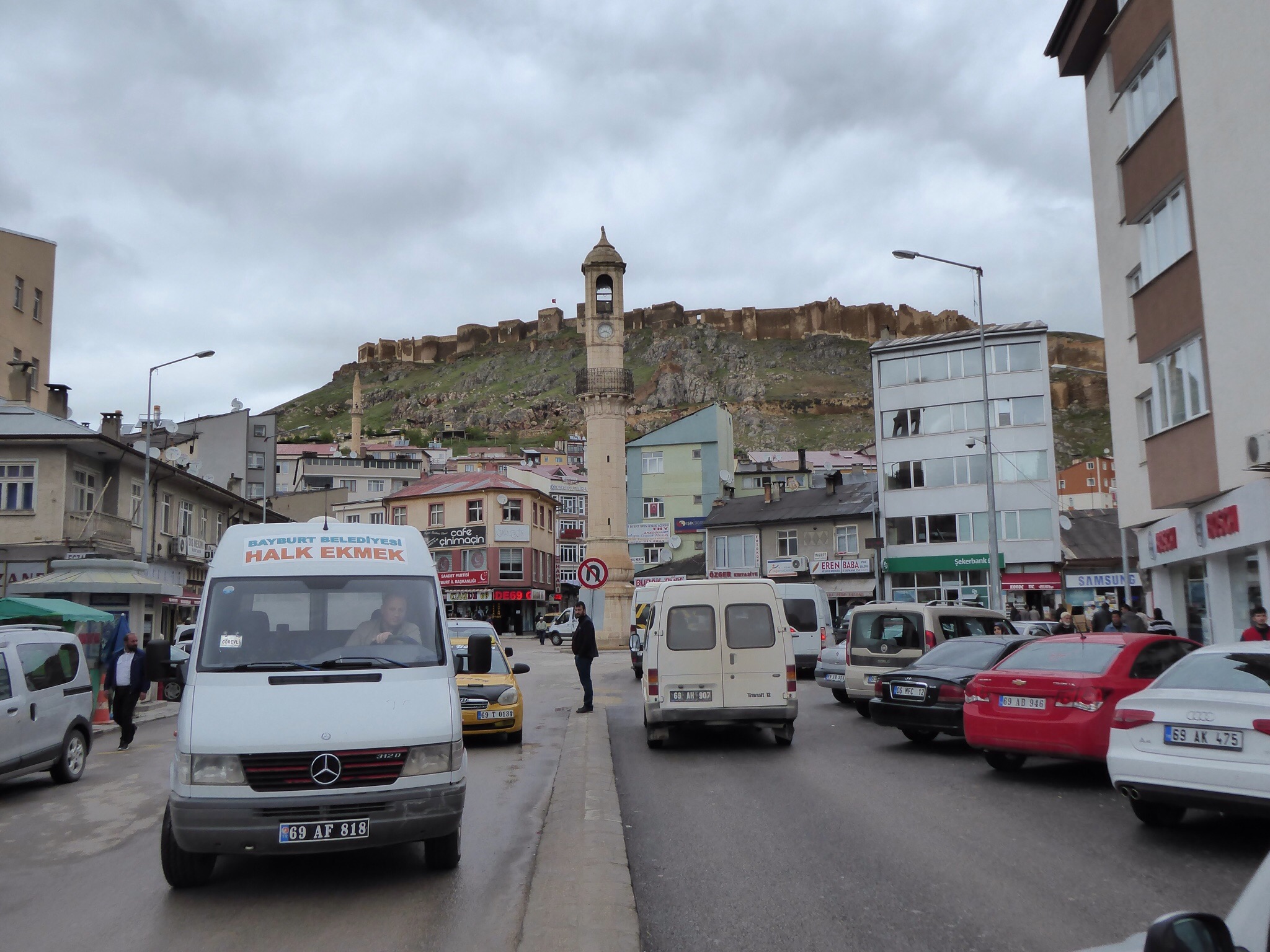
Slowly feeling came back to our fingers and feet – courtesy of a hot shower and a double duvet – and we started laughing again. Later in the afternoon we visited the town (on foot). There is a river in the middle and the town made an effort to make this a pleasant feature, but it was a bit dowdy in the overcast conditions. The centre is dominated by a wonderful castle – or it would have been wonderful if the Russians had not destroyed it in 1829 during one of the endless wars that affected this region. So there is a large mount of rubble on a high point above the town – best seen from afar. We plan to go back to town for dinner but will have to wait until after sundown as it is Ramadan and we don’t want to give offence. The town has a variety of splendid eateries but they were all empty (open but empty) during the day.
We have 4 more riding days in Turkey and then cross to Georgia. We are back in the mountains but at the moment – fingers crossed – the forecast seems good.
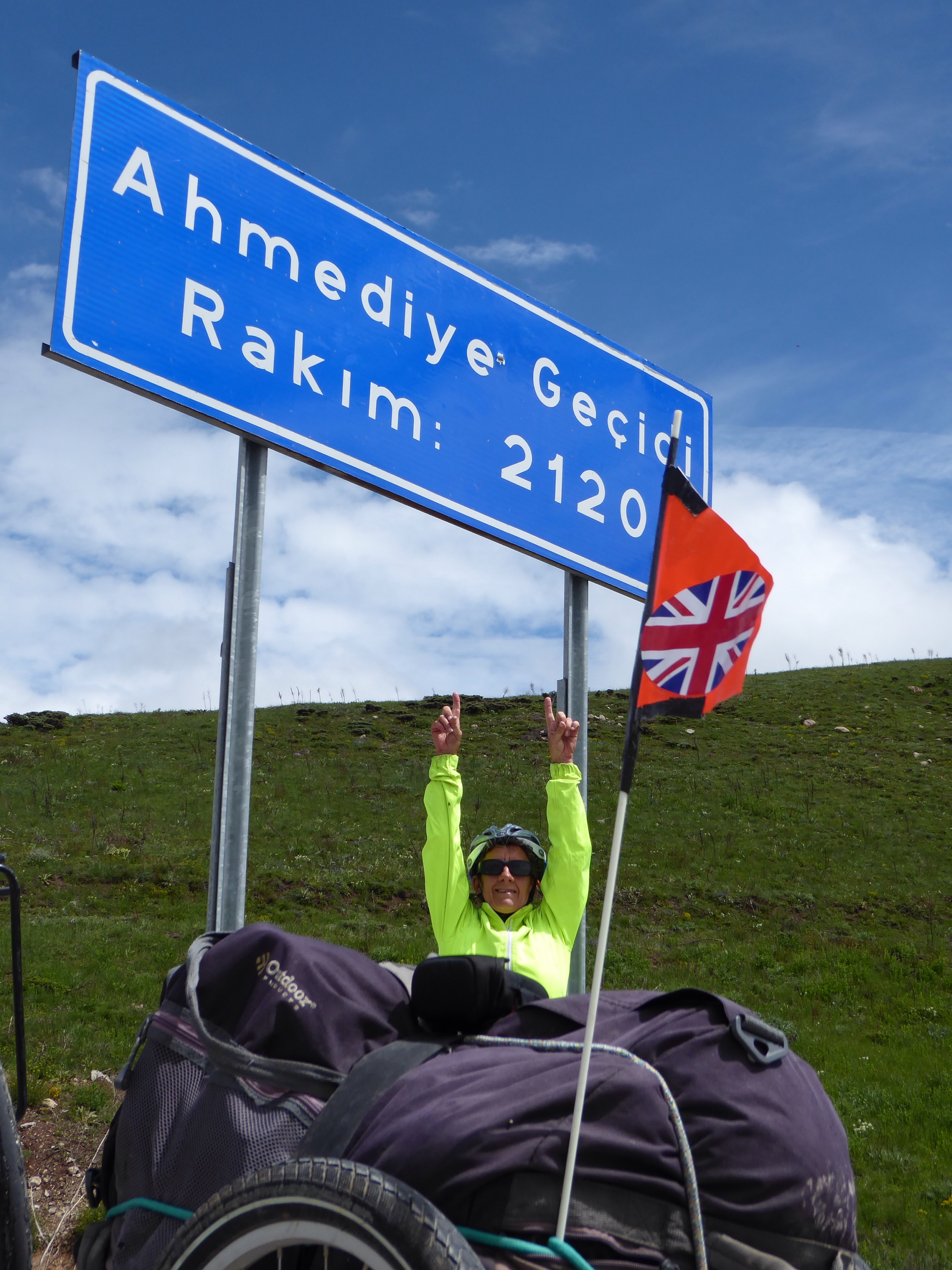
Time to leave our spacious apartment and comfy sofas to get back on the bikes. We both felt well recuperated but slightly in trepidation as we knew we had a big climb up the the highest point of the holiday. We were off in good time on a rather cool and cloudy morning. We had a slow steady climb out of Erzincan which ticked off 150m climbing without too much difficulty before turning on to the main road up the mountain (main being relative – it was a good wide road but again with not much traffic.) The road climbed steadily up a fairly featureless valley. Some steep bits but none too steep so we made good progress. For the first time this holiday I was feeling strong but towards the top David’s stomach was not feeling too great but he pressed on and we topped out at 2120m – the sun even came out.
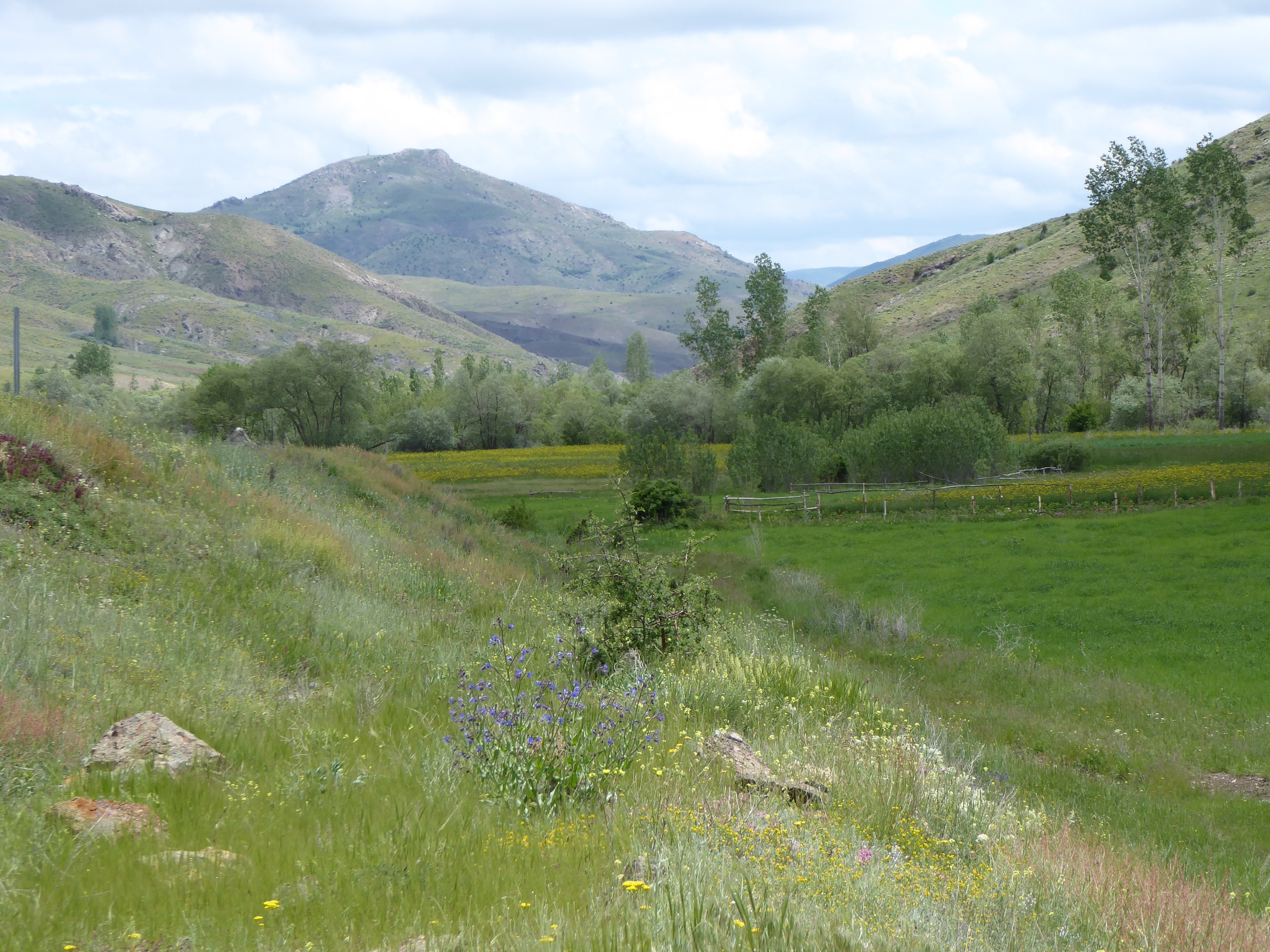
We immediately crossed over into a greener landscape with more trees. There was a short period of steepish descent and then amazingly 40km of very gentle downhill following a river valley which gave our legs a good rest. At one point we passed groups of children waiting for a school bus (it was lunchtime), causing much excitement and waving. After we passed, the school bus picked them up, passed us (more waving from the bus) and then dropped them all at school on the same road, just as we passed again. More frantic waving as we felt “adopted” by these enthusiastic children.
We then rolled into the affluent town of Kelkit (as far as we could see) and into another valley. We were feeling partial to a cup of tea but being Ramadan several cafes were closed. However, as always, someone wanted to help and guided is into a side street and through some metal gates into a lovely courtyard of a small restaurant. It was filled with men who as usual gave us a good stare. Most were not drinking anything and presumably just come out to the cafes during Ramadan to pass the time of day as usual but several were drinking tea so we were able to have some reviving tea and a brief chat with someone who had worked for 2 years in a fish and chip shop in Morden!
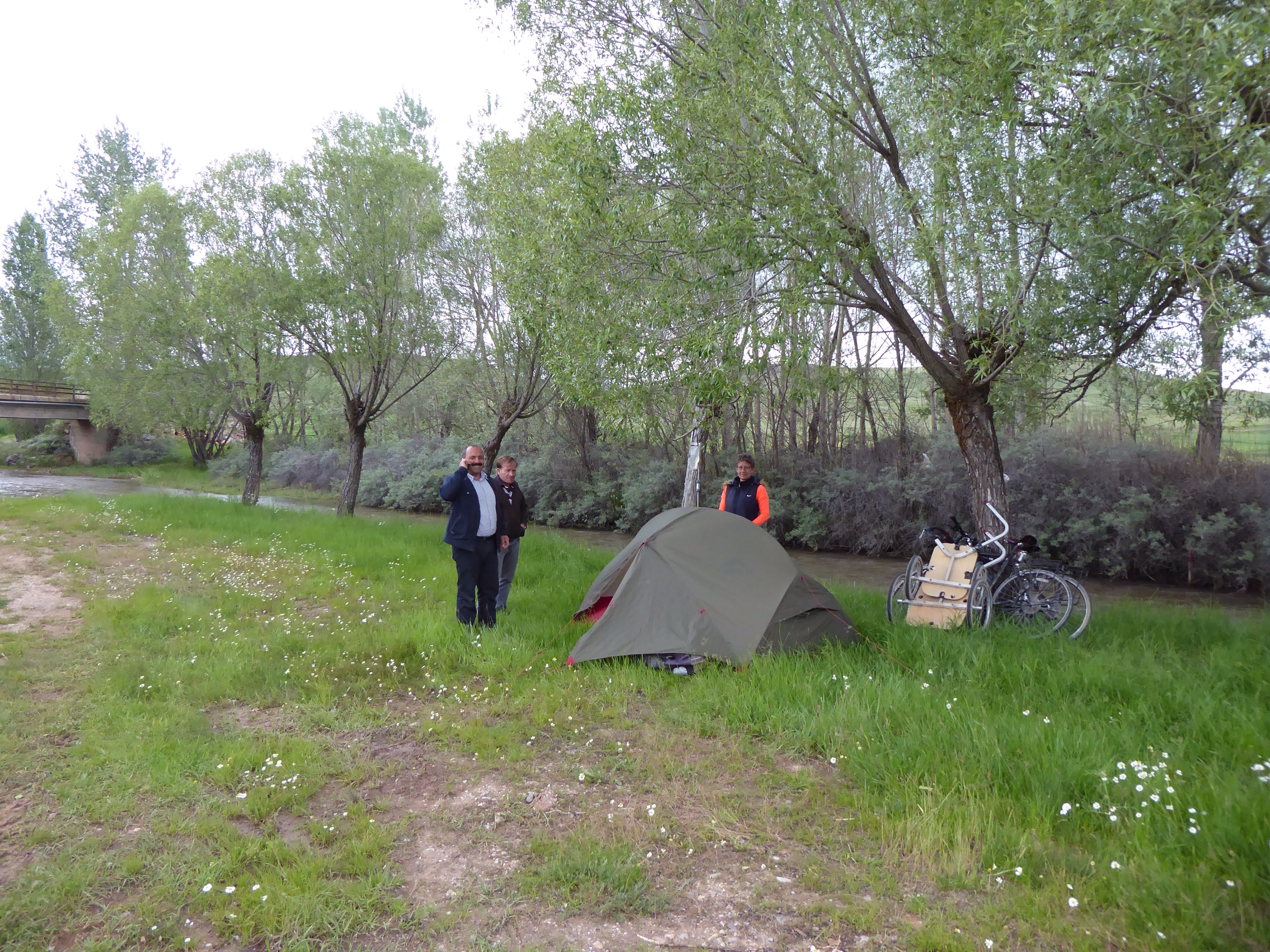
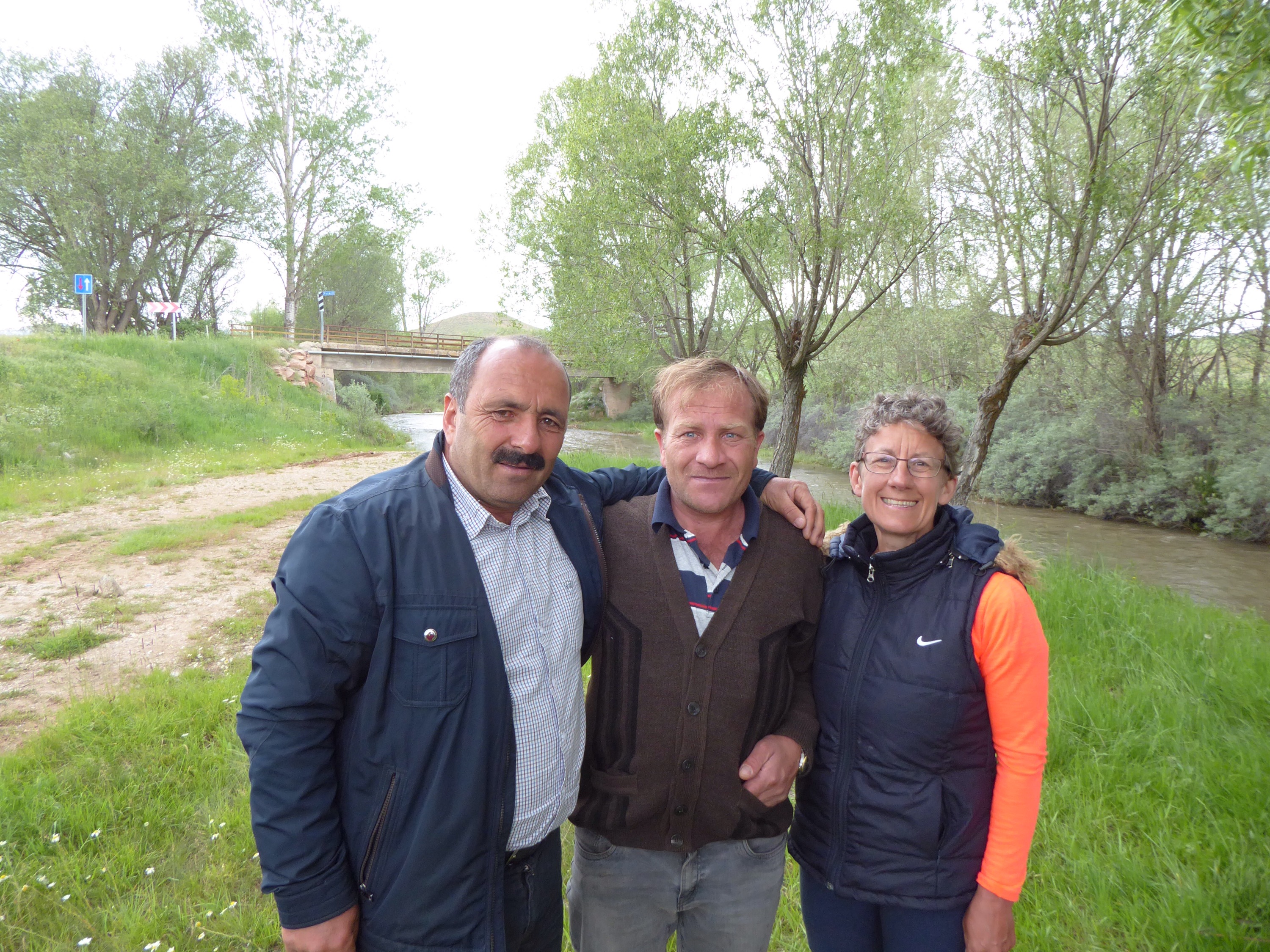
Back on the bikes we turned east again and decided to do 20km+ up the valley. We were tiring and the weather was looking more threatening and so at about 4 we started to look for a camping site and found a good spot by a stream on and sheltered flat piece of ground by a quiet side road. People tooted and waved as they drove past as we were quite visible from the road and then a car with men drew up and stopped. They were clearly very worried that we would be cold, wet and starving but they seemed reassured when we showed them the tent, sleeping bags, stove etc so we moved on to the usual topic of children and showing them photos on the phone.
We took their photos, which always seems to make people happy and eventually the went on their way. All this done with our cursory few words of Turkish. A little later a car with 3 men drew up. They were worried they we would be washed away by the stream if there was heavy rain and pointed to the opposite bank which was a bit higher. We nodded and smiled and off they went but we decided to stay put as there was no signs of flood in the recent past and although rain is forecast (thunderstorms are always being forecast) we don’t think there will be apocalyptic rain.
David cooked a delicious meal, partially on a fire he made, and we are settled in the tent with a gentle drizzle outside. The rule of not camping in the rain was broken long ago as we don’t have the luxury of other choices much of the time but it’s not so bad and we are dry and warm.
Well we did lots of nothing today, recovering well from dodgy stomachs and plotting the rest of the trip. We were tempted to cycle out to some waterfalls 18km out of town but resisted the temptation. So I can report that a new tyre was purchased for my bike, the MSR stove was cleaned, we went for a walk around this clean,modern city and bought 2 muffins and a mobile phone case (gold – but only 15TL) and a good deal of reading was done.
In a week’s time we will be in Georgia and so it’s possibly time for some reflections on Turkey. Having been here 3 weeks we have only scratched the surface (of course) but it has been fascinating. These are unscientific impressions – but I hope they both reflect and respect the country we are visiting.
Perhaps the most obvious trait we have seen is the self confidence and friendliness of the people. Our few words of Turkish are always inadequate but are warmly welcomed. Using Google translate is hit and miss but has caused much hilarity. However there is no concept here of an invited guest. We are guests in their country and almost everyone has approached us on the basis that, as welcome visitors, they will help and ensure we have a good impression of their area. There is the occasional element of “you are fine here but the bandits are in the next valley” but rarely so. Most of the time we have met nothing but kindness and a real desire to practice English (which is seen as an internationally acknowledged second language).
But there is no doubt that we are not in Western Europe. We have been repeatedly woken up for calls to prayer to a God we do not believe to exist – but the deep seated belief of a majority of Turks in Islam is ingrained in the culture. Being part of communal prayers is part of being a member of the community.
This is a country where social events rarely if ever include alcohol. It is not unlawful but is rarely seen. Tea is the predominant social drink, not Efes Pilsen (although this is a particularly fine larger in my view). There are no drunks on the streets and the country functions as a social organisation (and Turks are very sociable) perfectly well in a largely alcohol free manner.
In the West of Turkey we saw lots of evidence of obesity – as in Greece. Women in the fields were often massively overweight and it was tragic to see so many fat children. It is clearly a serious and growing problem. But there is far, far less obvious obesity as we moved East. I do not pretend to understand the reasons for this.
We also expected Eastern Turkey to be poorer than Western Turkey, but there is little if any evidence to support that supposition. Erzincan, where we are today, is a bright, modern city with shops full of appliances and adverts for an iPhone 6. It has a ski resort close by and a vast university. I have not seen a single woman in a burka on the streets, and women of all ages with headscarfs walk side by side with those without – probably a 50/50 split. There are also lots of men pushing prams (without or without spouses) but it is perfectly acceptable for a man to take children out on his own.
However it is also clear that there is political unrest just below the surface. Turkey has taken in 2 million refugees and has a President who was elected to a largely apolitical office and is now moving to become an executive president. The tensions between the secular state and the (former) Islamist president are clear. Keeping good relations with the West and with Russia is seen as important, with the latter needing some urgent repair work.
Human rights concerns, and in particular the rights of Kurds, are a massive issue although the present government is seen by many as having a “divide and rule” approach, with an increasingly Islamist slant to its politics. There is, however, a strong desire to join the EU and, as a result, a vital need to show effective action in tackling both corruption and human rights abuses. It is a paradox that Turkey is trying so hard to get into the EU just as some in the UK are pulling in the opposite direction. Perhaps it is easier to see the value of EU standards from here than it is from London.
Tomorrow we have a 1000m climb to begin with so we’ll get an early night and hope to be refreshed in the morning.
Having spent almost 11 hours horizontal (although woken my an exceptionally loud mullah) we hoped to feel revived but both of us still felt tired with dodgy stomachs. Today is the first day of Ramadan, which may be why the kitchen was locked, so we ventured out to try and find a simple breakfast. Whether because of Ramadan or Kemah just wakes up late, all but a few shops were closed. We found somewhere for a cup of tea (where they again refused to let us pay for it) and brought lemonade, dry crackers and dried apricots. Sounds an unusual breakfast but was what our stomachs felt could manage and was the best available.
This time the road along the Euphrates river did exist and the 50km along the river to Erzincan took us through spectacular scenery. Some of the inevitable ups and downs were pretty steep but there were flat sections, quite a novelty after the last few days. The sun was bright, blue sky and still snow tinged mountains so it was a lovely morning’s ride.
As we got towards Erzincan though David began to feel worse and we resolved we would have a full rest day tomorrow to recover enough to carry on into the mountains. We had booked an apartment very reasonably priced and right in the centre of this a pleasant modern city. It is a modern city because the original city was destroyed by an earthquake in 1939 which was so devastating that the entire city of Erzincan, as it then was, was abandoned and a new site was chosen for the city a few miles away from the old site. 33,000 people lost their lives but the city has been reborn.
Our apartment turned out to be a large one bedroom apartment with kitchen sitting room and a washing machine!! Every item of clothing will be washed – a treat after handwashing in sinks. A good place to be able to spread out and have a break.
We spent the rest of the day resting apart from venturing out to get some food. Again a treat to be able to cook something other than a one pot meal so we had roast chicken and both of us had a reasonable appetite so we feel we are definitely on the mend. We ate it after sunset – just to be respectful to local observances on the first day of Ramadan (and because it worked out like that).
Bernie was up in the night with an upset stomach and didn’t look too special in the morning. But the campsite held few delights so we packed up and agreed to have an easy day. Sometimes the road breaches our agreements, as you can see from the amount we climbed, but that is for later. No worries about fuel today and our map showed the road along the river Euphrates, so we expected a fairly easy day. But the road did not exist. The real road left the river and climbed up a valley to the north, so after consulting various locals to reassure us that our map was wrong, we followed the road they pointed out. Our friends from the previous evening were too polite to say that our map was rubbish but they did speak of “10km up hill”.
The road gently climbed up a wonderful mountain valley but we made slow progress as Bernie was in torment. She stopped on various occasions to lie beside the road but insisted on going on. Eventually we managed to use googlemaps to work out that the road which began at 950m topped out at over 1600m.
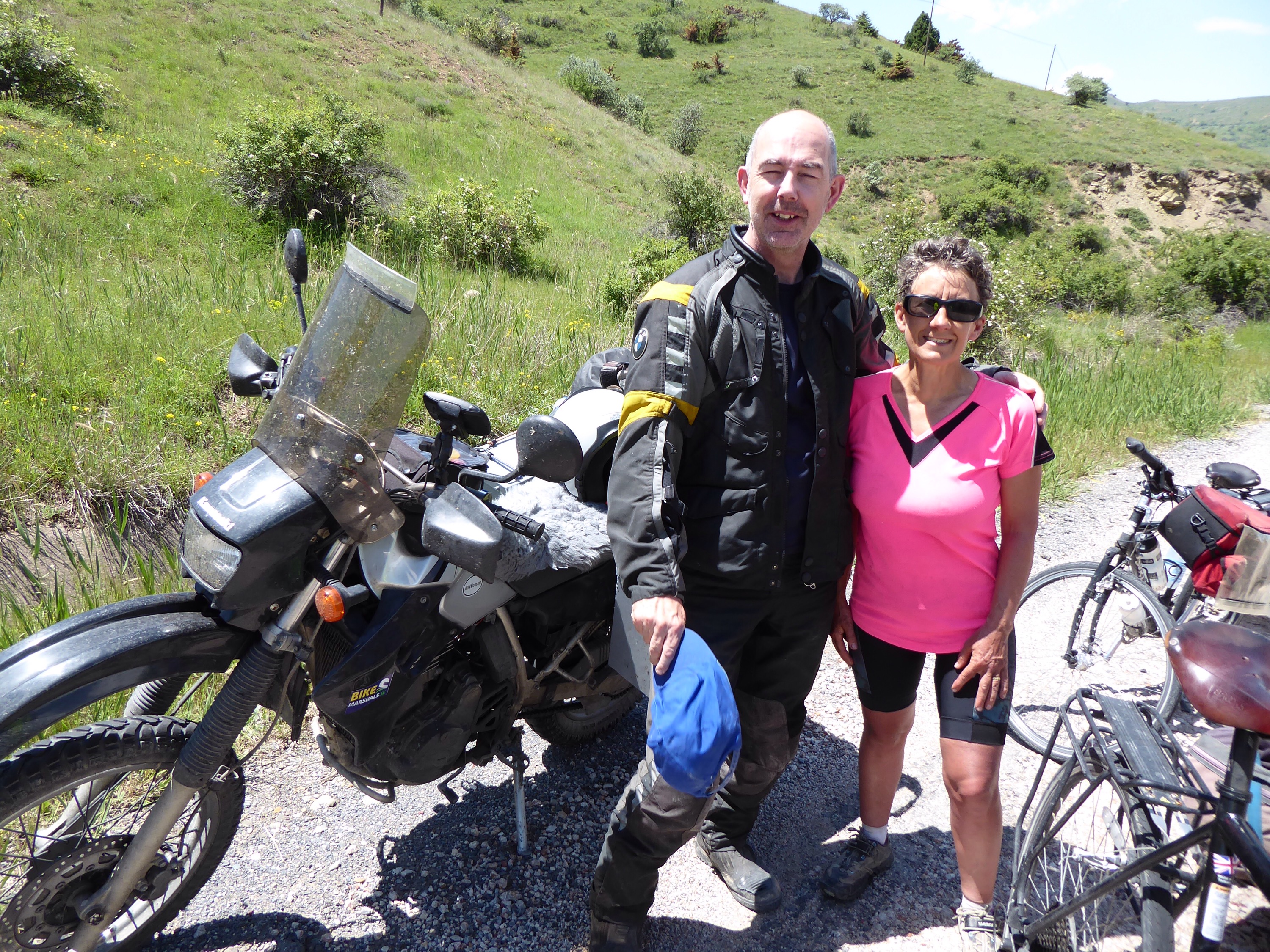
It was slow going despite the wonderful scenery and got progressively steeper as we got higher. Near the top we met Declan, an Irish motorcyclists who was on a 6 week trip around Europe – doing between 400km and 800km a day – so a tad more than us. He looked for tough mountain passes to ride – but on a Kawasaki 650 instead of using entirely his own muscles. We shared experiences and delights at Turkey. He said he wanted a photo to prove to his friends that there was someone madder than him. He will be in Tiblisi tomorrow – so maybe we are doing something wrong.
Eventually we got to the top of the climb – at 1670m – nearly the same as yesterday’s high point (but we started much higher so today’s climb was longer). Bernie got a second wind and I felt the same stomach cramps and sickness that seems to directly affect my ability to turn the pedals. It is as if all the energy in my legs had been removed.
My back tyre needed changing on the way down as the surfaces (and weight I am pulling) had their revenge. This is the first trip was have carried spare outer tyres and I felt vindicated. Bernie slept under a tree – with wonderful reviving effects! That led her to look at Googlemaps and finally work out which road we were on. The good news were that the signs were right and this the only road to Kemah. The bad news was that we still had a lot of climbing – notably a 350m climb near the end. Our hearts sank and we wondered why we put ourselves through this turmoil particularly when we were tired from the previous day and expected a day ambling along a river. But the road must be followed and so we got back on our bikes and duly followed it – like a Pablovian dog I suspect.
The last climb was tough but, unlike the previous ones, we knew it was the last. The soul destroying climbs are the little ones (well 100m of climbing) followed by a 120m descent. The joy of whizzing down the road is somewhat tempered by the knowledge that all that height has to be regained. I was feeling slightly dizzy and weak as a result of the stomach bug but had just enough energy to haul self, bike and trailer up a climb which was the same as climbing Clee Hill from sea level to end the day – and it was raining by now. Total madness.
But over the hill the rain eased up, a beautiful valley emerged and we swept down to the town of Kemah where there was a tea shop at a mosque complex. Ramadan start tomorrow and so it was busy but we managed to get wonderful tea whilst sitting in the immaculately tended gardens. Bernie inquired about accommodation and we secured a place at a “Teacher’s House” which are government run residences for vital workers – not just teachers. At that point I felt like I had done some work and it was vital to be horizontal, so we sort of qualified.
We followed a car into the centre of town and collapsed – all the effort was forgiven A short meal and then 11 hours sleep and all seemed a good deal better.
The town is on a gorge of the river. It looks peaceful but was one of the locations of the heavily disputed Armenian massacre in about 1915. 25,000 Armenians were supposed to have been killed here in a single day by throwing them into the gorge. However the total population today is only 2,000 so that may be an element of exaggeration but this genocide in which maybe 500,000 died more or less on the orders of the Turkish government remains a dark part of Turkish history, as was the Greek/Turkish population swap a few years later which saw 2 million people exchanged between Greece and Turkey. So peaceful as this area is today, there is a considerable history.
Today was quite a day which resulted in us breaking our climbing record. Our departure was delayed by a rather strange event. As we were leaving town we stopped to get petrol for our fuel bottle (for the camping stove). The petrol attendant looked wary and about 4 men managed to explain to us that we needed some sort of written permit from the police. We had not had problems before but the Jandarma were only a few hundred meters back so off we went.
The gate was opened by a gun wielding soldier who looked younger than any of our children. With the help of google translate and someone who could speak a little english we showed them the fuel bottle and explained it was for cooking. This they understood but for reasons we could not fathom we had to go top a petrol station 4km back the other side of town (except perhaps this was a state run petrol station). The police promised to ring the petrol station to authorise the fuel. We left the trailers under the watchful eye of the soldier with the gun and set off for the petrol station (remembering at the last minute to take the fuel bottle with us!). Needless to say it was the other side of a hill but eventually the fuel was brought without a problem and we were back hitching up the trailers. We were an hour on and had done 12km and 150m of climbing before we had even started!
The guide books had said that there was not a road between Divrigli and Erzincan but there was a road marked on the map and on google maps and a blog we found confirmed there was a paved road through so a few km out of town we turned off the main road and started golng up and up and up. After a few km the road degenerated into a gravel road as road widening was clearly going on. Going up slidy gravel climbing in bottom gear was a challenge to say the least but luckily it only lasted 6km until we were back on paved road.
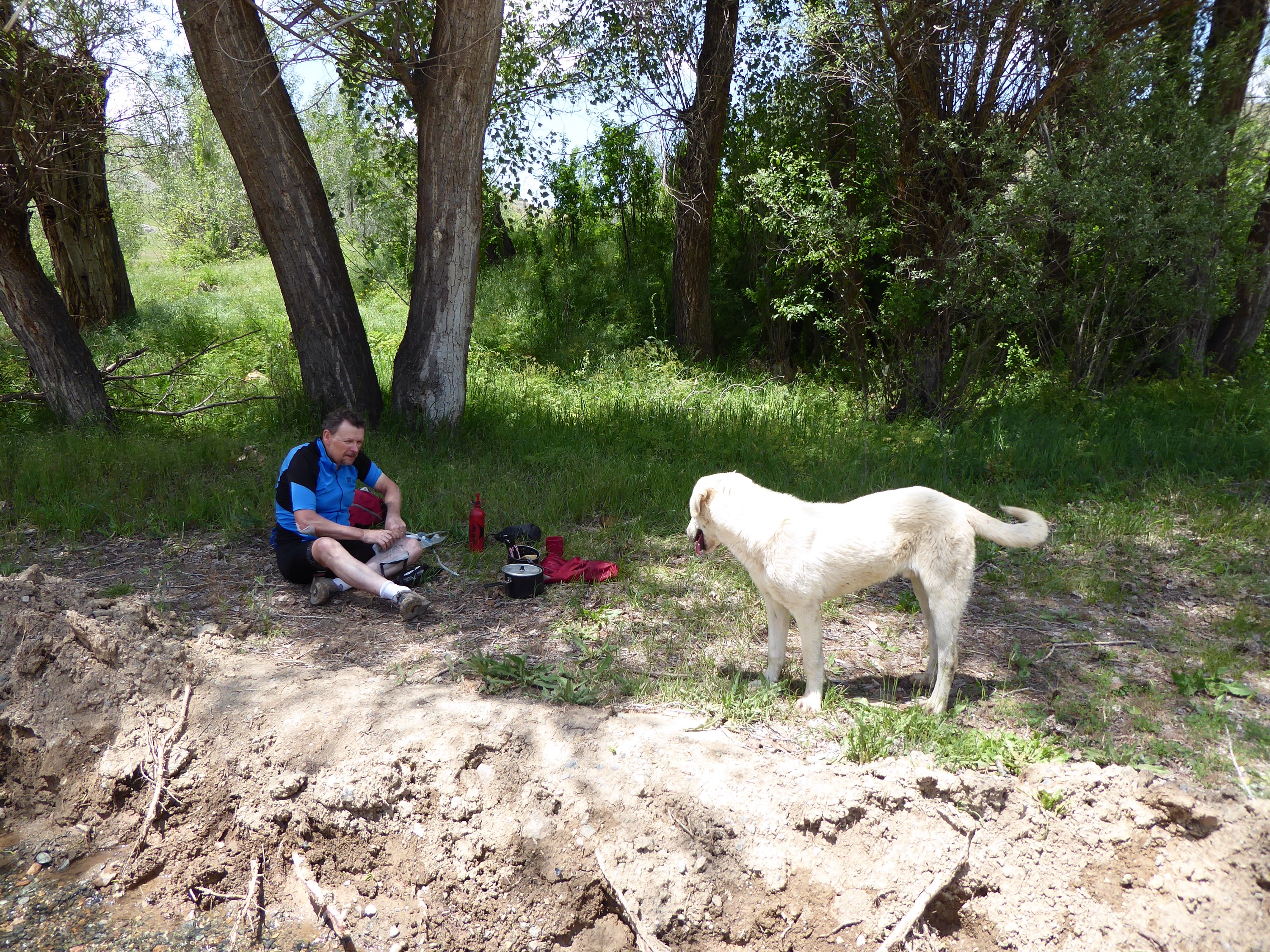
After a climb of about 400m we dipped down again into a beautiful green valley. We stopped for a break beside a small river and were joined by a friendly dog who flopped down beside us and look longingly as we ate some biscuits. the dog was out of luck as we needed all the energy we could get.
We climbed gradually along the the river valley and then steeply at the end. Time somehow suspends doing a long bottom gear climb. Km crawl by and we creep up goal by goal – just get to that bend then have a rest, just get to that sign and we’ll have a drink. Eventually we made it to just over 1700m and sat at the top eating lunch looking out over rust coloured hills. A bit more up and down and then down down down on the descent into the next valley (4 hours up, 45 minutes down!).
We hadn’t done a vast number of km but we were tiring but still a few more ups and downs getting rather slower. Thunder echoed aroind at one point with black clouds around but we managed to avoid the thunder showers. At last the final (we thought) descent down to the main river valley – a early stages of the great river, the Euphrates. We were directed to a new bridge and new road and quickly it was clear that this was due to the construction of a large hydroelectric dam. More up to get around the dam and along to the town of Ilic.
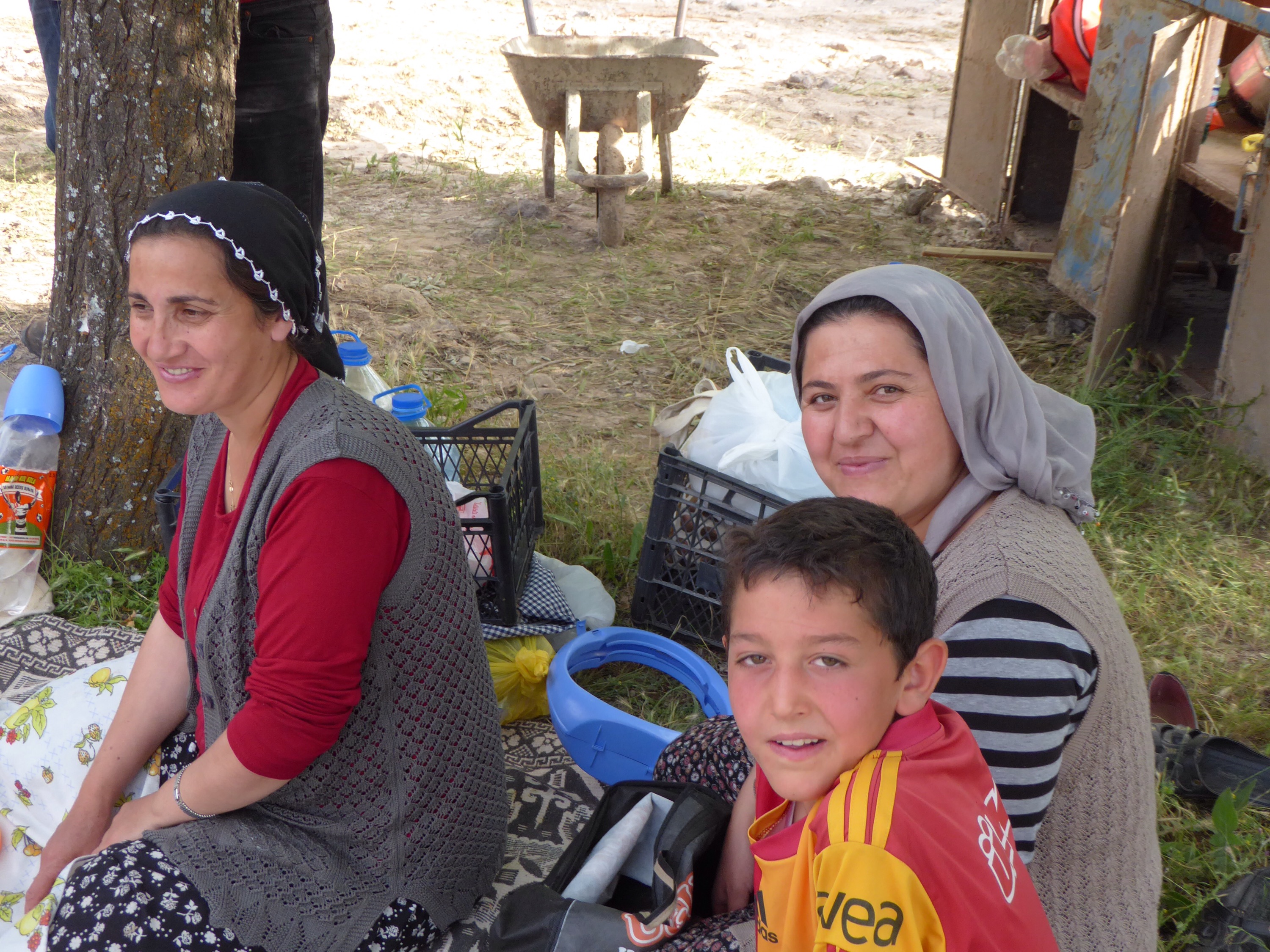
The last few km seemed to take an age. We reached the turn up to the town and cogitated turning up to the town to see if there was a hotel as we were so knackered or whether to go straight on to see if we could find a camping spot. I flagged down a car to ask if there was a hotel, not wanting to do any more climbing unless necessary but got a negative and completely blank looks when asked if there was anywhere to camp. It looked as if we would have to press on…and it was up hill again. I tried to stop my moral sinking but just as we set off I glanced to a track and could see it ran down to a stream with some (rare) flat land. We wheeled our bikes down and at the end of the track there was a group of men, women and children. We asked if we could camp there and of course the response was “no problem, have some tea”. A fire was already brewing the teapot. It looked like three families, one of whom must have owned the little shack that was there.
One of the men could speak a little english- he was a supervisor in a gold mine. The women were shy and smiling, laughing every time we groaned with delight drinking the lovely tea (and groaning every time we moved).
Edit
We took photos, showed them photos of the children and couldn’t believe our luck when all turns out so well when we were on the point of exhaustion! Tore ourselves away after 3 glasses of tea with our profuse thanks to set up camp, cook and collapse.
So we have been on this jaunt for 3 weeks and I had my first day of feeling totally knackered at the end. But it was a stunning day’s ride with all the ingredients that make cycle touring unpredictable, frustrating and superb.
We woke in the middle of the night to a wind and rainstorm and needed a few extra guy ropes to stop waking up in a different field. However that passed and there were blue skies in the morning, provided we looked westward. Looking eastward was still grey and threatening.
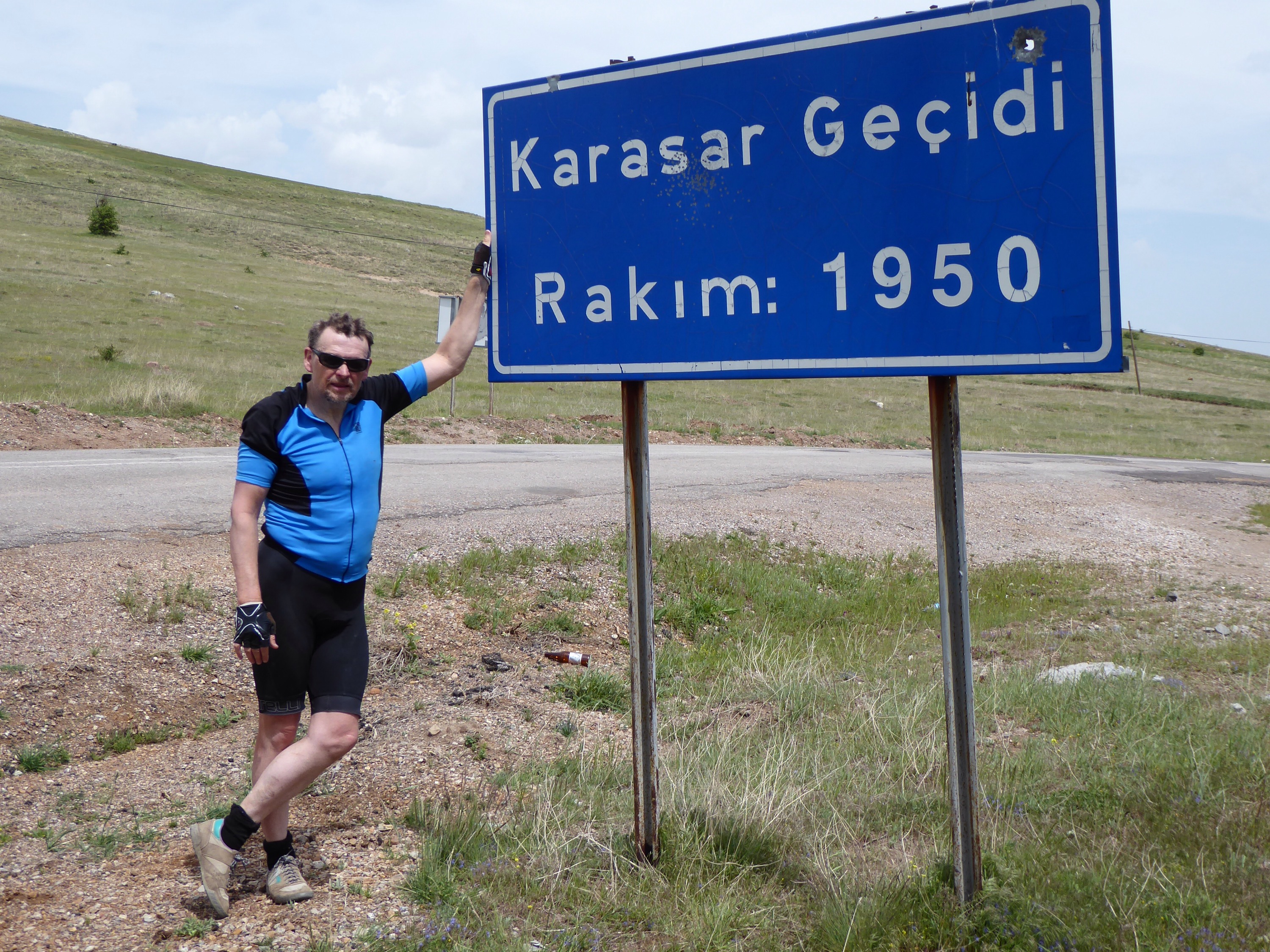
We packed up and got on the road by 8, which was not bad for a disturbed night. Then a slow climb out of the town on a deserted main road. We got to 1650m and felt we were making progress and then, somewhat to our surprise, started to descend. The next 20km were all downhill into a lovely valley as the road followed a river. Maps show roads following rivers but, without contours, it takes A level geography to work out which way they flow. I got this one wrong and enjoyed the road descending to 1400m. However nagging at the back of my mind was the concern that we had a 1950m pass to surmount and that every metre down was another one to climb.
Finally we reached a village where the river went one way (with a railway) and the road went another – and so we reacquainted ourselves with bottom chain ring. The next 20km were mostly a steady climb of varying levels of steepness. The landscape changed as we climbed, with a more mountainous feel. But there were cultivated fields on both sides of the road all the way up.
Elevenses was a “DIY” cafe as we brewed coffee on the side of the road at 1700m. Just 250m climbing to go we thought and felt we were making progress. But then the upsi-downsi part started. Over the next 20 km we climbed a further 400m and made about 100m net progress – really frustrating. There were little villages throughout the route – even though this must be seriously harsh conditions in winter with snow on the ground for more than half the year. The growing season must be short and, even in May, there were patches of snow on the hills above the villages.
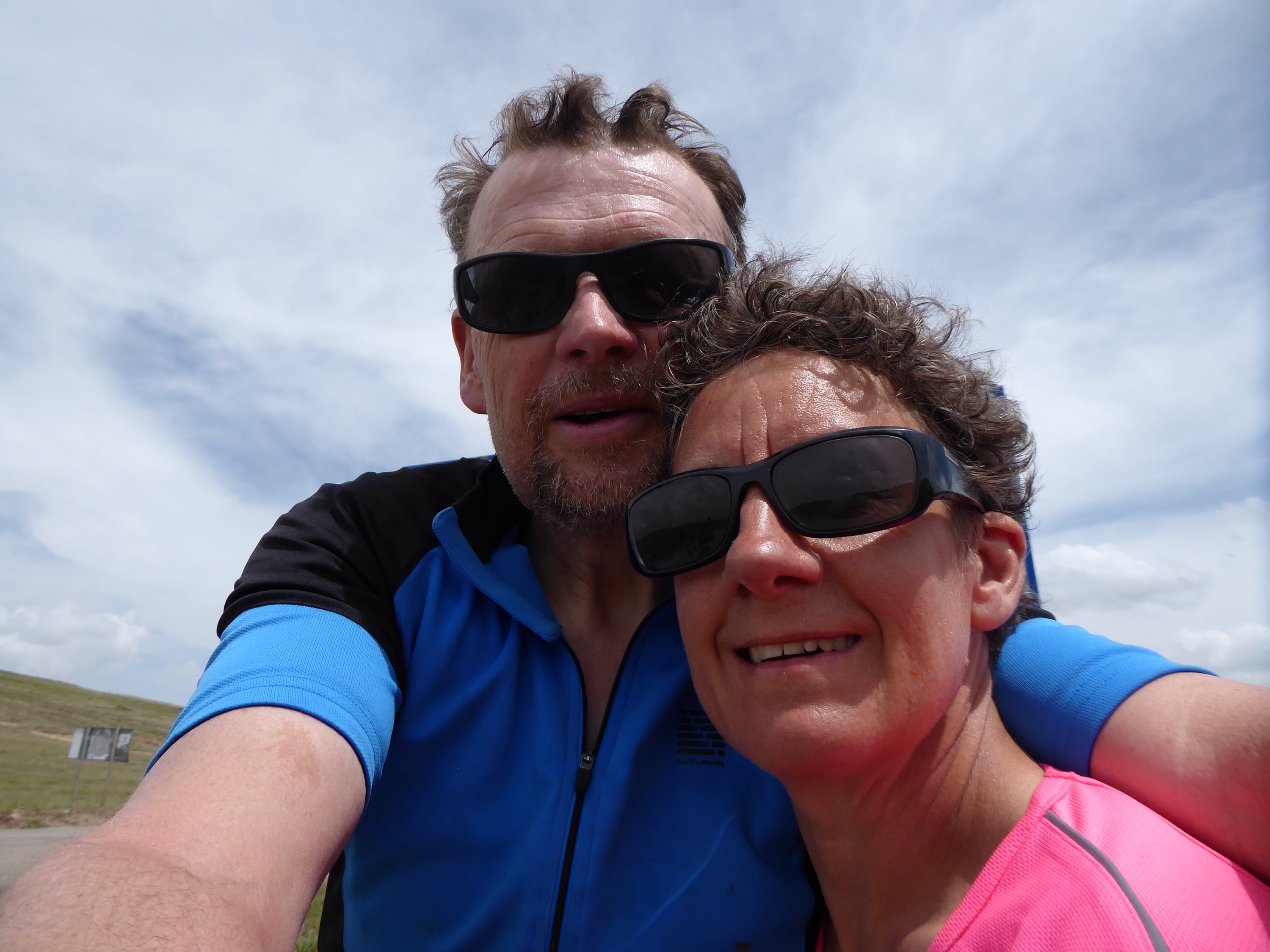
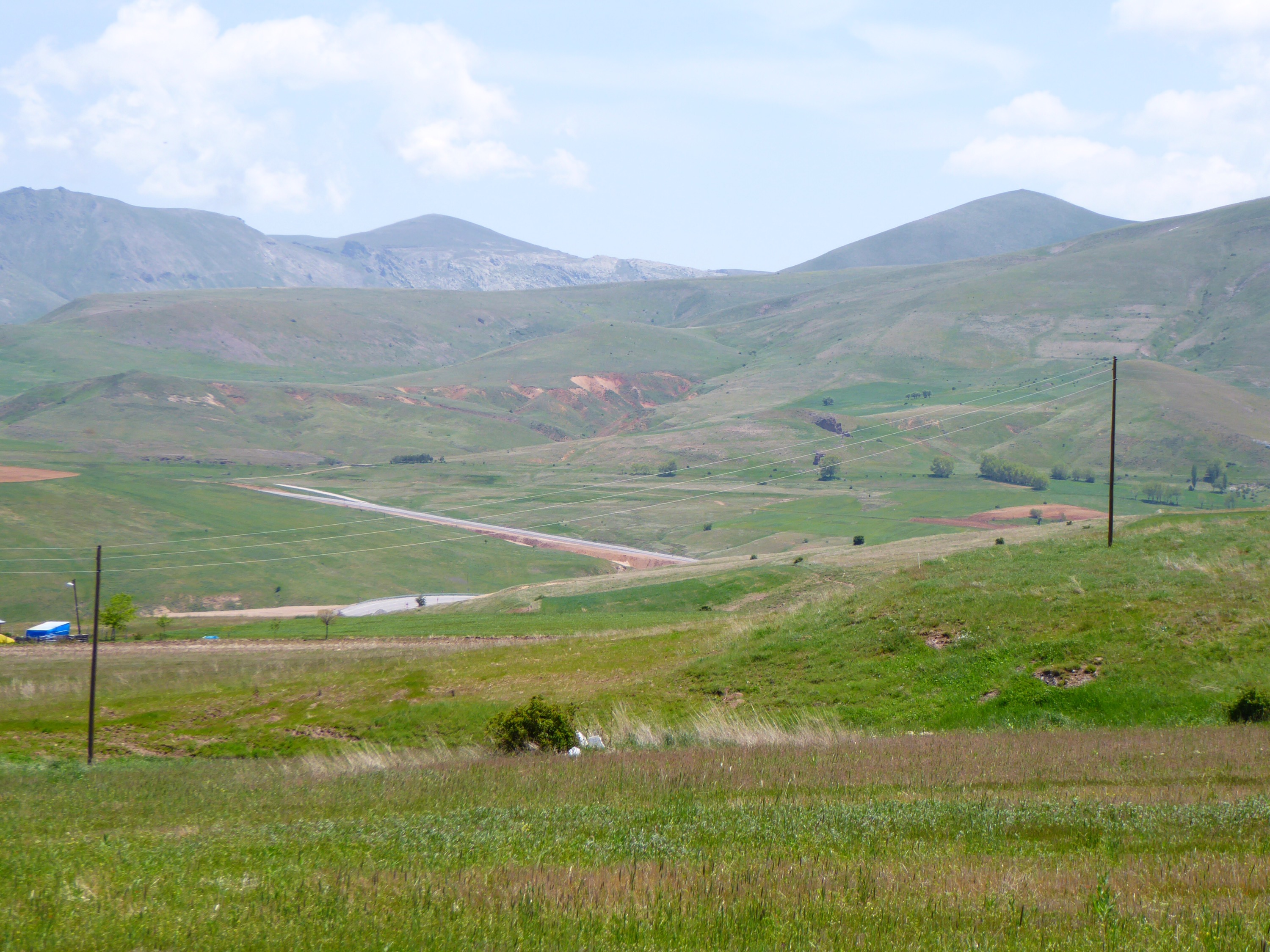
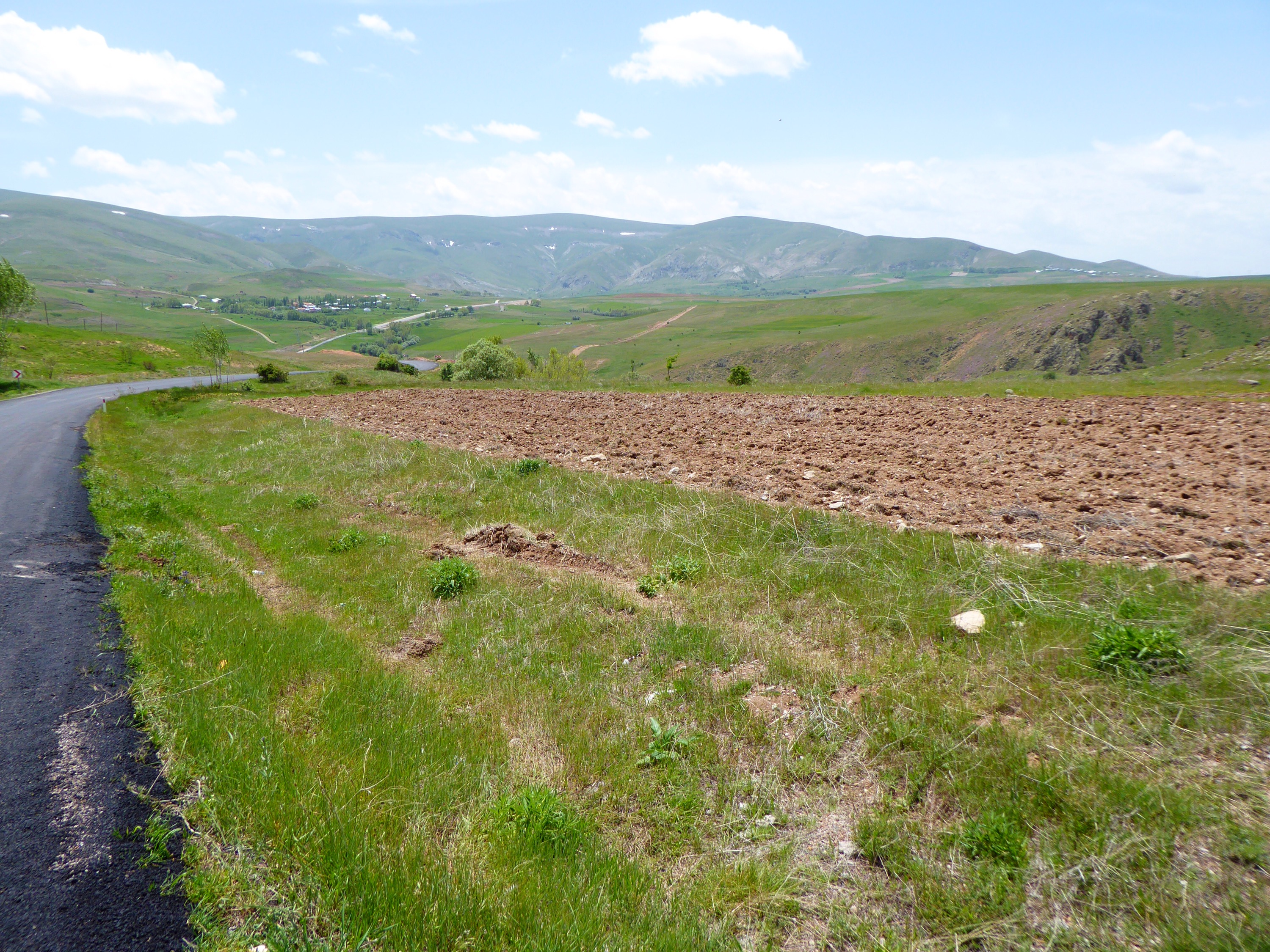
The top was a classic pass between peaks, and had farms and cultivated fields – even at over 6000 feet above sea level! Then we descended – and boy did we descend. The road dropped from 1950m to 1000m over the next 15km.
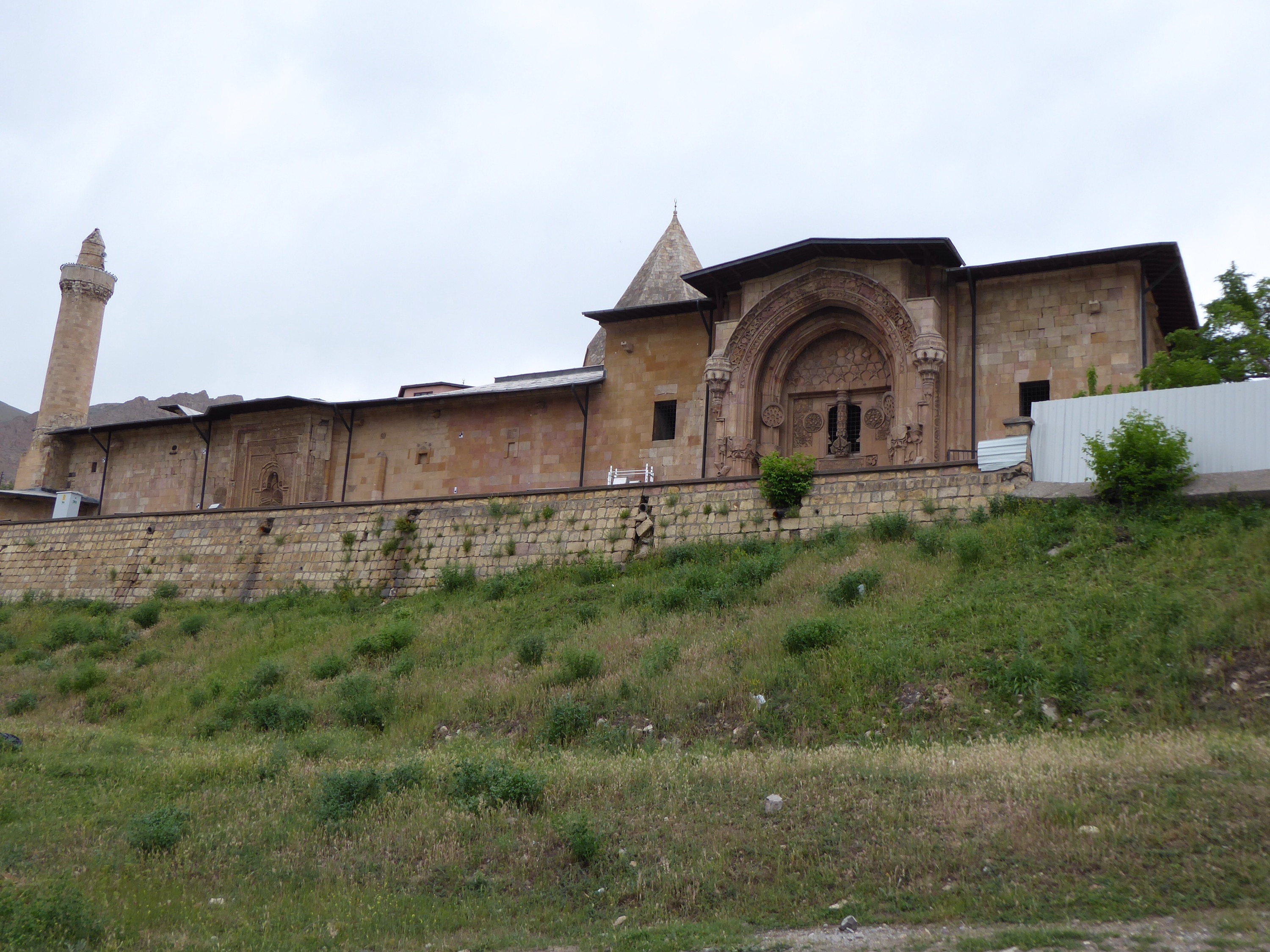
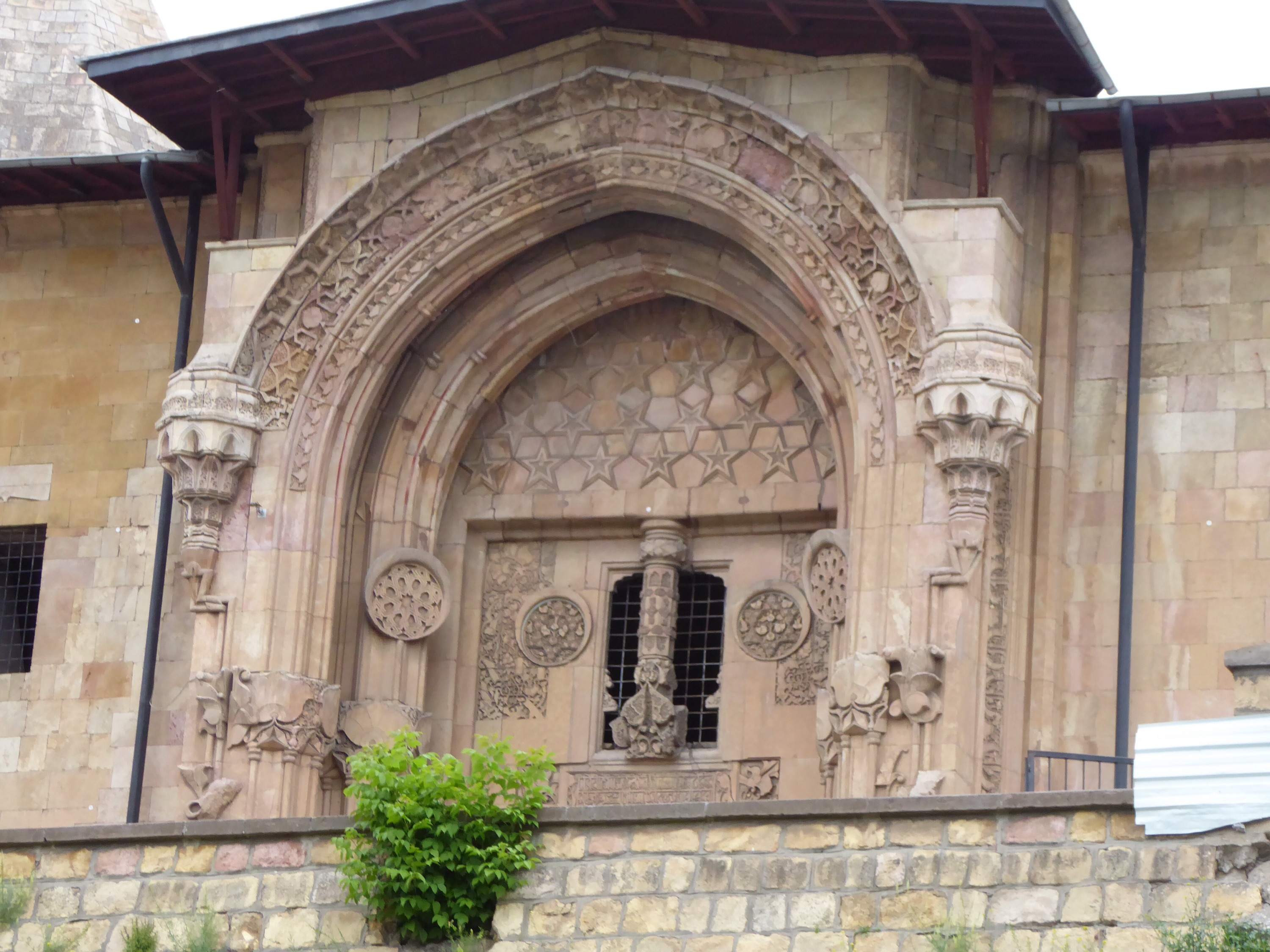
Divrigi is a pleasant little town of some wealth, sitting in the mountains around it and serving the local area. It has a C12th mosque and hospital which has spectacular porticos and is on UNESCO’s World Heritage List – and was part of the reason we included this on our route. The UNESCO listing may explain the considerable funding which has been provided for restoration works and so explain why it was closed when we attempted to visit. There was a sign which said something about the mosque being open until 6pm but, at 5.30pm when we went, it was very clearly in lock down. However we looked at the outside and saw how splendid it was and will become once re-opened.
A meal of kebaps (we were the only diners since others must have found out about the closed mosque), tea at a teashop and baklava from a baklava shop ended off the evening.
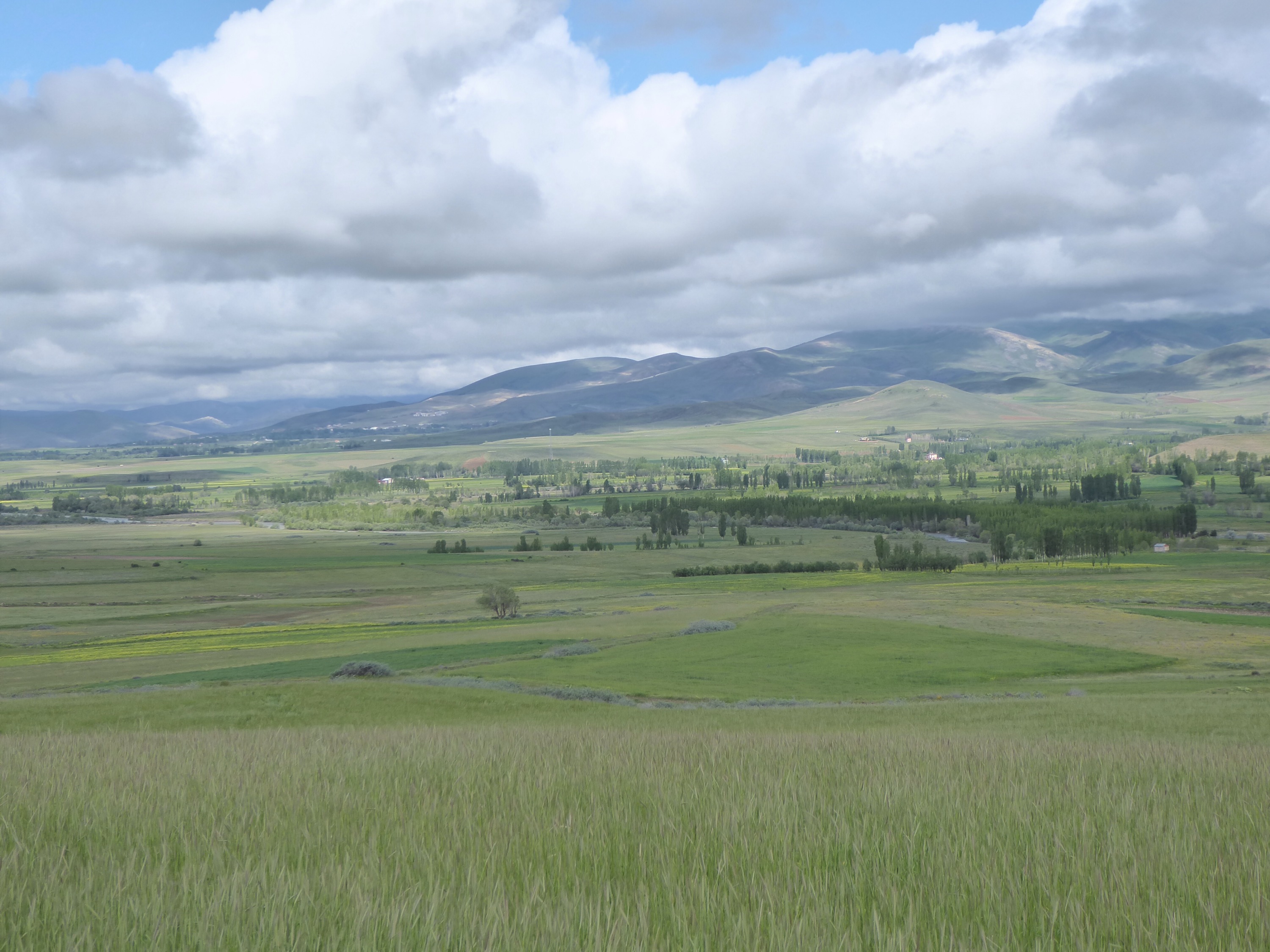
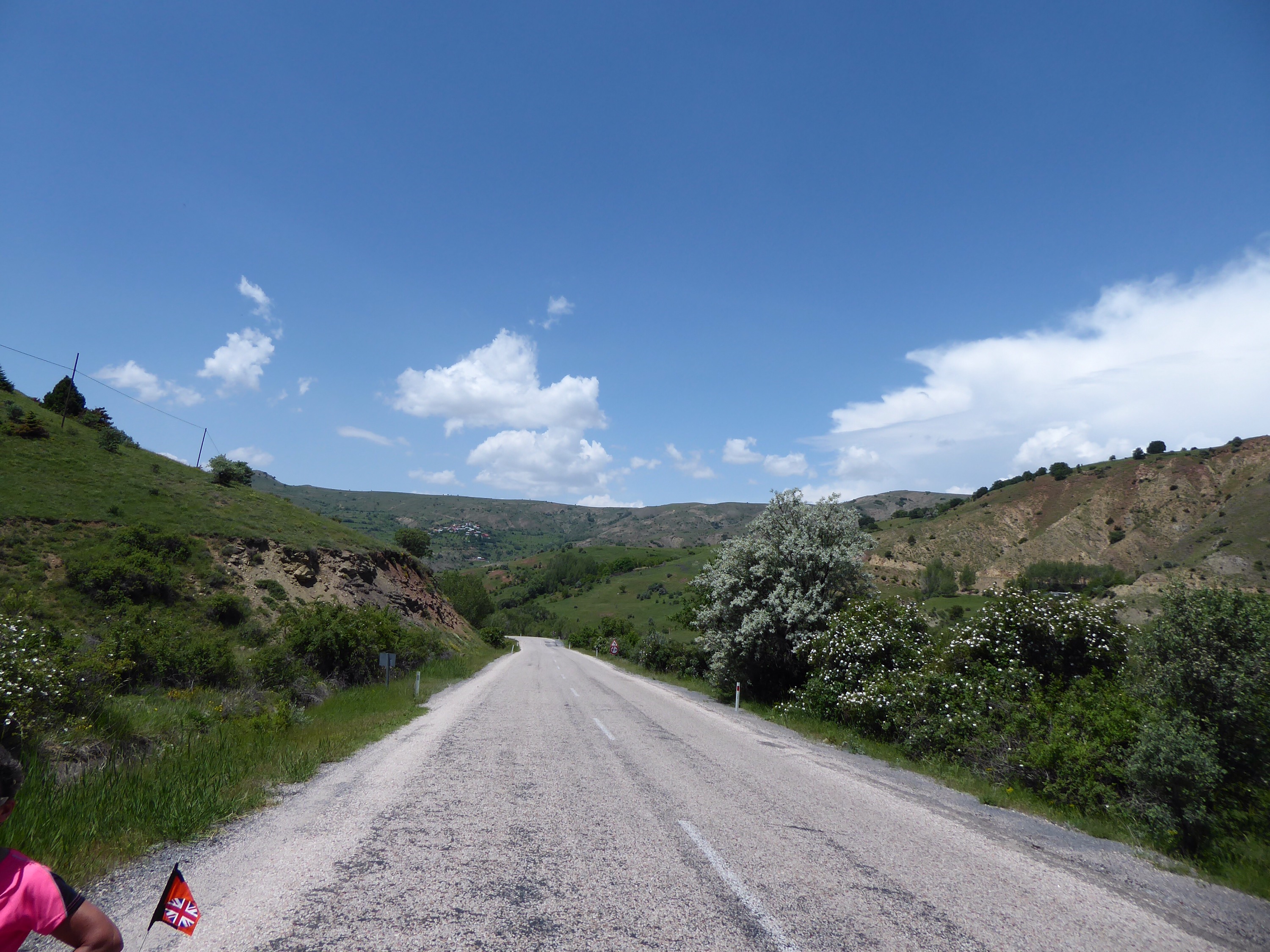
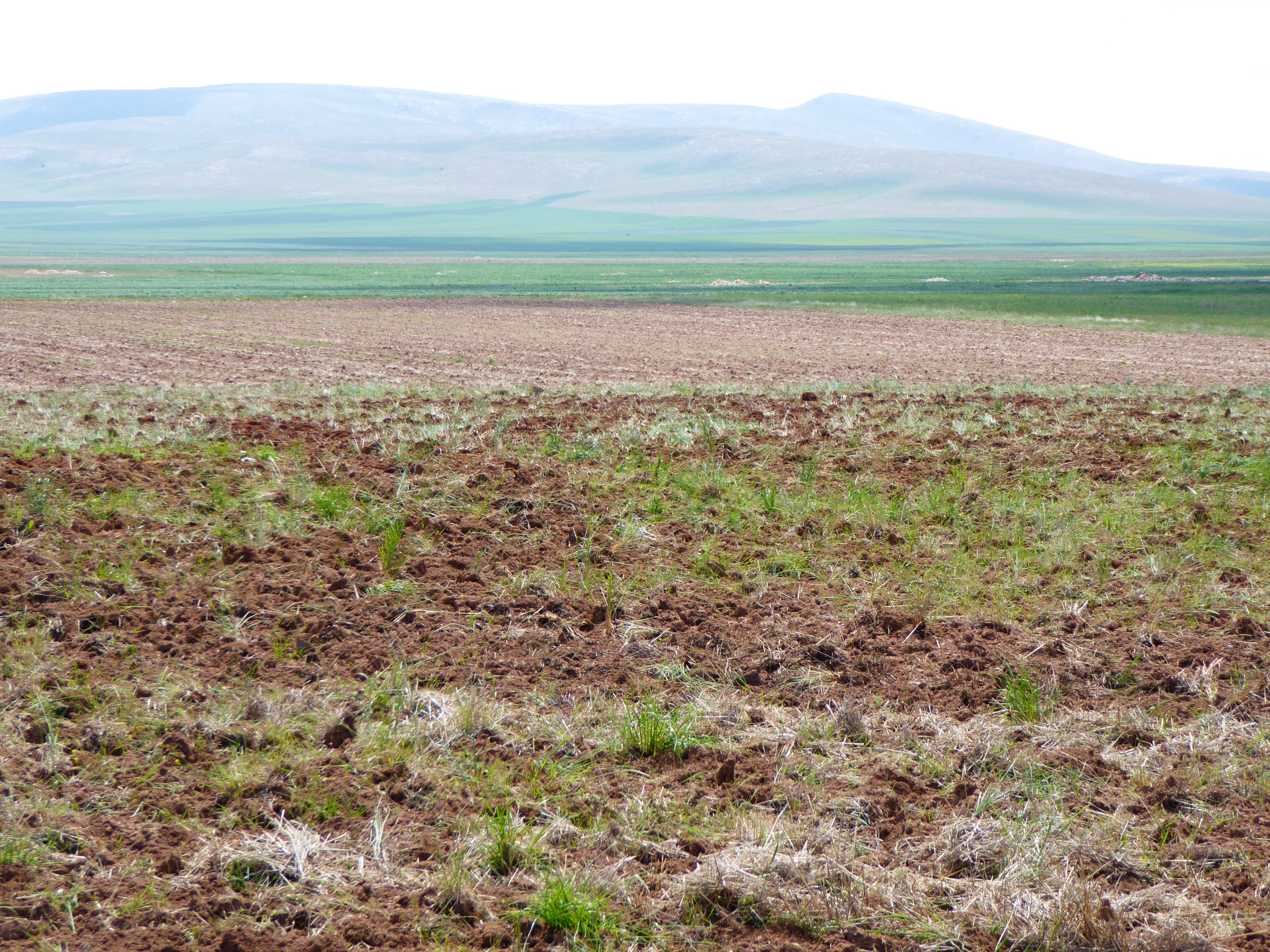
We woke to the sun streaming into the tent and packed up from our riverside camp and were on our way by 7.30. These early starts are often my favourite with an hour or two of fresh air and fresh light. We gradually climbed, the road undulating but taking us a bit higher each time.Although we were still on the main road it was very quiet and there was no sign of life apart from a few far distant villages. We finally hit just over 1800m – our highest elevation so far – and we found ourselves on a massive high altitude plain.
We turned off the main road and it immediately felt much more remote. There was a small village a few km on but very little sign of life. There was a school but no sign of any children. No shop but there was a small petrol garage. The man there invited us to sit down which we did for a few minutes while he smoked but no offer of tea – it obviously wasn’t brewing (it takes about 20 minutes to brew turkish tea). We turned on to an even more minor road with the road stretching into the distance. Some of the land was cultivated even at that elevation but in winter it must be bitter. Aziz said there was snow on the ground for 2/3 months a year at 1100m – so it must be much harsher at 1800m.
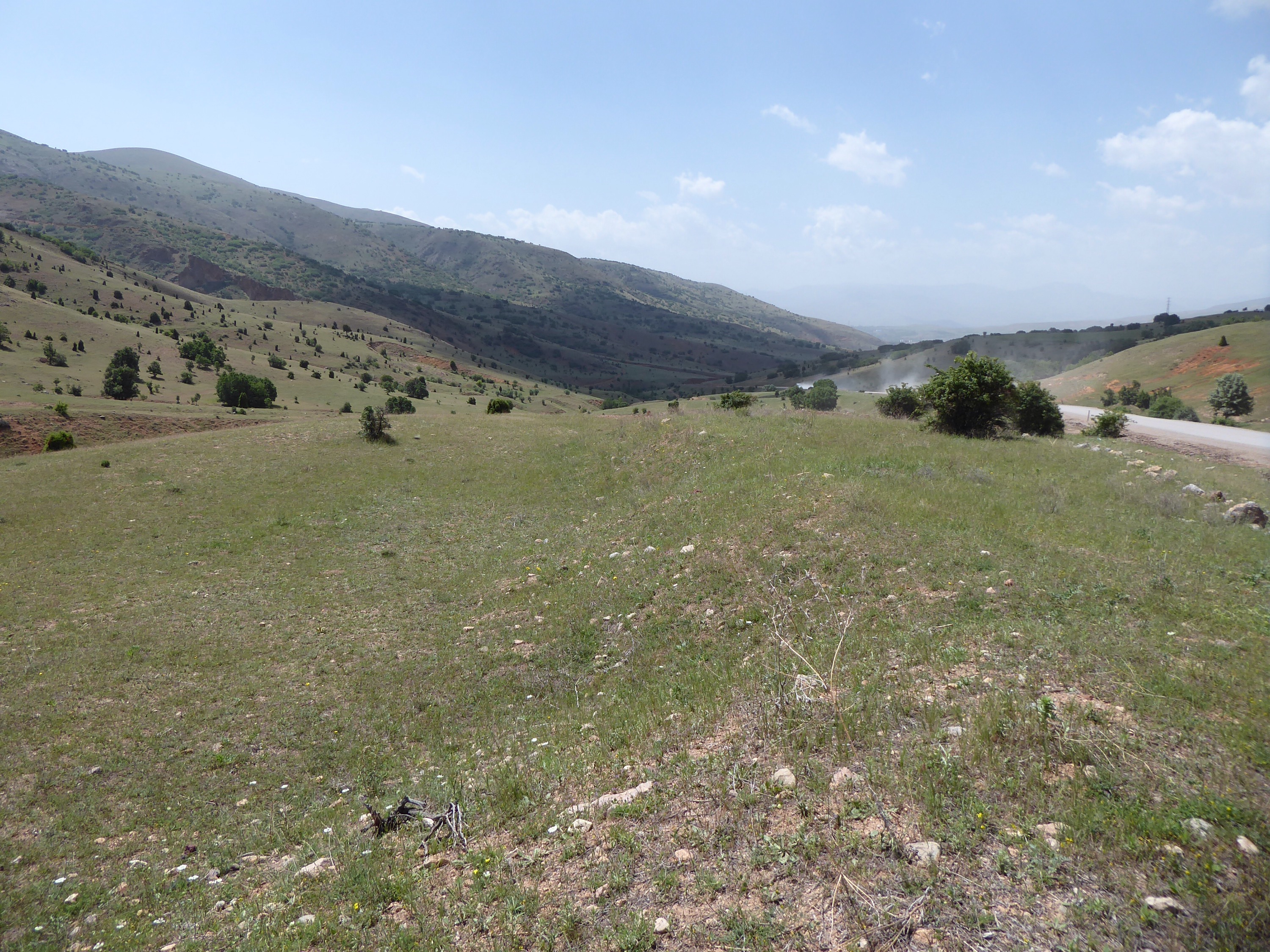
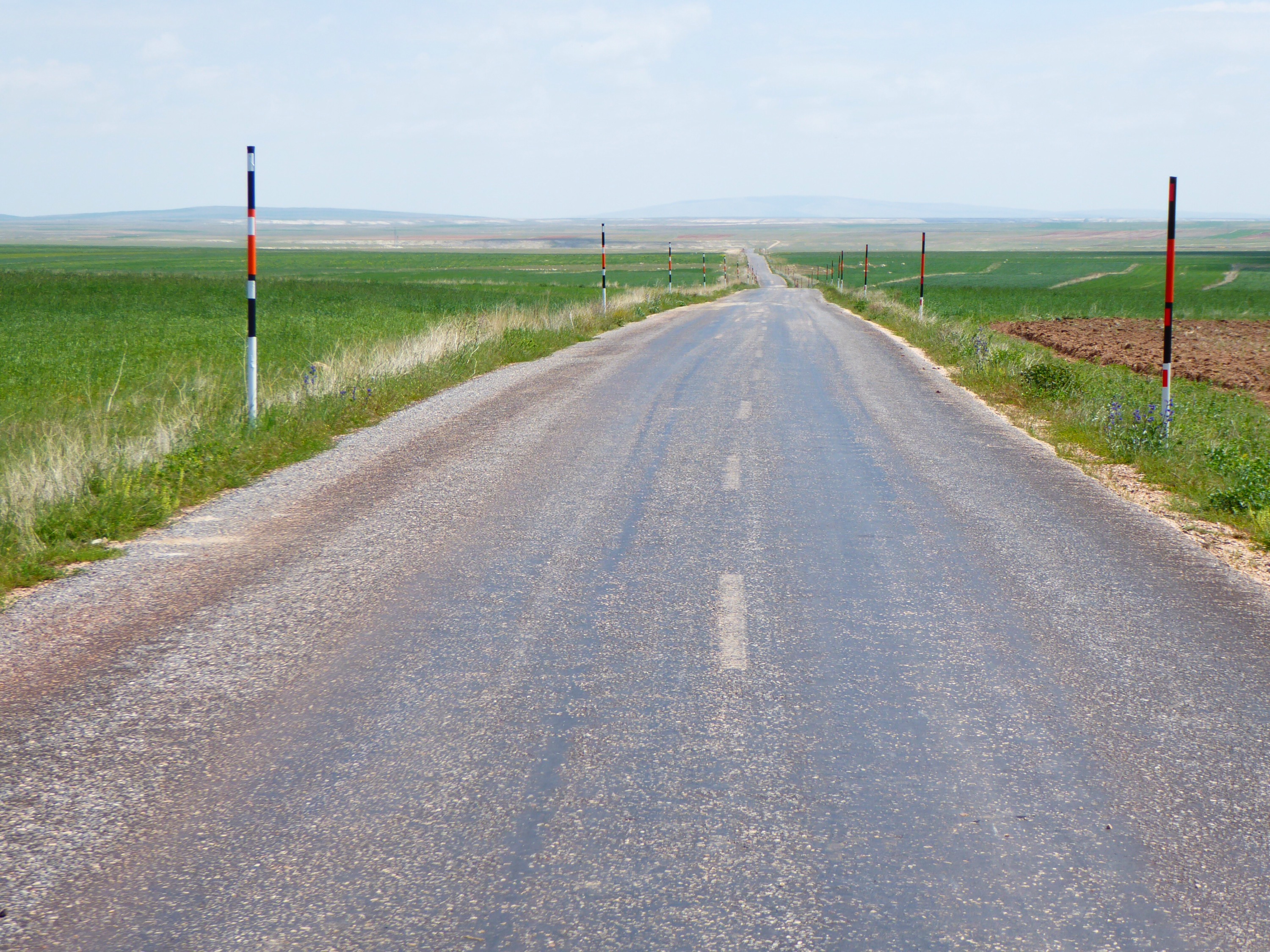
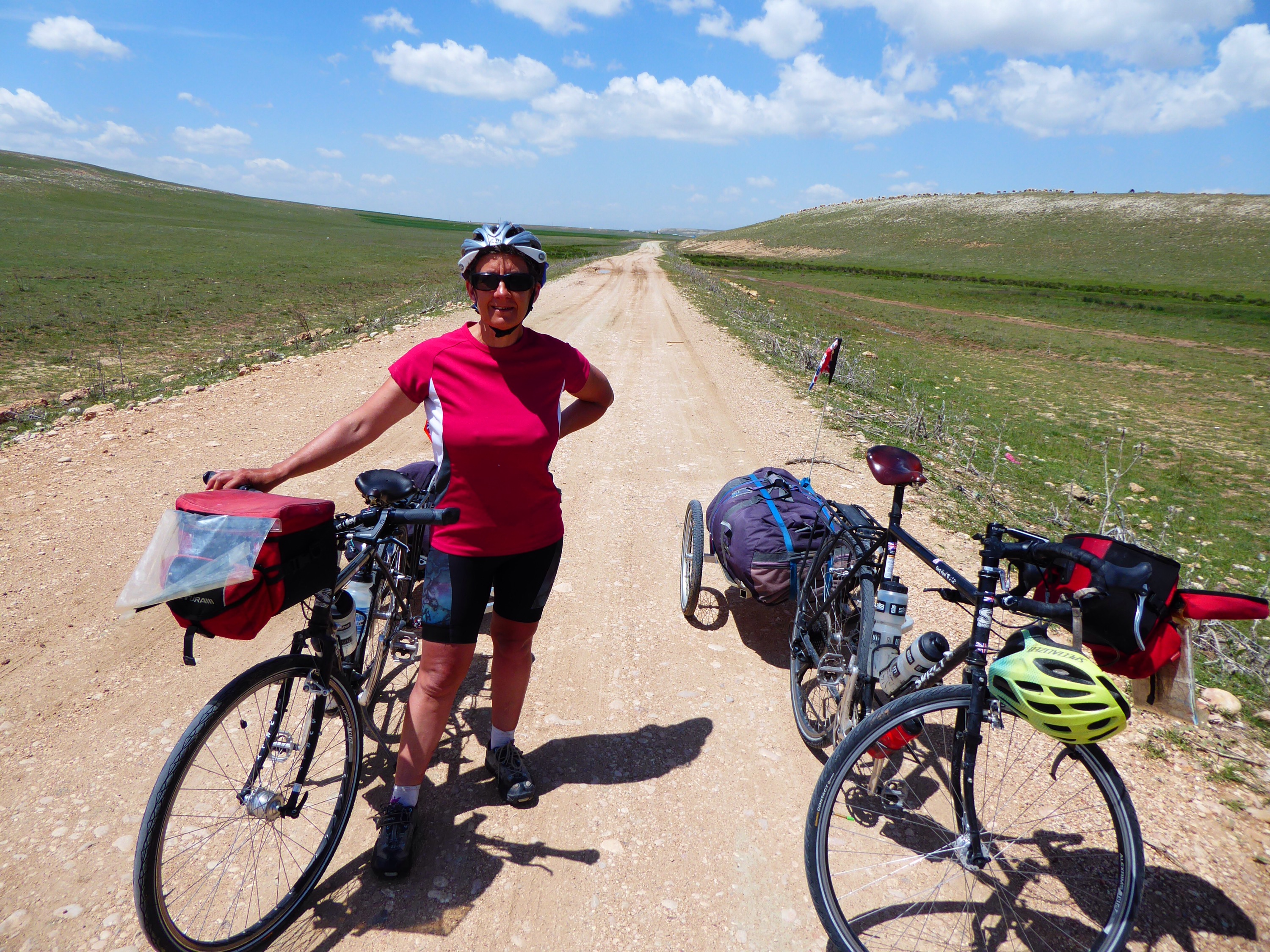
There were post markers along the road, we presumed to show the way when there was snow. We passed a couple of other tiny villages that huddled into an occasional dip, giving some shelter – just a few shacks/houses and a minaret but very little sign of life (but serious smells of cow slurry). At a village after about 20km the tarmac ran out and we found ourselves on a dirt track. We bumped and rattled along, our speed markedly reduced as we concentrated on finding the best line along the ruts. Luckily the track was dry and compact so not as bad as it might have been. We had no idea how long this would go on for – it was 30km to the junction of the main road but fortunately after 12km at the next village some tarmac of sorts returned (at least in patches around the pot holes) and then improved to a reasonable surface and we were able to cover some km again at a reasonable speed. We had dropped into more of a wide valley then finally followed a stream gently down hill. As always there was climb out of the valley to the main road over hills stripped horizontally white and pink.
We had covered over 80km by now and were beginning to tire but there were more valleys to cross and more undulating hills which seemed to go up for ever, but at least it was not steep.
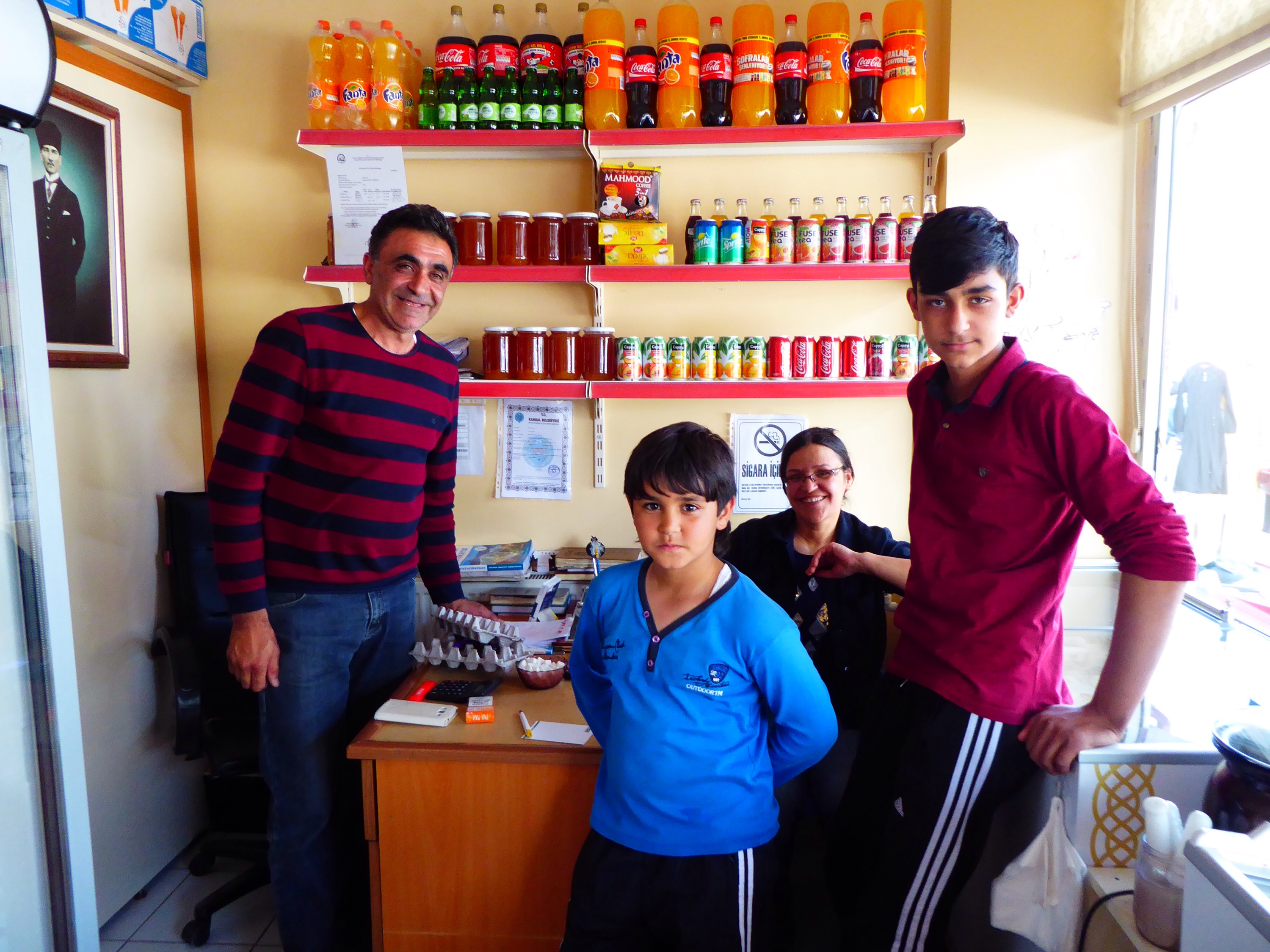
We finally reached the small town of Kangal. It was market day and the town was bustling. We did some shopping and stopped at a tiny cafe for some tea, several glasses in fact having been deprived all day. They also sold fresh laid eggs so we brought some for a few lira and with the usual Turkish kindness they refused to accept anything for the tea. Although we had covered out longest distance yet it was still on 4pm as we had left so early so we pedalled out of town to where we could see a minor road crossing a river and found ourselves a camping spot.
As we left town a car passed and the cafe owner emerged with David’s headband – which he must have left at the cafe. He knew which way we were going as he was seeking to persuade us to go to a Fish Spa, 15km away. However nice a fish spa may have been, we did not have another 15km in our legs! In fact our camping spot is great and probably better than a fish spa – apart from croaking frogs (something of a perennial there) and mossies. We were so grateful to the cafe owner for his kindness – but it is typical of Turkey.
As it was still warm and the river was easily accessible, we were able to have a wash and ‘bucket’ shower. Not quite steaming hot water but fresh and blissful after a long day. After we had been in the field for a few hours, the farmer turned up to see what we were doing in his field! He was wonderful, showing us all his fields and having a conversation about farming in England and Turkey – all via googletranslate. He kept saying that us camping was no problem for him but he would have preferred to take us to the fish spa and get us into a decent bed. We declined which he took graciously even if without comprehension.
A really interesting cycle across some high, challenging countryside, even if we ended up at the same elevation as we started.













 The Slow Cycling Blog