Category Archives: Uncategorized

Thursday 23rd January : Kratie to Kampong Cham: 126km – flat and wind assisted.

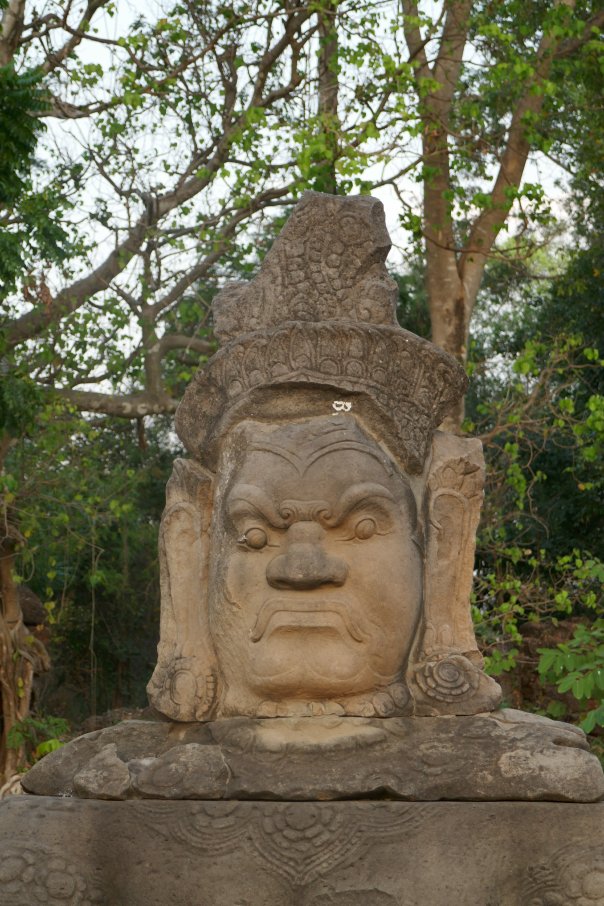
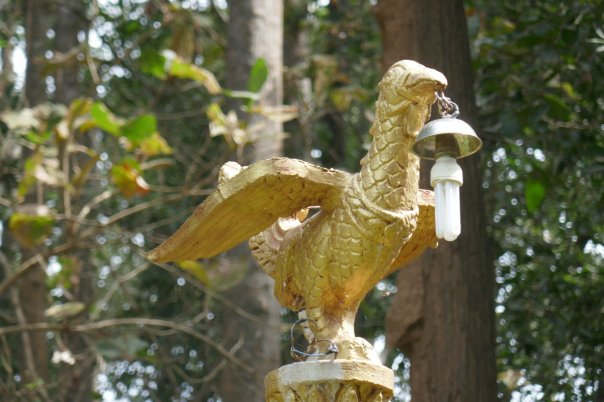
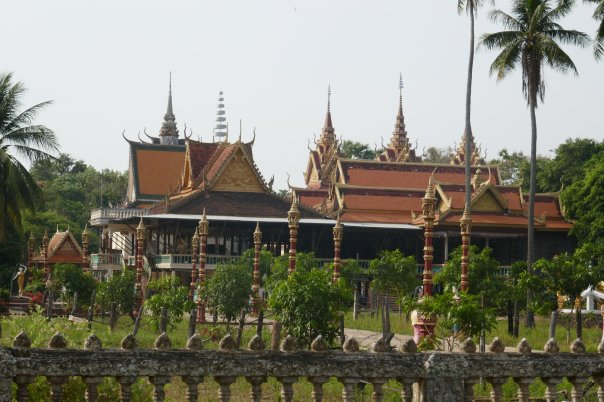
What else would a golden griffon have hanging from its beak?

Today was a lovely cycle along the river Mekong, with villages all the way, plenty of interest and timely food stops. The temperature was not too bad, the road surfaces were good and we had a following wind. Nothing is perfect but this was pretty good.
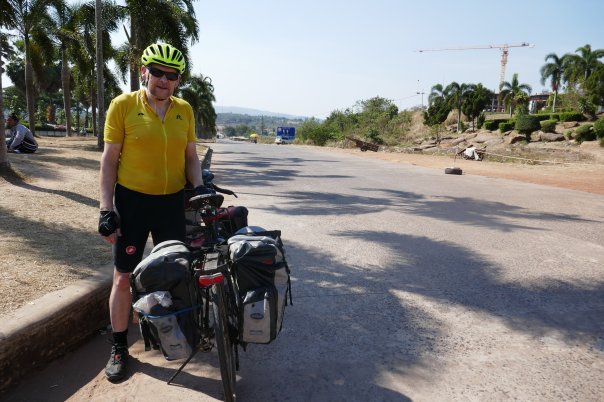
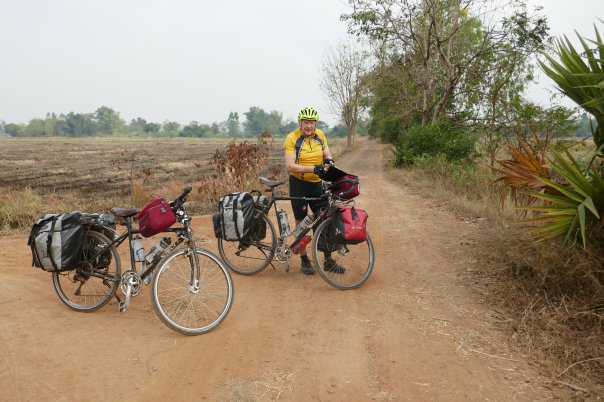
We woke with the alarm at 5.15am and were on the road by 6.30am – slightly delayed by pumping up tyres and having coffee. We were conscious that our bikes were beginning to look rather shabby after all the dust we had but, heh hoh, this was not a beauty contest. Our thoughts were dominated by my brother’s illness but he wants us to keep travelling and keep sending him updates, photos and travelling tales as they mean so much to him. So Pete, if you are reading this, we are doing so!

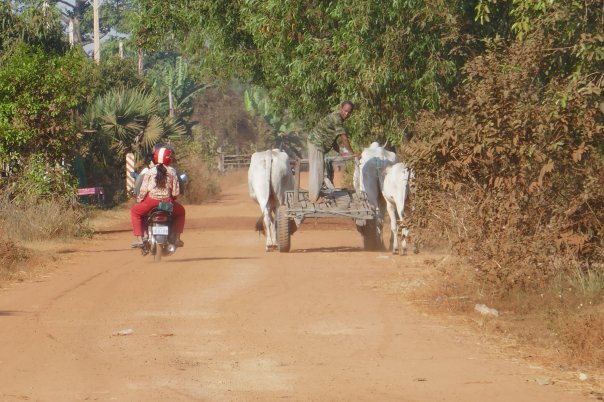
The road meandered around the East bank of the Mekong, sometimes next to the river and sometimes a few km away in paddy fields which were fed by river water. The road was quiet and we were overtaken by a range of vehicles – including a bullock cart with 2 huge bullocks on board, pulled by a motorbike. However the prize of the day goes to the motorbike with ice-cream side car which had a horn that was adapted to play “My heart will go on” from the movie, Titanic, at a very slow pace as if it were a funeral march. It took a long time to work out what the tune was but, of course, once it got into our heads it stayed there for much of the day! I will never hear that song again without thinking of the ice-cream salesman on the Mekong River highway.
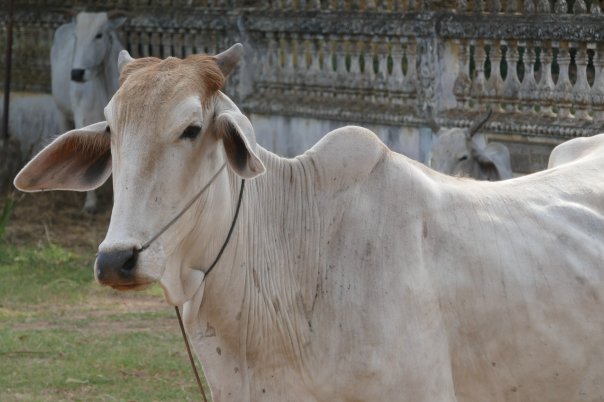
Don’t step out of line as I am watching and listening to your every movement.

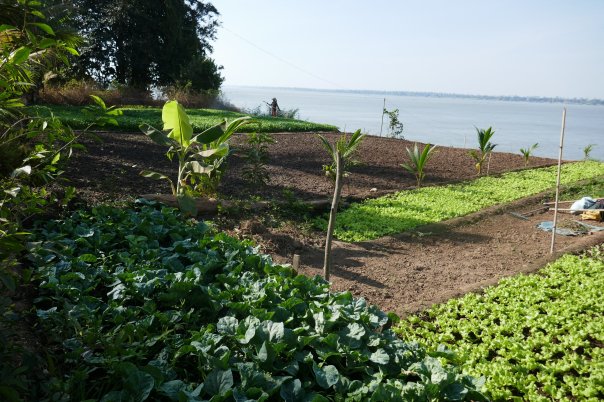
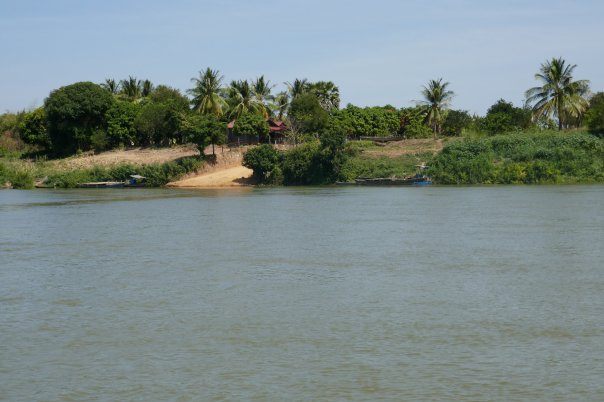
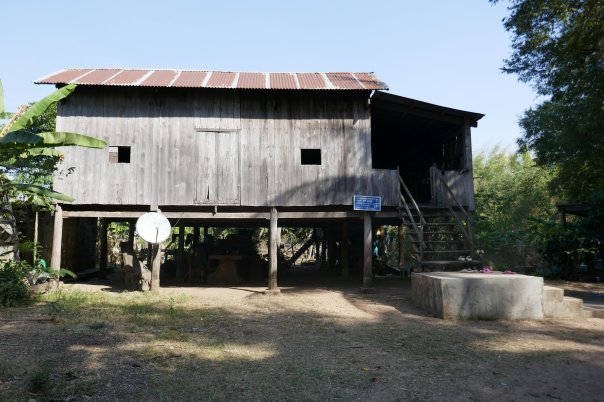
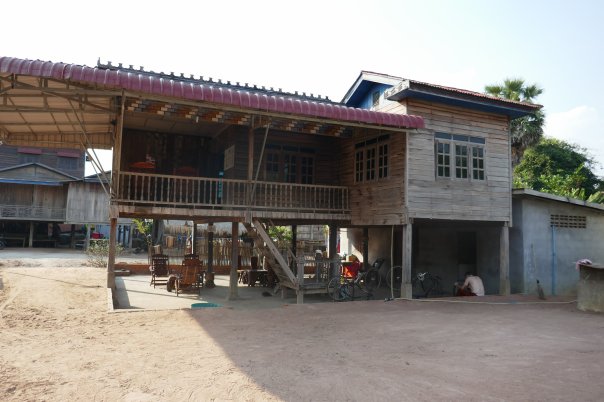
We turned off the main road to follow the river. The side road was usually one field away from the water, and was continually populated with houses for almost all of the next 40km. The houses are mostly on stilts – to protect against the flooding when the river rises in the wet season. Lucky told us yesterday that there were bad floods this year and hundreds of people had died. The Mekong in flood must be terrifying. The river has a mixed status – being both the great benefactor for this region and the cause of so many deaths.
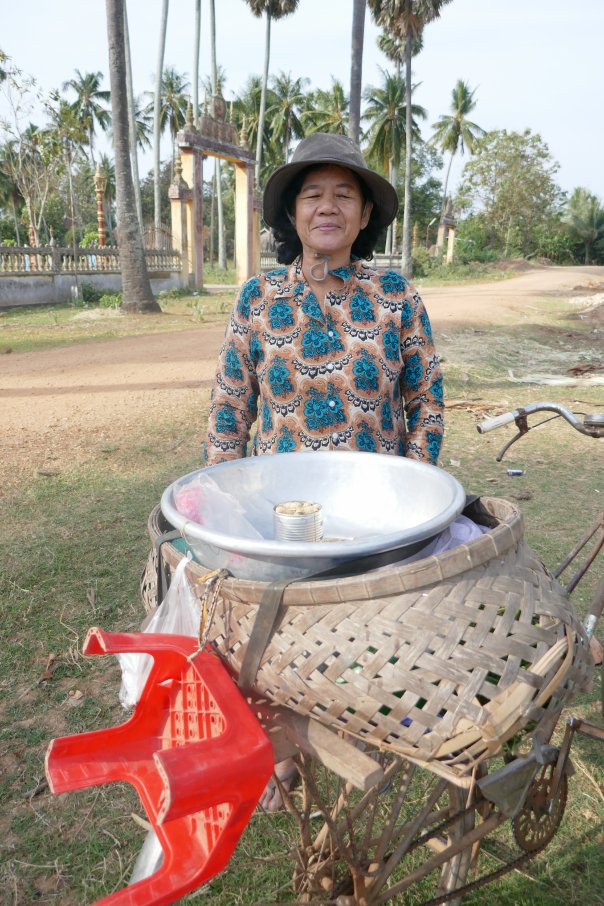
A lady who sold us fresh peanuts

This is “Cham” territory, with a number of Cham villages. These are ethic Khymers who are mostly Muslim. There was an increase in mosques, veiled women (but very few fully covered) and men with Islamic head coverings. We stopped at a Muslim eatery for lunch and the local Imam helped us get some excellent Chicken and rice, as well as topping up our water bottles. All very friendly and – of course – our meal cost $1. Everything seems to add up to $1 – vegetables, multiple soft drinks or even a beer. It is always mysteriously $1. Whilst I am confident we are charged more than the locals, I do not resent an informal tourist surcharge. It is a way of delivering value directly into the local economy and seems to be fairly well established. We are rarely charged any more than $1, and even with the tourist surcharge, things are far more affordable for us than for the locals given their incomes. So we smile, treat the price asked as fair and pay up.
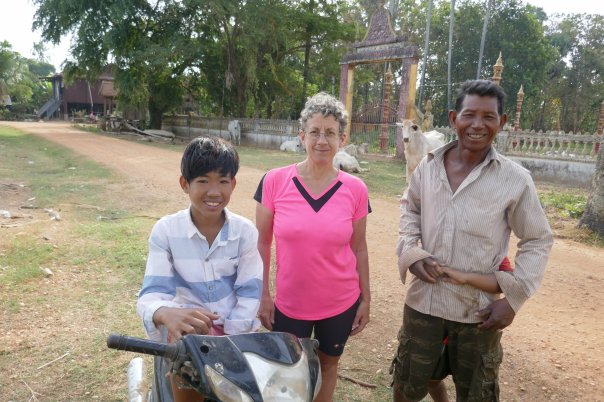
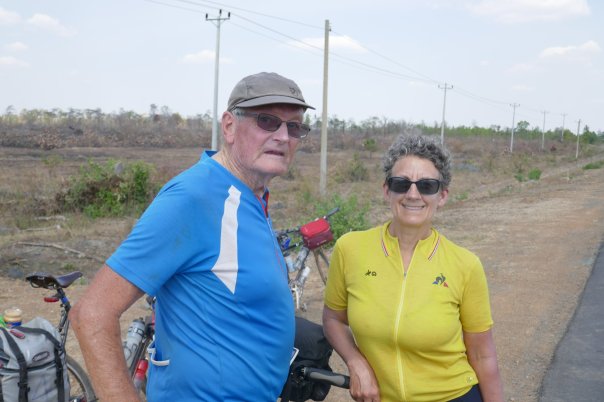
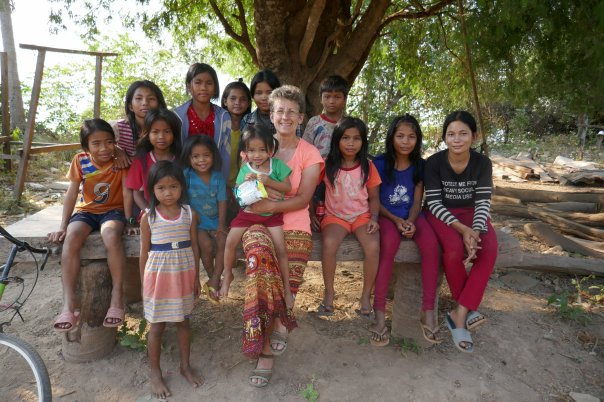
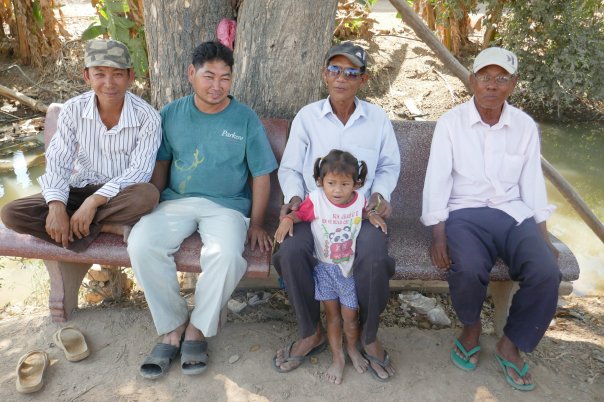
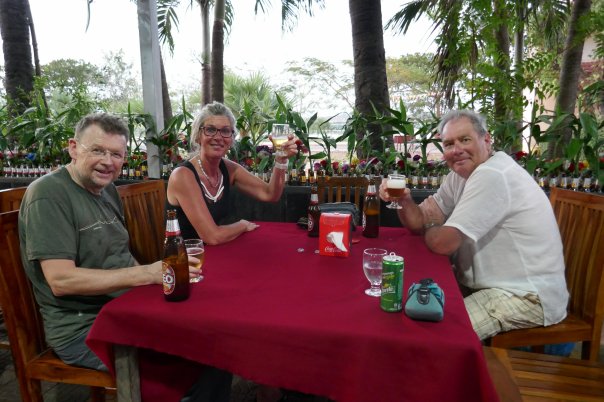
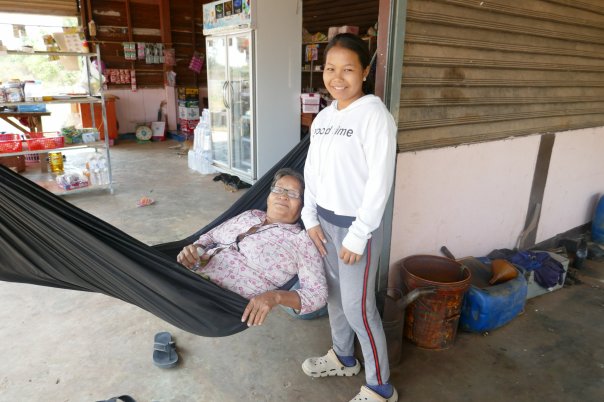
New friends along the way

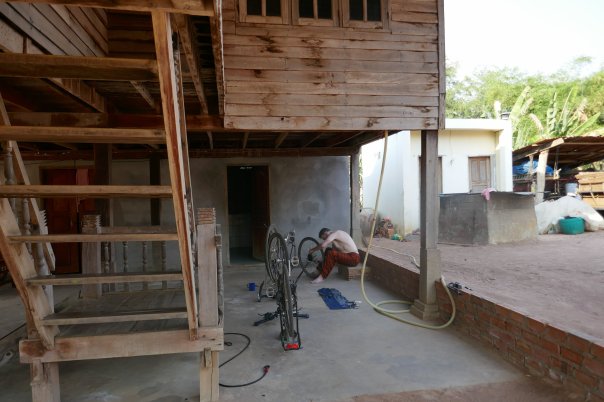
We took lunch having covered 85km – not a bad morning. But we both felt slightly heavy legged and so stopped for a soft drink at about 103km. This produced one of the major amusements of the trip. The soft drink seller we stopped at had no cold drinks, but directed us to a store opposite who did. The couple who ran the store doubled up by cleaning motor bikes – with a water spray until and cleaning cloths. So we tentatively asked about this service for our bikes and – surprise, surprise – it cost $1.
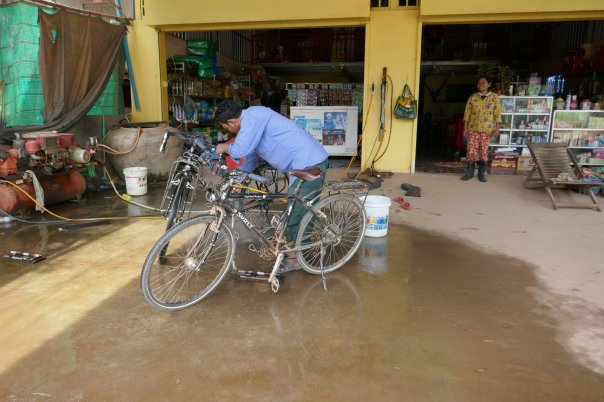
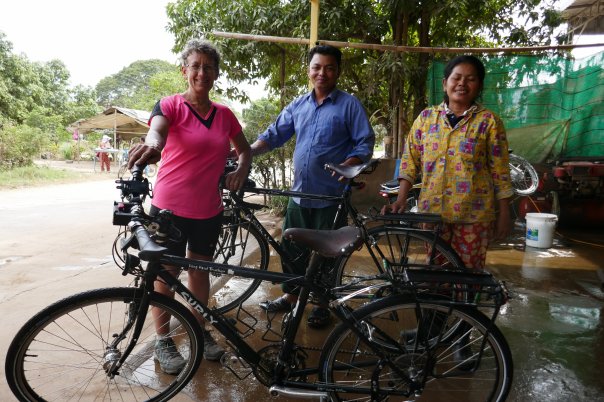
Clean bikes and the bike cleaners

Fantastic value as we watched them expertly clean every part of the bikes, getting the mud, dirt and grime out of all the crevices. But they thought it was hilarious that anyone thought a bicycle was worth cleaning. This gathered quite a crowd including a lady of about our age who was fascinated by the whole process; no translation needed to understand that she wanted to know where had we come from, where were we going and when did we not have sore bums. The last question involved her feeling Bernie’s padded trousers and then carefully feeling my posterior as well – to the further huge amusement of the onlookers. She was quite a character and we were happy to play along. The sub-text was “Well they are mad of course – not only having their bikes cleaned but also cycling all this way – you think they could afford a motorbike but poor things have to cycle”.
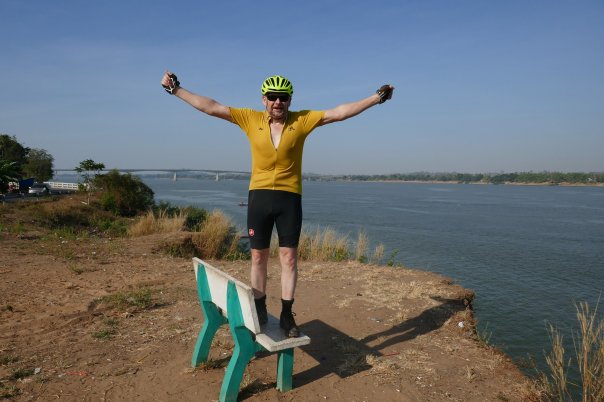
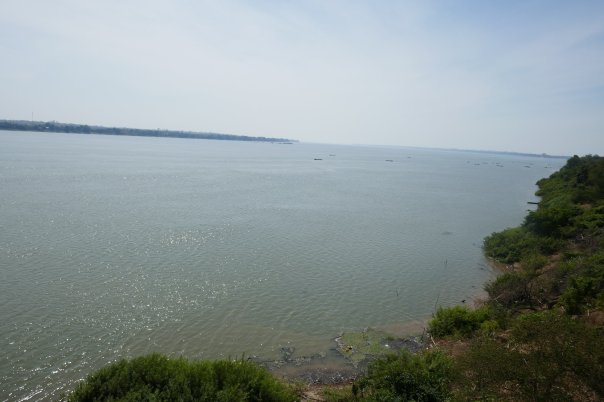
This really cheered us up and we ambled along the last 23km, finally crossing over the river into the city of Kampong Cham at about 3pm. There was not a single hill all day and the only time we registered any height gain was to climb the few metres needed to a bridge. I have never done such a sustained flat ride with the wind behind me. Such a change from Northern Cambodia where we battled against the wind day after day. So a lovely day on the bikes – just 1 more day to reach the capital.

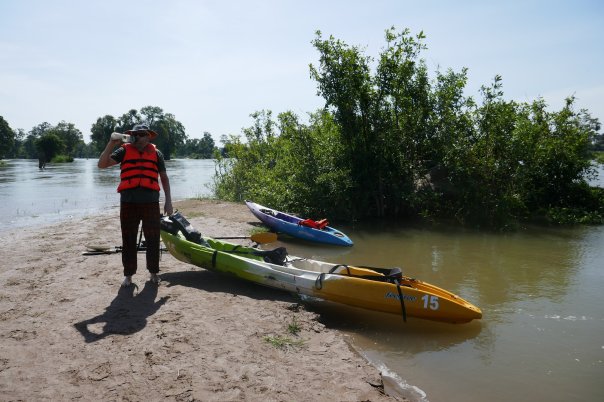
22nd January.  Kayaking with fresh water dolphins.

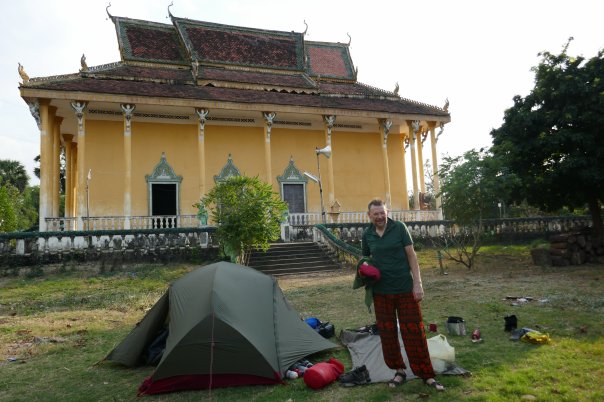
Although I am sure the monks were praying early it mercifully was not broadcast across loud speaker as with some other temples so we woke gently in our temple camp site. As I stirred outside the tent for an early morning brew at dawn, so the monks were also stoking the fire in their kitchen area and preparing breakfast. We slowly broke camp and headed off (having persuaded the monks to accept a donation) to meet our guide for our kayaking trip (booked through Cambodia Discovery Trail). This part of the Mekong is famous for a pod of rare Irrawaddy fresh water dolphins and we were hopeful of spotting them.

First they strapped our bikes and panniers onto a motorbike trailer to transport them to the finishing point so that we could continue cycling from there. Everything can be carried on a motorbike in some sort of trailer or other. The most impressive so far was a very large wooden bed!

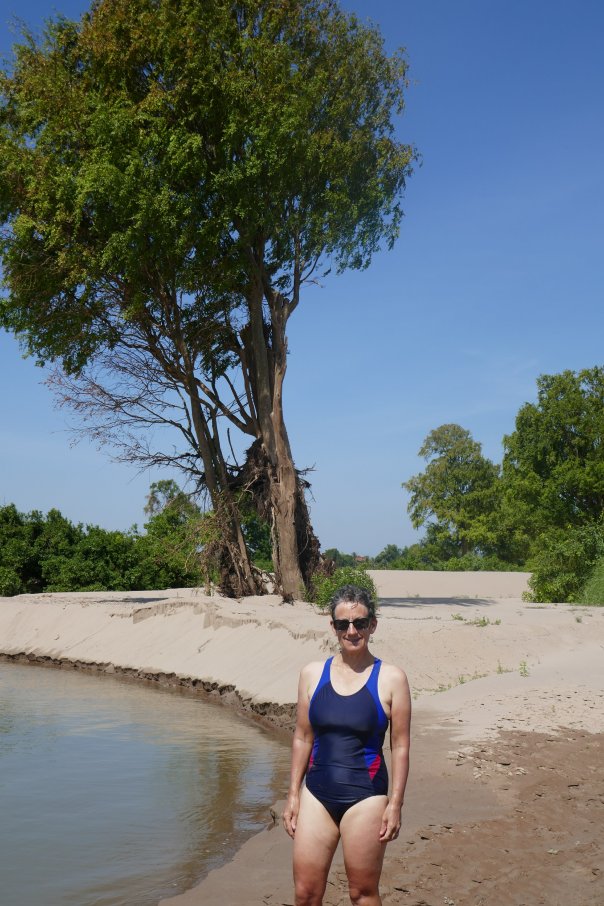
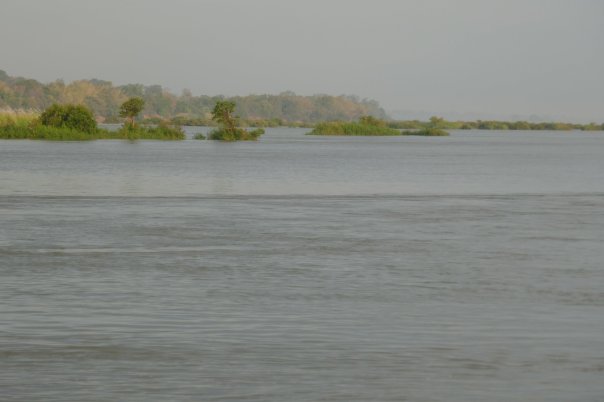
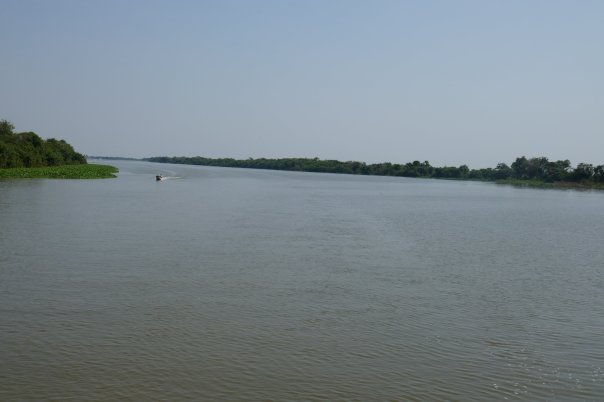
Our guide, Lucky Kip, was a pleasant softly spoken local man whose family were fishermen and knew this bit of the river like the back of his hand. We were in a tandem kayak while he had his own single. We were soon installed and pushing off onto the mighty river. Anything else aside it was incredible kayaking across to the other side first and then drifting downstream on the swirling currents. As it is dry season the river is scattered with trees and bushes and small islands poking out of the water. During the wet season the river rises by 35m and all these are submerged. It was both peaceful and but quite scary with the power of the river. We saw cormorants and king fishers then pulled up onto a small island and swam in a small protected bay.

We then paddled through an area called the floating forest – large trees looming out of the water with elaborate root systems.

We were then on open water and into the dolphin area. We were making our way to the opposite bank when lucky suddenly stopped and paddled rapidly to the other bank with us following as fast as we could. We pulled the boats onto the bank and soon saw a couple of the dolphins coming up for air then diving down again. These dolphins are shy and easily scared off but we watched for 20 minutes or so as they rose up and down. Glimpses only each time but as there are only 80-90 left in the whole Mekong river it was a privilege to see them. The fresh water dolphins have flatter noses and larger rounder heads compared to the ocean dolphins. There were around 2000 on the river but during the starvation of the Pol Pot years the local people killed them to eat and for oil – often shooting them or dynamiting them out of the water. In spite of concerted conservation efforts their numbers are still precarious but thought to have raised to around 90 last year because of good rains. With females only giving birth every 3 years if there is a year of a lot of pollution it makes a significant difference.

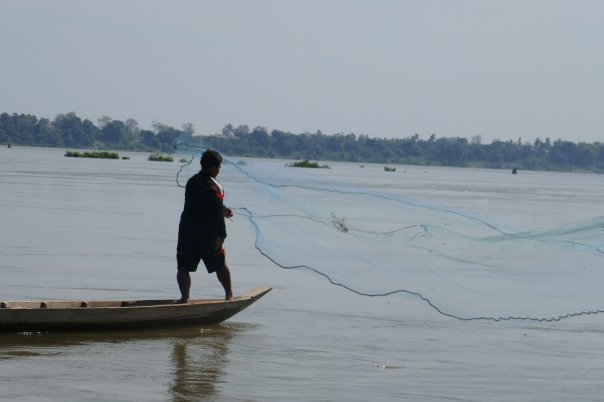
While we were watching the dolphins we were also watching fishermen on small boats casting their nets and pulling them in, catching small fish. 1 kilo is 5000 rials (about 1 pound) – that’s a lot of fishing for not much money.

We then had a final hard pull directly across the river to the other bank to finish our trip. Out bikes were there waiting for us and we had just 15km along a small paved but bumpy road into the town of Kratie. We treated ourselves to a room with A/C and felt exhausted. We thought we were fit but suddenly using totally different muscles and we were wiped out again!

Kratie felt a step different from the more remote north east. More affluent, more touristy (lots of places with burgers on the menu), nearer to Pnomh Penh. It had a long and pleasant river front but to us not nearly as charming as the little villages we had seen (or are we getting ‘tourist snobby’ again). A good place to rest and do some onward planning.

Monday 21 January: Koh Preah to Sandan: 122km and 350m of climbing

One of the features of affluent, western life is the distance between individuals. We sleep in our own rooms (possibly with a partner) with thick walls between us and other members of the family. This is pretty uncommon for the rest of the world where families live on top of each other, sleep within the same area and live in far closer contact with others.

We felt this as we rose before dawn this morning, with both Sorrany and her husband and Veronica and Allessandro sleeping in the next door room (although Veronica and Allessandro were under a mosquito net which offered some demarcation). We crept about as we packed up but our efforts at being quiet in this wooden house were pretty unsuccessful. Both Sorrany and Veronica were soon up – and we had exchanges with them both before leaving. We wish Veronica and Allessandro well on their bike trip. It had not begun well but they reached the delights of Kop Preah and decided (very sensibly) to spend an extra day there).

We picked our way across the island in the early morning light. The road was loose stones and so it was hard to keep balance with any weight on the front wheel, but I managed not to fall off (just). Then, as we got to the tiny ferry we saw it had just left! But, not wishing to loose the prospect of another paying customer (and with the chance of doubling the number of passengers for this trip), it did a loop and came back to the bank to pick us up – a result that saved us a hour’s wait! So we sat as the ferry chugged across the river to the mainland.

We retraced our steps along the road going north to the temple, and then left the dirt to turn East onto a sealed road. The joy of tarmac after bumping along the dirt roads is a simple pleasure. That road took us up and over a 100m hill to join the “no7” road which was one of the main routes from Cambodia to Laos. But it was quiet! There were a few trucks but not many. Lots of minibuses use this route – stopping to pick up passengers as a substitute for buses. They were held together with string – literally – as many had parts such as exhausts kept in place by string or rope, and had motorbikes strung with rope off the back. It was not clear whether the motorbike was being transported for a passenger or was a back-up to be used to go to get help when the minibus broke down.

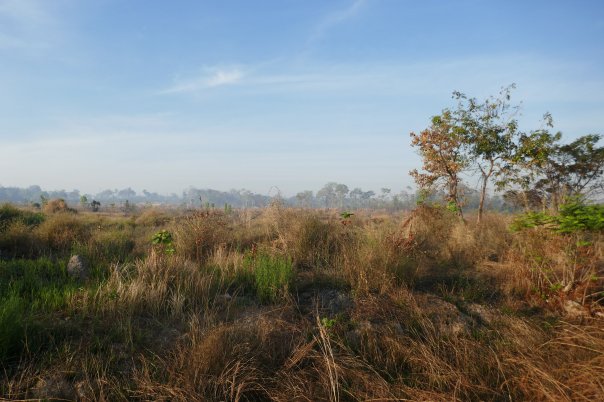
The road surface was initially not great and it ambled up and down for the next 20km, as the temperature gradually climbed. This is scrubland and was thinly populated – and only then along the road. I am pretty confident there is mostly uncultivated bush for miles and miles away from the road. But then the surface dramatically improved. The Chinese have built a brand new road in the last few years and we whizzed along. As the day heated up, so the wind got up but it was in our favour. So we sped along at about 22kph. The road undulated but there were no big hills and we made great progress. We got to the village where we originally planned to camp at about 11. So we changed plans, had a quick soft drink and carried on. The scrubland continued and, as if from nowhere, we met a cyclist coming the other way.

Paul is retired, lives in South Yorkshire and cycles the world when he can. We exchanged pleasantries and went our separate ways – with our southward journey being fuelled by peanut butt sandwiches. Almost as much a delight as the Chinese road.

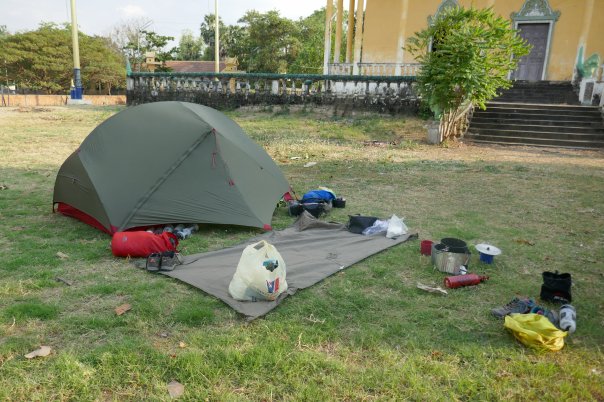
By about 3pm we had got to the turning to bring us back to the Mekong. 14km later (and countless wave and “hello – what is your name – goodbye” from passing children) and having covered 122km, we re-joined the river at the village of Sandan. We found a small Buddhist temple and easily got permission to camp in the grounds. There were plenty of monks around but our efforts to make a contribution to the monastery were rebuffed.

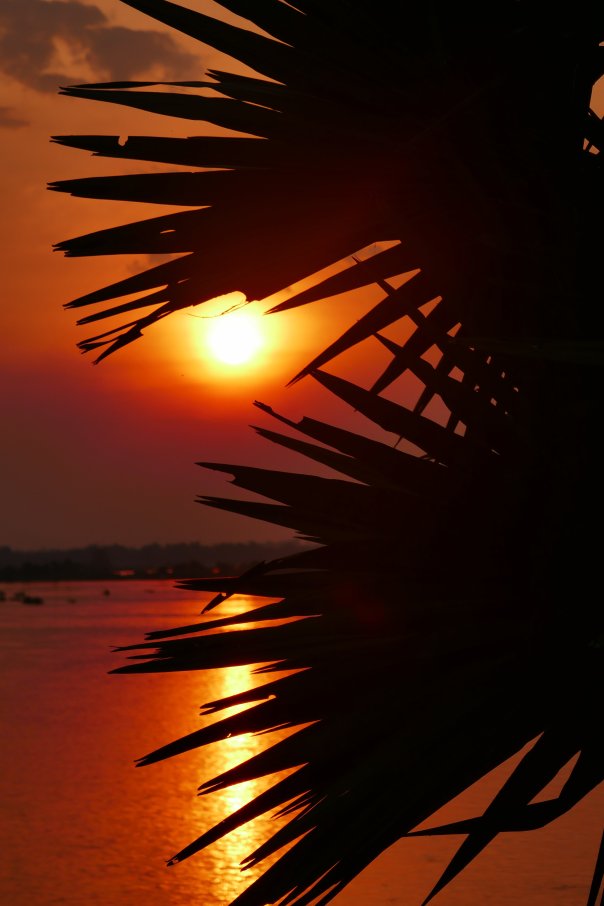
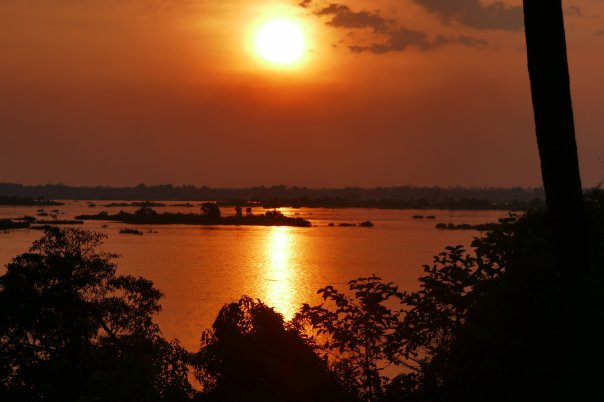
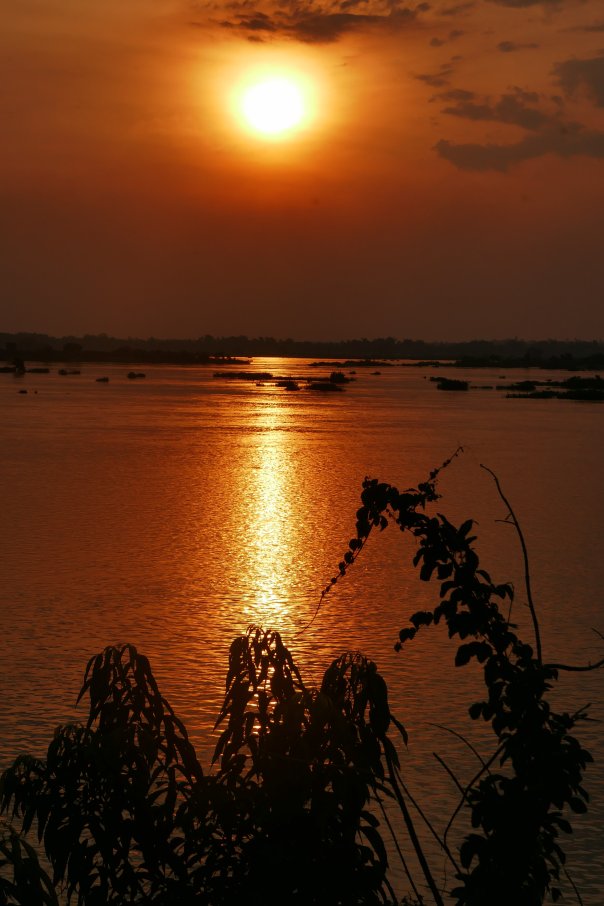
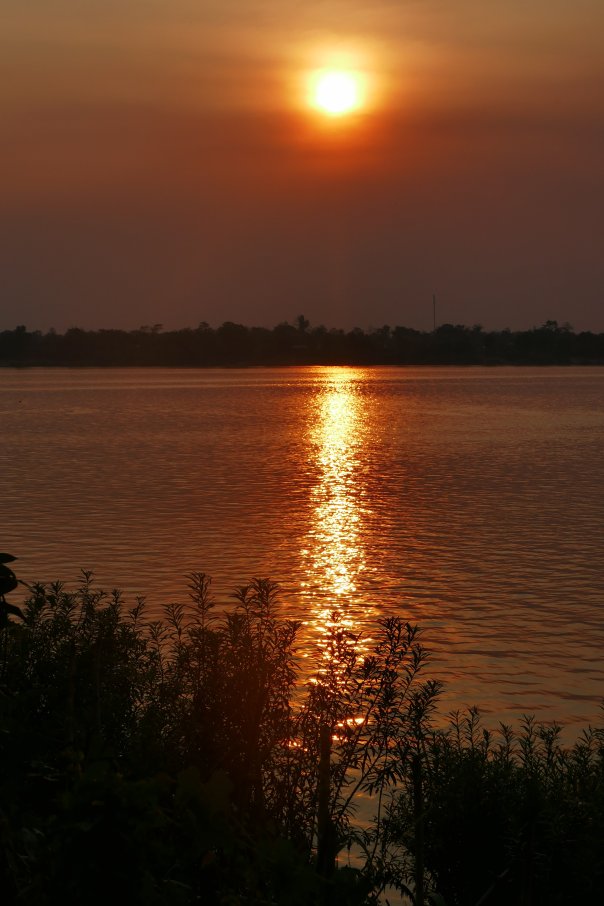
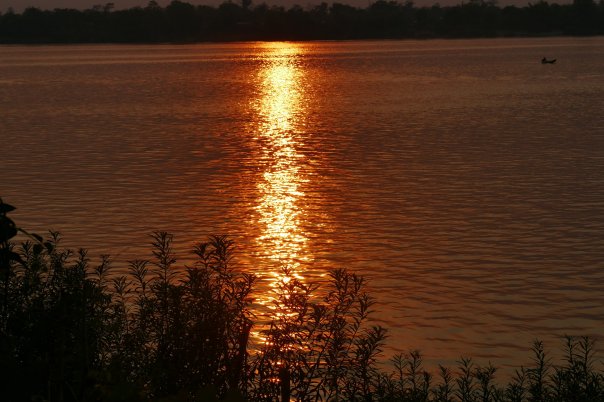
Then we set up camp, brewed and ambled into town to try to buy coffee (failed as the Cambodians do not seem to drink either tea or coffee on a regular basis) and watched a spectacular sunset over the river. We cooked our one-pot meal and then ate to the background of junior monks practising their chanting. The words for the chant were on a mobile phone and the young monk was scrolling through the text on his phone as he chanted. It all felt very strange and yet very familiar at the same time.

We exchanged a few words with some of the monks who spoke a little English but the extent of their English meant it did not get beyond exploratory questions – but was till far better than our Kymer. The limited conversation made it clear that we were welcome here, and that felt good. Finally we went to bed in our tent – driven there by the mosquitos – and watched an orange moon rising in the East.

Sunday 20th January. Chilling on a Mekong Island. 38km.

Today was short on kilometers but big on ‘experiences what we have had’. I am sitting on a small inhabited island in the middle of the Mekong river in a very simple village as the sun is beginning to dip down and filter through the surrounding trees. 5* luxury it is not but 5* experience it is.

We got extremely helpful advice we got from Theara at the Cambodia Mekong Trail office in Stung Treng (if you are a traveller reading this go to http://www.cambodiamekongtrail.com and visit their office). This outfit runs tours but also feeds back into the community, they are also generous with their advice for independent travellers. We would never have found this place or known about the Homestay project without them.

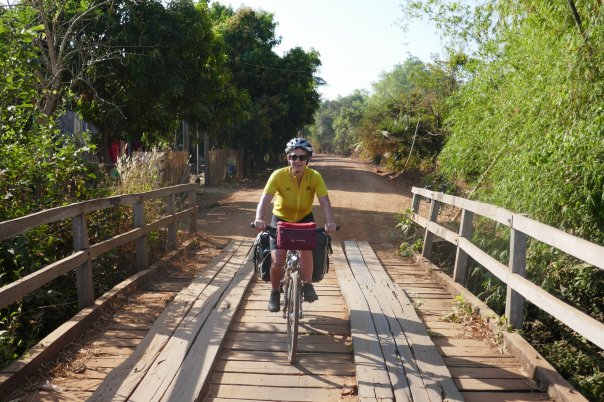
As we only had a short cycle we had the luxury of a gentle start and ambled off at about 8.30. We cycled about 30km directly along the banks of the Mekong past thriving communities and lush vegetation. The first 6km were paved but then we were on dirt track, crossing numerous rickety wooden bridges. Harder work than paved roads but we were in definite ambling mode and jogged along absorbing the scenery and the joy of the wind behind us! We passed a large modern pagoda which was impressive – I wasn’t dressed for entry being in lycra shorts (and not wanting to unpack everything to cover up with my sarong) but could see most of it from the gate and listened to the tinkling bells observed by 2 small boys who were fascinated with the bikes.

A little later on there was a side turning down to the small ferry over to the Island of Koh Preah. We had a debate about whether it was the right turning. I knew for carrying on as thought it as to soon but after a killer of kms we managed to find someone who u derstood our accent as we tried to say the name of Feb island. David had beenright (just on this occasion) so we retraced our steps and found the ferry. We wheeled on and sat around for half an hour or so while a couple of other people also pitched up for the short hop across the river. There was then a few km across the island on a tricky gravelly track to the small village on the other side of the island. The village has a programme of 7 homestays that rotate visitors and we were soon directed to typical wooden house.

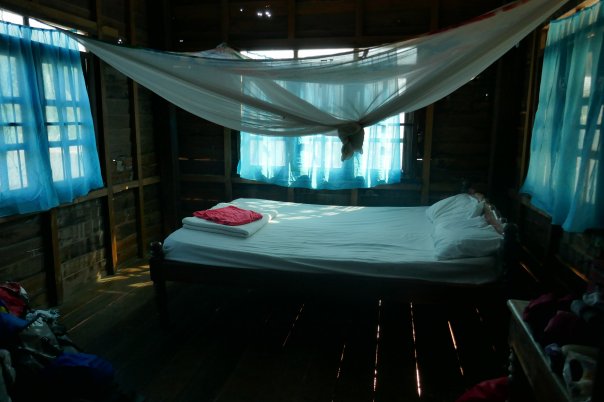
The house had one large main room -off this was a small bedroom where we would sleep on a mattress on the floor with mosquito net over. There were plenty of cracks between the floorboards to the area under the house below. At the back of was a small kitchen with an open fire. There was a small outside ‘privvie’ with water for a bucket shower. Pigs, chickens and dogs roamed around and there were children everywhere.
We cleaned up and rested for a bit and then strolled through the village. We felt rather like the Pied Piper of Hamlyn as were followed by hoards of children and the usual chorus of hellos.

I

t was Sunday so everyone seemed very chilled (although I suspect it is much the same every day). The village houses stretched for about 3-400m then a path petered off into scrub land. Our aim was to find a shady spot to read by the river to get some cooling breeze – we found somewhere suitable which lasted for about 15 minute before we were ‘found’ again by groups of children – the brave ones approaching to say ‘what is your name’. By and large the mothers looked young and we saw very few older people – a result of the terrible genocide of the Pol Pot era.

The afternoon was cooling a bit and we provided more local entertainment for the watching children as we brewed up a cup of tea and filtered water for all our water bottles. More reading and chilling, we felt very laid back and strolled back to the riverside again to watch the sun go down. A retired teacher who we think was the community head, came to chat with his limited English (vs our non-existent Cambodian) . We learnt a surprising amount. He was 64 and had retired as a teacher at the island school 3 years before. He had 8 children who were teachers, a nurse and son in the military. None lived on the island. I wonder if these communities will survive going forward.

We were then provided with a delicious dinner cooked by Sovanny. A last amble in the dying minutes of light as a full moon rose then when we came back to the house we found 2 Italian cyclists, Veronica and Allesandro, had just arrived. It was their first day on the bikes after a tricky time getting transport from Pnomh Penh. They had missed the turning to the little ferry like us and arrived late. They were good company as we chatted while they had another dinner provided by Sorrany.

A memorable day.

Saturday 19th January: Chheb Chas to Strung Treng: 86km and 300m of climbing

Today we reached the mighty Mekong after 3 days of travelling across northern Cambodia. The Mekong is a massive river which runs for 4,350km from the Tibetan Plateau, through large parts of China and Laos and into the sea in Vietnam. It provides water for cultivation in the areas it passes and defines the geography and politics of its entire length. So getting to see and experience the Mekong was a key part of our Cambodian trip.

We woke before dawn, packed and breakfasted on porridge and bananas, and then left the guest house which will always be remembered in my mind by the massive bed in which we slept – totally out of proportion to the room. It must have been made with the idea of families sleeping together in a single bed.
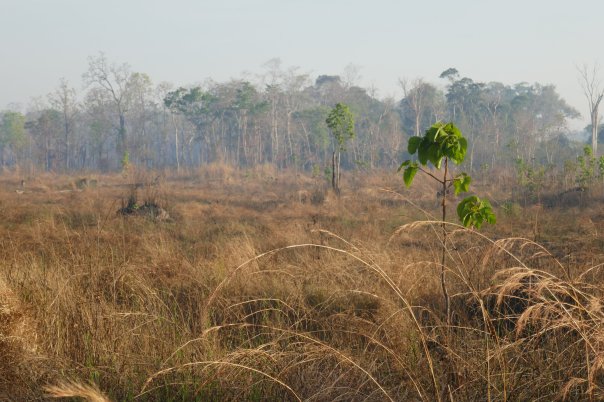
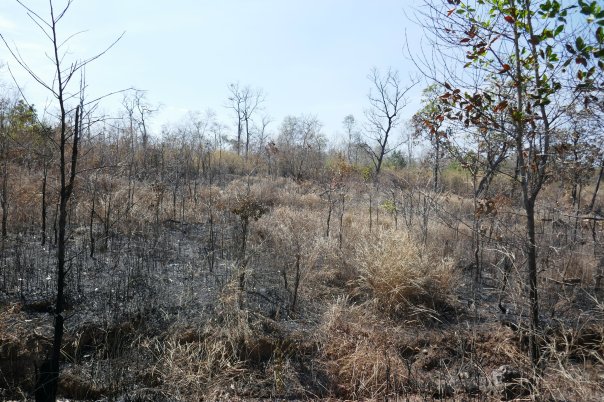
The air was cool as we gradually climbed out of the town, with a morning haze in the air. The cause was land burning, which is a farming practice here even though attempts are being made (unsuccessfully as it seems) to stop it. Farmers burn off the vegetation to create an ash surface for the next year’s crops. The climate change effects of this practice are not great, and it is not needed. But it takes a long time to change established practices in an agrarian economy. The result was that we were cycling through thin clouds of smoke, with the occasional fire still smouldering. It was atmospheric in a strange way.

The vegetation changed markedly as we went. Sections would be uncultivated scrubland with some forestry, but then we would enter a cultivated area with tended fields and more houses. There were the usual hoards of small children everywhere, all shouting “hello” or “goodbye” as we passed – often at the some time. There were lots of smiles here. Cambodian men, women and children smile easily and often and, when they do, their whole face lights up. It would be easy to characterise this as a “happy” nation which was at ease with itself, but the truth is far more complex. But there is an element of this at the surface, even if there are huge depths to the national psyche which tell a different story.

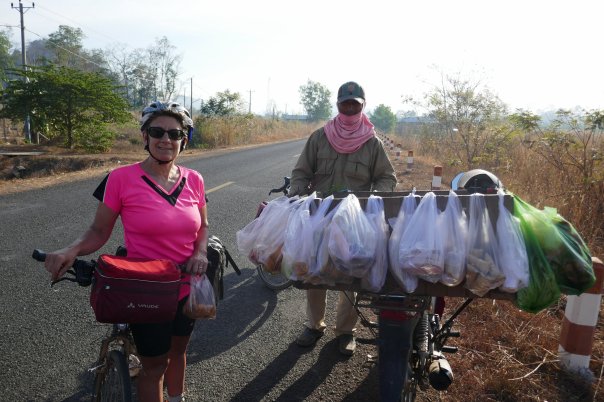
We pressed on across the changing landscape and bought breakfast from a passing motorbike seller. There were huge numbers of men and women on motorbikes with a box on the back containing fruit, vegetables and meat. The boxes have spikes on the top, from which are hung plastic bags with all manner of other goodies. There must be a production line somewhere which produces all these, sells them to the bikers who then work as travelling shopkeepers to sell them on to local people. This may explain why there are so few proper food stalls outside the main towns. They are not needed because the food comes along by a stream of motorbikes. Then, as they go along, the travelling sellers sound their horns to alert the women of the villages on the road (and the customers always seem to be women) to buy their goods.

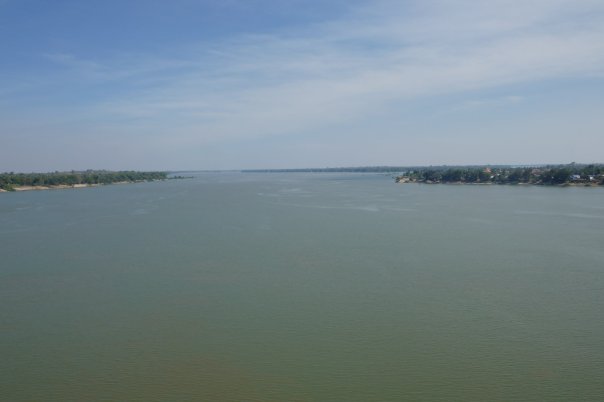
By 11am the sun had got up and it was heating up, but we were approaching our destination. We went around the final bend and then saw the majesty of this iconic river. It was about 1km wide at the point where the “China-Cambodia Friendship Bridge” spanned the waters. Another example of Chinese economic power – I do not doubt that the friendship has strings attached but, at least for the moment, is good for Cambodia.

The town of Strung Treng is at the confluence of 2 rivers, the Mekong and the Tonle San. The tributary, the Tonle San, comes from the East and rises in the Vietnamese/Laos mountains. But this stage it is about 500m wide and is a major river in its own right.
We found a guest house and booked in, and then wandered around this busy town. We found a mellow chap who spoke English softly. He runs tourism on the Mekong through a community based tourism project. We signed up to do half a day kayaking on the Mekong in 2 days time, hopefully to see the fresh water dolphins who live in the river.
Then we met a lovely Dutch cycling couple (yes another Dutch couple) who were coming south from Laos. We had a lovely evening with them, comparing notes and reflecting on the joys, frustrations and choices we make to travel this way. So many of the things they said accorded with our own views – but we accept that we are in a minority!

Friday 18th January. Sayrang to Chheab. 112km and 250m of climbing.

I was rather dreading today. I was exhausted yesterday and was not relishing another day of heat and headwind (we have chosen the wrong direction to travel as the prevailing wind seems to be NE). As it turned out it was a much more manageable and surprisingly pleasant day – although still long.

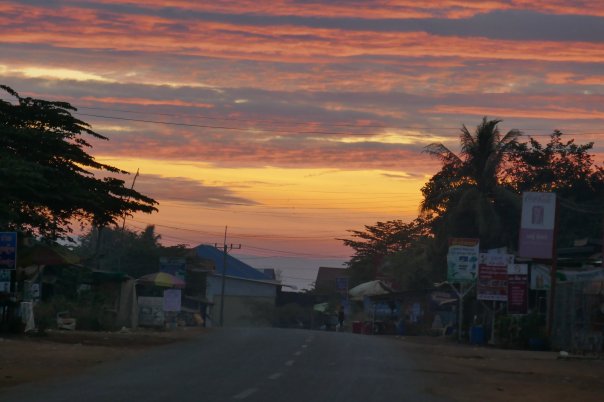
Up with the larks (or Cambodian equivalent) we were ready to go just as the sun was rising. It was blissfully cool (18 degrees) and a beautiful sunrise (maybe not as photogenic as over the Angkor temples but shared only with each other as we cruised the first km on a gentle downhill – perfect). It was slightly more overcast and the coolness persisted – it made so much difference and we completed the first 55km of the day in about 3 hrs (ie by 9.30am!) with barely a stop. The wind was there and persistent but we were going more due east than north east and that slight side on wind also made a huge difference. Wherever there was water there was greenery and pleasant villages. This road 300km across the north of Cambodia is newly paved but still has very little traffic so great for cycling.

So we reached the provincial capital Preah Vihear for second breakfast and came across a surprisingly fancy restaurant which did us fantastic omelettes (not on the menu but they were happy to rustle them up for us). Coffee not so good – they use condensed milk in coffee, which is pretty disgusting (to us) – must remember to ask for black coffee next time.

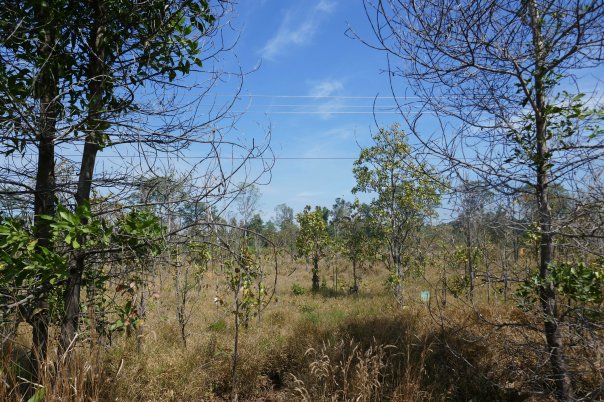
We were therefore well rested and after a foray into the local market for fruit, veg and cake we were ready to tackle the next 55km – we knew there was little between Preah Vihear and the next place where there were any guesthouses. This was an area of much more scrubland. Preah Vihear province is the poorest in Cambodia. We passed numerous wooden shacks on stilts (as almost all Cambodian houses are) – no running water or electricity, although all had neatly swept surrounding. Children were clean and all looked well nourished so not abject poverty but what looked like a very limited life. There was evidence of dry paddy fields waiting for the rainy season but it was not clear how people subsisted in the dry season. We saw quite a few pigs scuttling around the shacks – and quite a few legs akimbo and definitely dead on the back of motorbikes, presumable being taken to the market.

One of the joys of Cambodia is that every single child (and quite a few adults) shouts “hello’ and waves in great excitement as we go by. They are full of cheeky smiles. Many pedal battered old bikes to and from school and they love it when we overtake them. Of course the occasional bravado boy tries to keep up for a short while, whooping and smiling. You can’t help but be cheered up. Often a chorus of disembodied ‘hellos’ emerge from somewhere unidentified so a general wave back is in order.

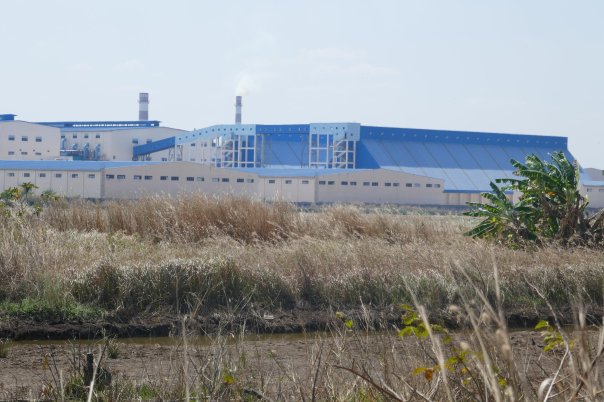
A massive new factory – built in the middle of nowhere. There must be a reason but we couldn’t guess it!

Another feature that we come across several times a day are Cambodian weddings – these consist of a decorated large tent (marquee-like) and amplified music booming out at top volume. You can literally hear it kms away. We feel we can hum along quite effectively now…even David’s voice seems well suited to the rather wailing tones! We think that some of the more mournful wailing might be funerals but difficult to tell!

So although the flat landscape is not particularly scenic there is usually plenty to see and observe to keep the kilometers ticking by. The afternoon did heat up, the wind did get stronger (still mostly ‘slightly side’) and we did get tired but we rolled into the little town (more a large village) of Chheab (yes it is double ‘h’) a little before 3. 2 guest houses were marked (our new find is the app map.me that is particularly good at marking hotels and guesthouses in places that will never reach a guide book) but we were dubious about how basic they might be (one we had looked at yesterday was only 5 dollars but very grim, luckily there was a smarter one up the road). As it was there the first one we came across was a large brick building (wooden ones quaint but let in all the mossies) with large rooms and even en suite facilities. 10 dollars or 15 with air con…..no contest – we always go for the air con if available (feeling slightly guilty about the environment but we rest and sleep so much better in the this humid heat).

After a shower (cold but wonderful) we strolled round town. This took approximately 5 minutes to see the full extent but it had an impressive Buddhist temple in the middle (no photos as had not taken camera or phones with us, not expecting to see anything). In that time we did see about 5 phone shops. As in India nearly every village has a mobile phone mast (or 2 or 3) and connectivity is as much as an obsession as it is for us. It was a small, ordinary little Cambodian town in the middle of nowhere – we certainly feel off the beaten track (although we did see one Australian cyclist today going the other way today towards Siem Reap so we are not totally unique).

Thursday 17 January: 108km and 300m of climbing

Today was back on the bikes – after all this is supposed to be a bike tour! But after 3 days off we felt both ready and a bit sluggish. We started going through Siem Reap city – now the second largest city in Cambodia. There is far more here than tourism, but tourism is the glue that holds the place together. The sun was just rising as we went towards the East, and we rather enjoyed seeing the day starting for all the locals.

W

e ambled out on the main road to Phnom Penh, with motor bikes, motos, cars and lorries. After about 20km we veered off to a minor road and then picked our way across country for the next 20km or so. It was a mixture of roads with large potholes and dirt tracks. Bernie’s bar bag gave up to an extent – bad design – and we swapped. It is now held on by a bungee cord but this arrangement may not last. One to take up with Wiggle and see if we can get a new one in Phnon Penh.

But the countryside route was slow but delightful. This is a prosperous area, with irrigated fields and diversity of crops. There are lots of people living here, all of whom waved and shouted “hello” as we passed. We were also conscious that this was a major military area in the war to liberate Cambodia from the Khmer Rouge in 1979. Land mines were planted all over the country but especially in this area. 20,000 Cambodians have been killed by land mines since the war ended and thousands more have lost limbs, hearing or suffered other trauma. So the idyllic countryside we looked over as we cycled continues to hold hidden terrors.
Eventually we re-joined a properly paved road. We had done about 40km and it was now about 10.30am and starting to heat up, and the wind was getting up.

The pattern of the days is that it is delightful cycling before about 10.30, with manageable temperatures and little wind. Then, as the heat develops, so the wind gets up. It does not matter which direction we travel; the wind is invariably against us. The next 20km were slightly uphill, against the wind and on bumpy tarmac. All in all, pretty tough going as the temperature climbed to 38 degrees. So we felt it was time for some “kulture” and, in this part of the world, that can only mean another ruined temple. This one was at Beng Mealea. We got our tickets and then ambled onto the site.

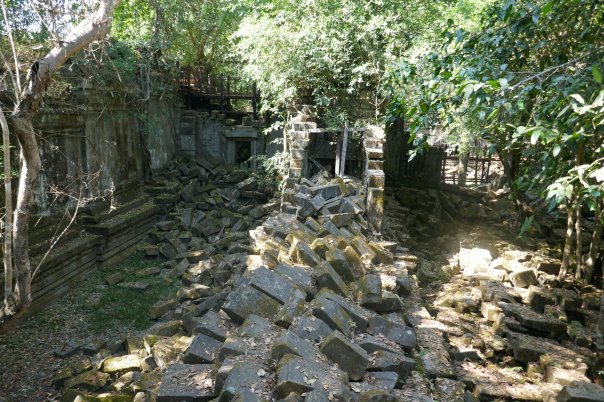
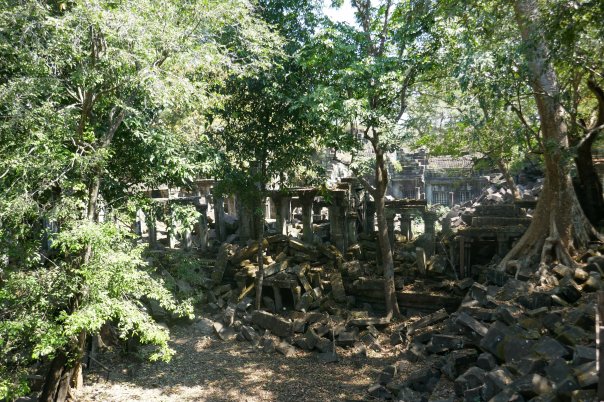
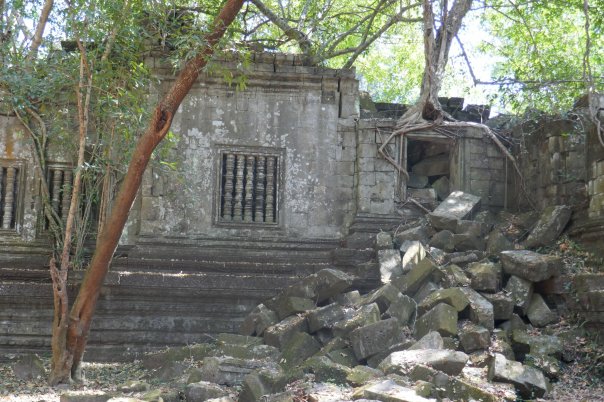
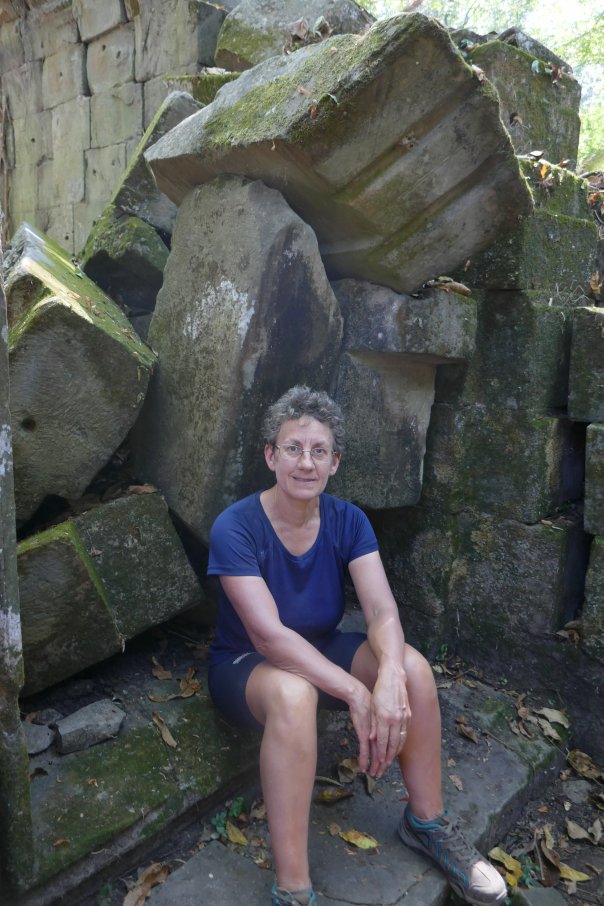
This was a contemporary temple to Angkor Wat but not as large (but then nothing is as large as AW). It had been wholly consumed by the jungle but was partially recovered and partially restored. But there were still huge piles of bricks everywhere waiting for an archaeologist to play detective to fit the blocks back together. Seeing temples in this partially unrestored state demonstrates the skill, ingenuity and patience needed to be an archaeologist – as well as the considerable external resources needed for any serious level of restoration work!

There were a few large groups of Chinese tourists in the site, all looking carefully for the best place to get photographed. We saw a documentary on a Chinese Wedding when we were at home – which suggested that the wedding photographers expected to take about 10,000 pictures on the day of the wedding. This group seemed to be up for the “photograph everything – with you in it” challenge. It was almost as interesting looking at them as seeing the ruins; they were all so carefully and beautifully attired, something of a contrast to us (but then they had not been cycling in near 40 degree heat).
There was enough of the temple still standing to show that it would have been magnificent when it was fully functioning. Equally, with it half taken over by the jungle, it was pretty impressive.
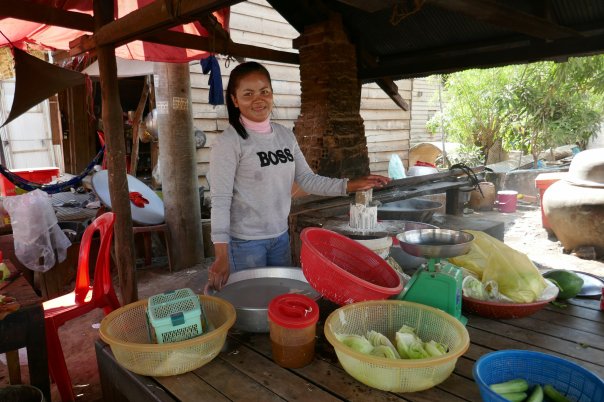
After the temple we refiled water bottles and cycled on but holed up for lunch after another 10km. This was home made noodles and cabbage, cooked at a wayside stall, with some “knock your head off” sauce as an accompaniment. The lady who was cooking was jolly and looked at us with a mixture of pity and amusement – not a bad combination in the circumstances. We saw the locals laddling on the “KYHO” sauce as if it was ketchup. We could only mange a tiny amount of the sauce. It cost $1 between the 2 of us for lunch – which seemed to be the standard price. Not surprising that many people here eat all their meals from street stalls as opposed to cooking themselves at all.

After lunch the wind remained strong (and against us), the road rose gently, fell a bit, rose a bit more and the scenery became more like semi-desert scrubland. We plodded on but it was tough. I would not say we did not enjoy it but the achievement may have been better than the immediate experience.
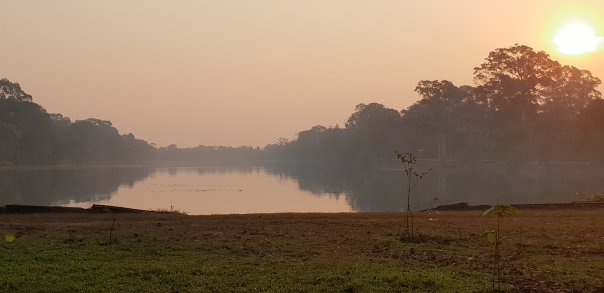
Eventually we rolled into the small town with squiggly writing (small so dubious translation but possibly “Srayong”) where we knew there were guest houses. There are some temples 10km off the main road but, to be honest, we are a little templed-out at the moment so may give them a miss. This is the first of 3 days going East across the north of Cambodia to attempt to reach the valley which contains the River Mekong, before we plan to go south to Phnom Penh and then to Vietnam. However there are a few miles to pedal before then!

Wednesday 16th January 2019. Angkor Wat Temples

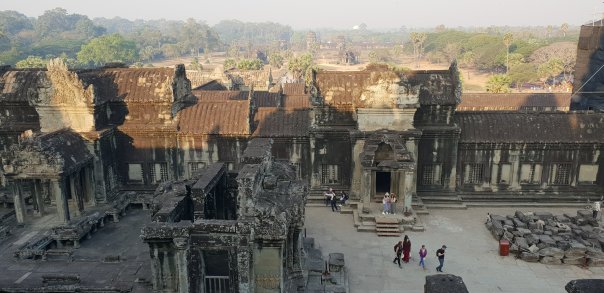
Third day off the bikes today but a day of serious sight seeing at Cambodia’s biggest draw – the Angkor Wat temples. Angkor Wat itself is the largest religious structure in the world but the whole area consists of numerous temples dating from about 950 to 1200, being the height of the Khmer empire. 2 million visit each year so we knew it would be a real tourist honey trap.

The guide books rate going to see the sunrise over the temples but we decided we did not want to share the sunrise with thousands of others and left our little apartment as it got light. It was about 10km to the site via the ticket office. We arrived as many were leaving to have their breakfast after seeing the sunrise so our first couple of hours looking round the magnificence of Angkor Wat was cool and not too busy. Our previous temple visits had layered in quite a lot of knowledge and history already so we did not feel we were starting from scratch and just tried to take in the building and carvings.

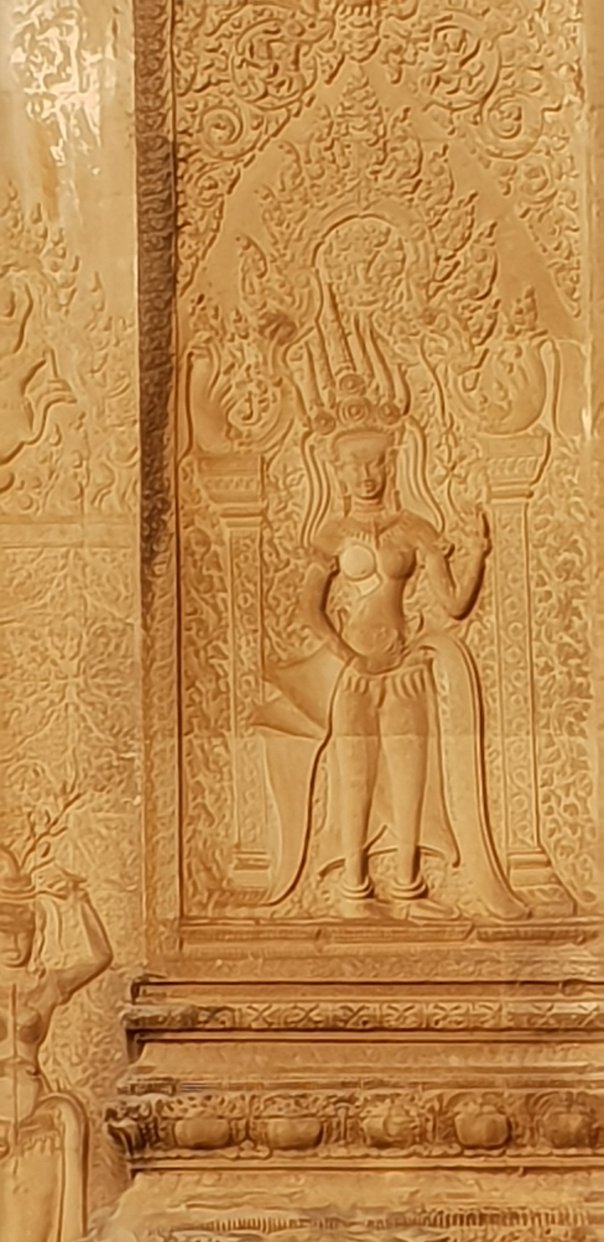
Many headed serpents, dancing girls, lotus flowers were all motives we had seen before. We made out way up the 3 levels of the towers and up the steep stairs to the inner sanctum of the middle tower. Only limited numbers are allowed in at a time so it was peaceful with great views. Then looking around magnificent Bas Reliefs in the outer walls chronicling wars, battles, ‘The Churning of the Ocean of Milk’ and the 37 heavens and 32 hells of Hindu mythology, among other things.

Like so many of the worlds great buildings they are at the same time incredible places but also rather obscene in the extent they are usually individual vanity projects of powerful people. The stats were huge – 300,000 people worked on the construction. Over a million people living in the temple complexes and surrounding area. It probably also contributed to the demise of the empire that was already waning – imagine if those 300,000 were engaged in constructive economic activity! So there was something monstrous about the temple edifice as well as being hugely impressive.
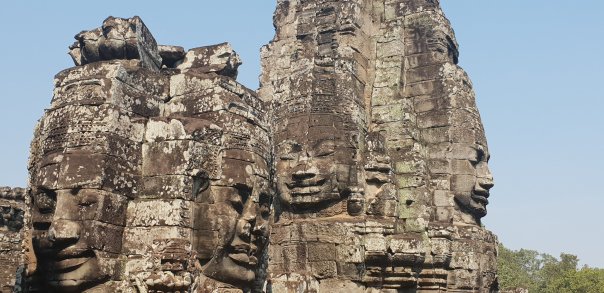
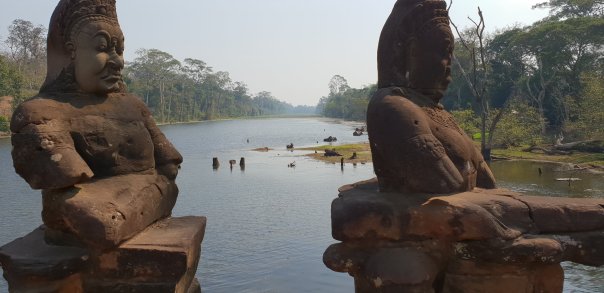
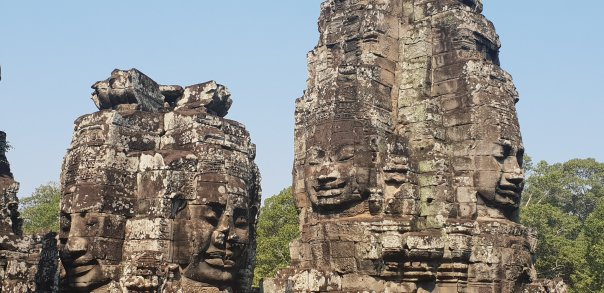
As the day began to heat up we retreated for our second breakfast and then headed to our next area, cycling on a few km under shady avenues to Angkor Thom – in effect a walled city.

At the centre was the temple of Bayon – 54 towers with (nearly) benignly (but possibly menacingly) smiling heads looking in all 4 directions. It really was spectacular.

We were beginning to wane but thought we would try and take in one more temple before retreating back to our apartment for the afternoon. Ta Promh was billed as a shady site that was good to see in the middle of the day as it was shady.

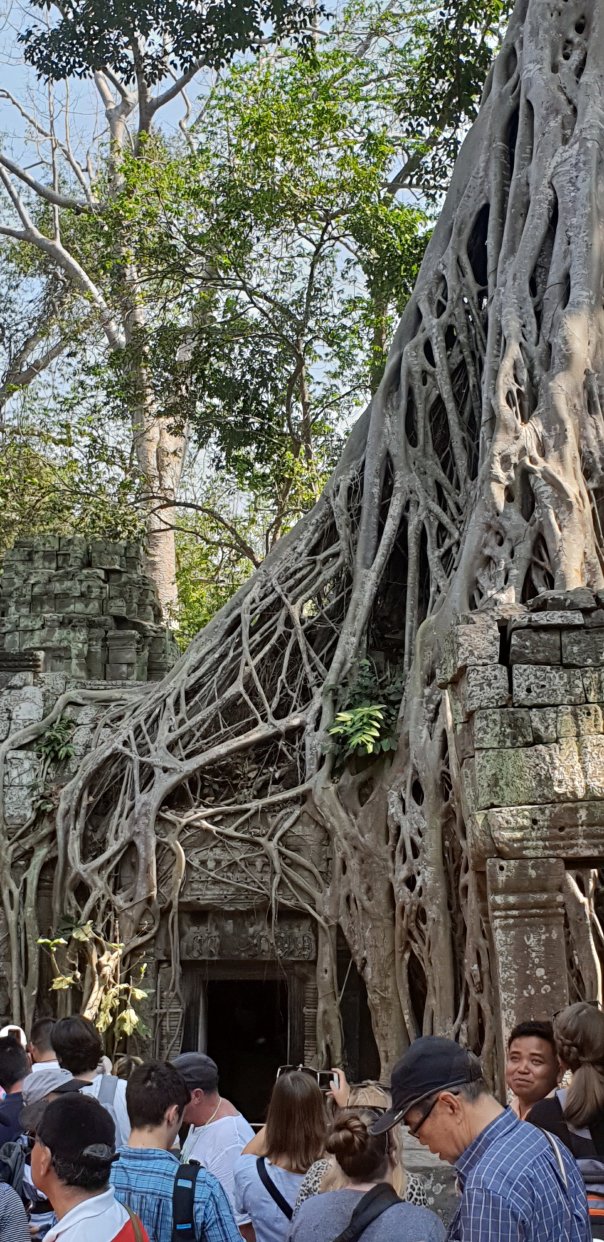
Unfortunately a multitude of tour groups also had the same idea and the place was gridlocked! The forest has encroached here and tree roots entwine round some of the walls and the complex was full of little alley ways and corridors that were heaving with people. This as the temple used for Lara Croft – Tomb Raider but, as we had never seen the film, that did not do anything for us. We quickly had enough and departed. There is only so much you can do in one day!

You could spend days or even weeks exploring the place but we had decided on just spending the day. We felt we had built on the temples we had already seen and got a really good feel of what the region meant. So after resting until the day began to cool we did not feel an urge to try and ‘tick off’ any more temples. We did though decide that would go and see the sunset , having missed the sunrise, that was also billed a ‘must do’ in the guidebook. This was spectacularly unsuccessful! We got there just after 5.30pm, about half an hour before sunset, but the gate had just closed and everyone was being turfed out. The sun was hidden by the trees and no sunset was seen. Hey ho. Back on the bikes to pedal back into town.

We needed to go into the centre of Siem Reap to find provisions (although there are a lot of small shops they carry few provisions – crisps and snacks but little substantial). As we paused to adjust the bag, 2 cyclists passed us – “they are touring cyclists” said David (clue – dusty bikes, numerous water bottles, handlebar bags) “let’s catch them up”. We met Sam and Matt who had in fact just met themselves cycling on the road. The 4 of us therefore went of a beer (toasting our friend Pat who has a significant birthday today) and a meal on the infamous ‘Pub Street’ (in fact food was very good) and swapped travellers tales and had a very enjoyable evening.
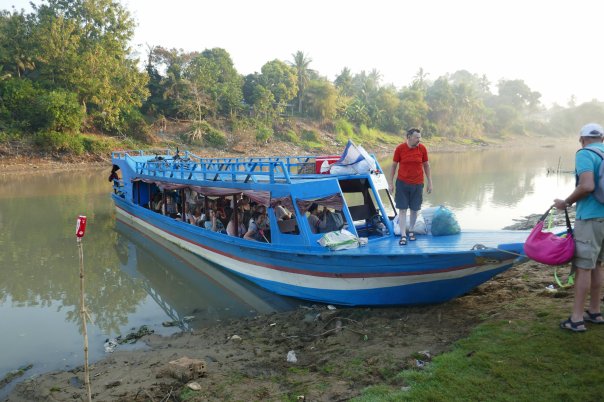
All in all another memorable day. Back on the road tomorrow.

Tuesday 15 January: Boat from Battembang to Siem Riep: 23km cycling

(David) Today was another non-cycling day (as will be tomorrow). For those following the trip on a map, Battembang is a city about 100km South East of Siem Riep, but the road trip between the 2 cities is over 170km as there is a vast lake and wildness area between the two cities.

So we caught the boat – with our bikes nestling on the upper deck – for the 7 hour trip along the River Sangke. The dry season meant the boat did not start in Battembang but 8 km down stream. “You follow the transport” was our instructions! So we cycled at full speed to try to follow a pickup which had our panniers, travellers and their rucksacks loaded in an improbable pile. But we arrived – slightly out of breath – and so did the luggage.

The boat was shallow bottomed and had a powerful (but loud) engine. Getting it off the mudflats was the first objective – and involved almost all of the men pushing and then jumping on before it got too far off shore! But we got going about 8am.

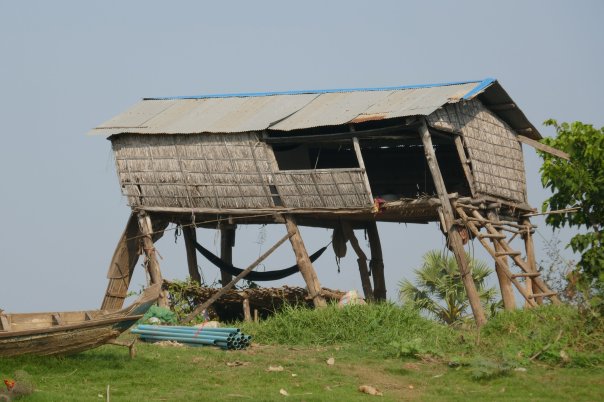
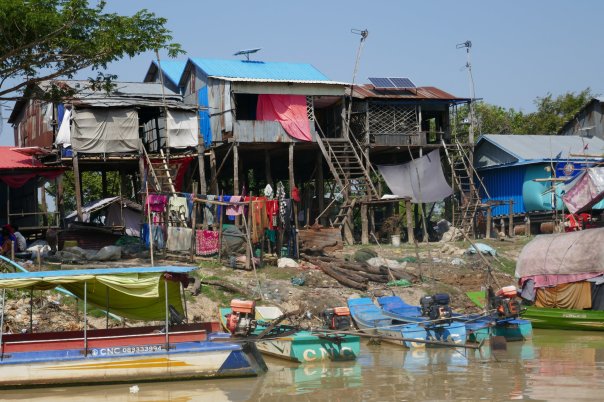
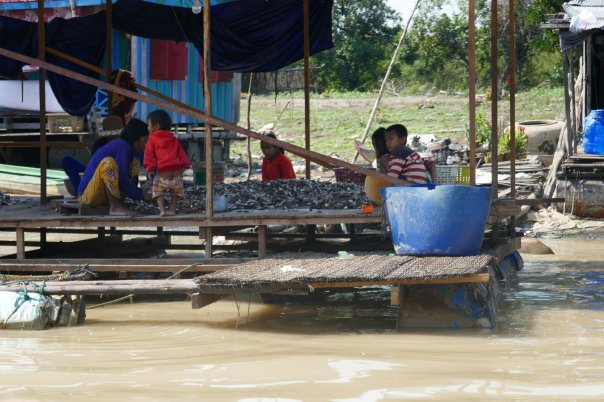
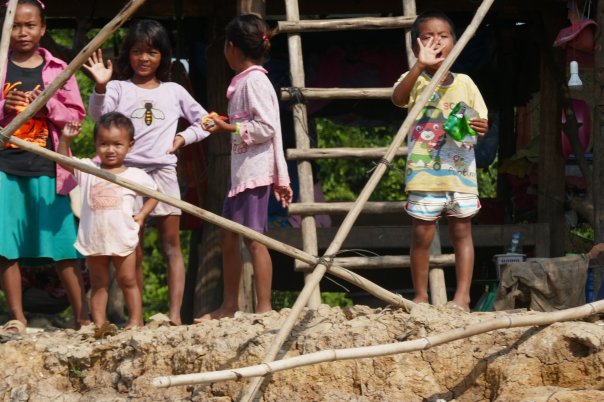
The pictures tell the story far more than any words – but the river meandered past hundreds of tiny villages where there was real poverty. Shacks looked flimsy, made of corrugated iron, pieces of plastic and timber, and perching on stilts for the wet season at precarious angles.

This was rural Cambodia where a combination of the fish in the river and subsistence farming meant people eked out survival. But even here there were motorbikes, the occasional school and riverside shops. Some of the long, thin boats passing us had impressive motors and were travelling at a fair speed. So it looks like there is development going on, but it is starting from a low base.

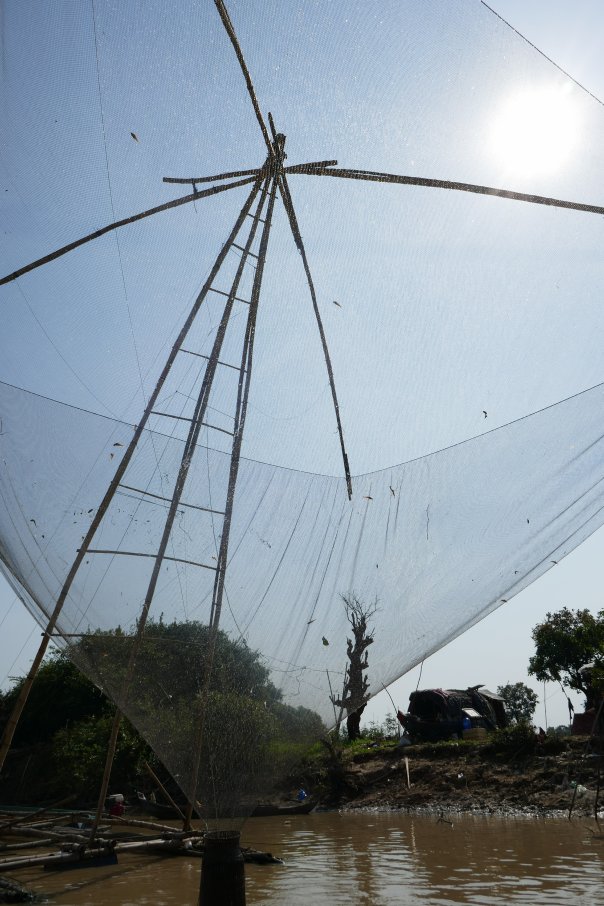
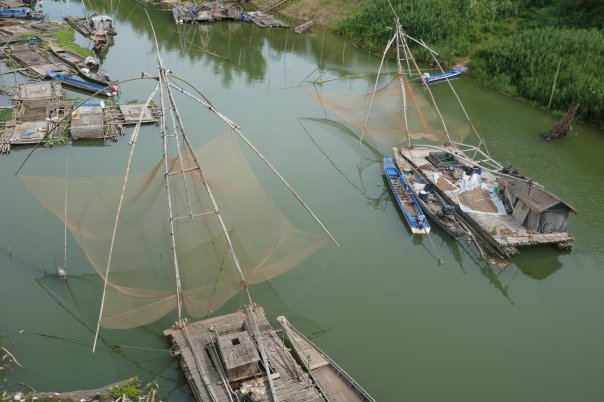
There was fishing with a variety of nets at all points, and also a great wealth of bird life. We saw one blue and red kingfisher but most of the birds moved too quickly to be identified, but were great to observe. At one stage we saw a “V” shaped flight of about 15 storks above – just like the red arrows. There were so excited very impressive bamboo structures holding large fishing nets with weights and pulleys to lift the nets inane out of the water. The other end was a living area, sometimes for whole families.

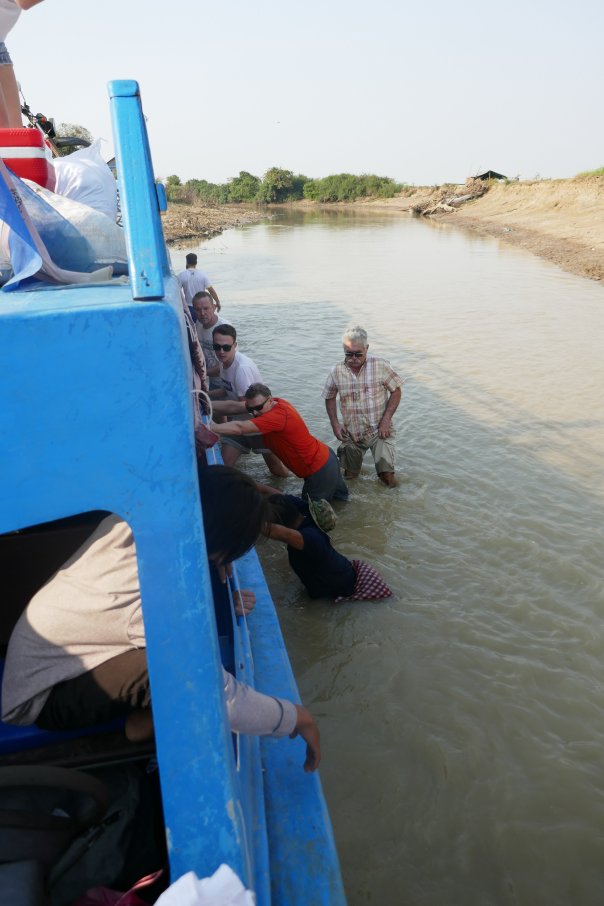
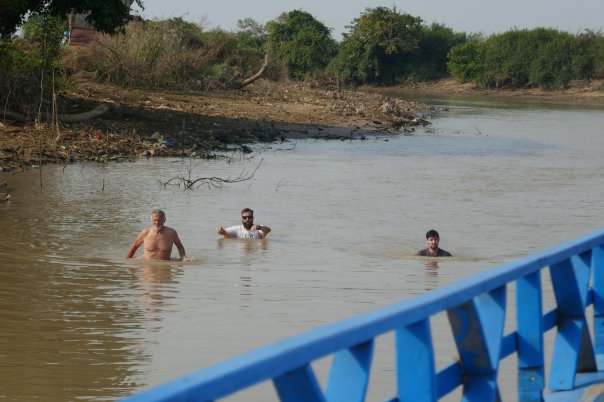
The water level varied and, at one point, the boat hit a sandbank. So we got into the water and pushed her off. When I say “we” I mean the collective male “we” on the boat, not the women who were not expected to get wet! It was quite fun really – especially seeing the battle of wills between the driver (who did this journey every day and thus probably knew what to do better than anyone) and the German tourist who was clearly an engineer in real life and had worked out all the angles, and gave clear Germanic instructions which everyone ignored. It as hard to know whether to laugh or push – so I did both.

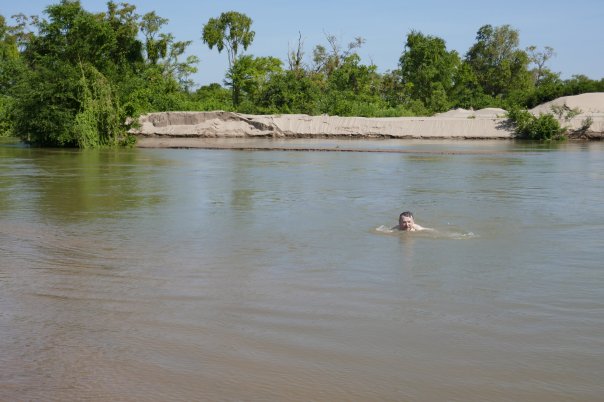
Some of the “pushers” get left behind and have to swim to catch up with the boat!

There were the occasional larger settlement, and after about 3 hours we stopped at one for overpriced rice and vegetables. A captive audience the world over has no bargaining position. The crew ate for nothing!

Eventually the river got deeper and turned into reed beds, and then into open water. The crew opened the throttle and we steamed towards Siem Riep across Boeng Tonle Sab, the massive lake which leads almost down to Phnom Penh. The final few km were up the river which was full of tourist boats on day trips from Siem Riep. It was really quite congested!

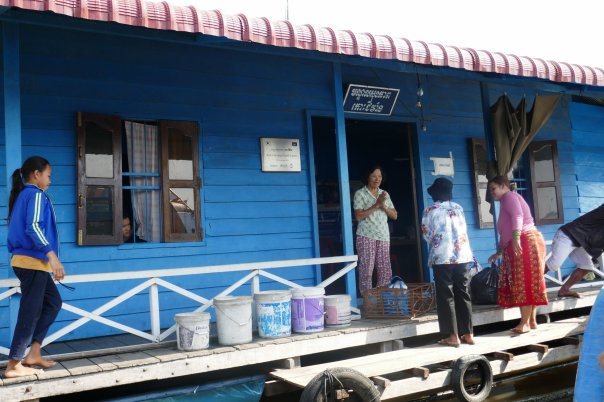
The local health centre.

Arriving we felt a bit stiff, a bit weary but overall it was well worth it. We then packed up and cycled the 16km to find our accommodation – an apartment 4km outside the town. It was not “ready” when we arrived, due to us being the first people ever to use it. But at $15 a night we could hardly complain.
So we are all set to experience the largest religious space in the world tomorrow. Ankor Wat has a moat around it – which is 190m wide. It will be quite a place and something we could not miss in our travels, even though it will be mega busy and we’ll feel like processed tourists if we are not careful. However that is for tomorrow.

Monday 14th January 2019. Day off in Battembang.

We left home 2 weeks ago and have cycled for 10 consecutive days. Even though that has included some short days, that is a much longer stretch than we would normally do. But was just the way the days fell. However, we really felt we ‘deserved’ our day off and had a bit of a holiday day. Battembang (there various forms of the translation of the word) is a fairly chilled city with some old French colonial architecture and a good place to relax without being tempted to do too much….or so we thought.

We started the day with an American breakfast. Whilst we love noodles and rice, it was great to have something different. Our usual cycling breakfast is instant oat porridge with fruit – quick and easy and great for cycling, but not the same as a good cappuccino! Next we successfully booked a boat to Siem Reap with our bikes for tomorrow. That means we won’t have to cycle back the way we came along the 70km of roadworks!

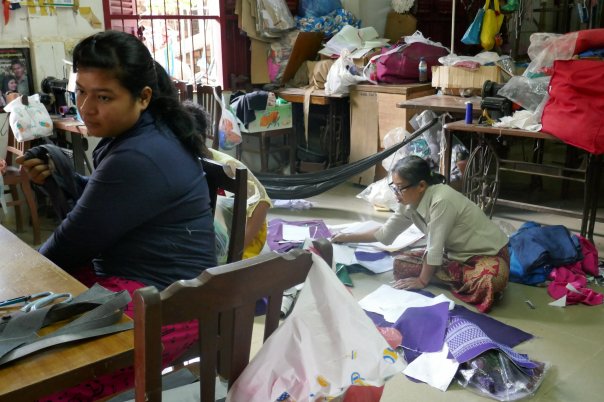
We had read about a small NGO supporting women by teaching them sewing and selling handicrafts. It was on the edge of town so we took briefly to our bikes and found it tucked away at the back of a house in a little street. The choice was limited but we felt we were supporting a good cause and involved putting money straight into their hands.

In the afternoon we subjected ourselves to a full body Thai massage. OMG those women have strong hands. The hour of pummelling was about 90% on the edge of pain. Perhaps this is because our muscles were tired and overworked or maybe it is always like this because they know just how much pressure to use for maximum effect. We were in side by side beds, face down with our faces in a hole in the bed surface, and at one stage the masseurs were both sitting cross-legged on top of us, pummelling our backs whilst they chatted away with each other in Cambodian. I suspect they were talking about the weather, their children or the increasing price of noodles, but it did not appear to distract them from their task. Then into the sauna, the hot and cold tubs, the steam room and the hot and cold tubs again. By the end our muscles felt fantastic.

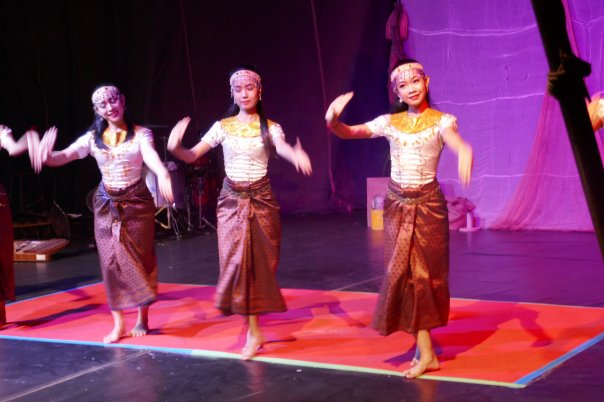
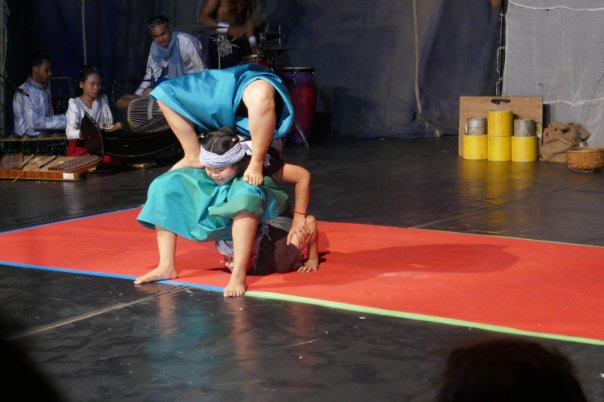
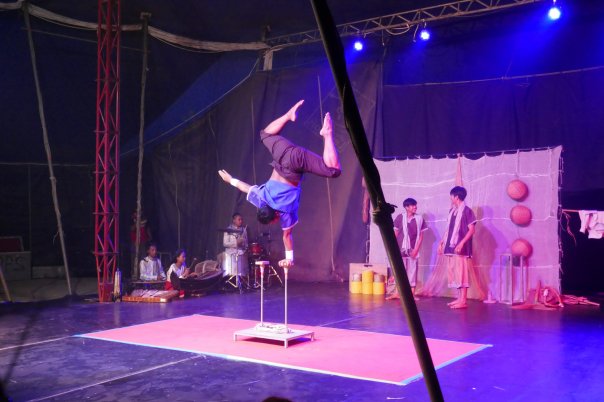
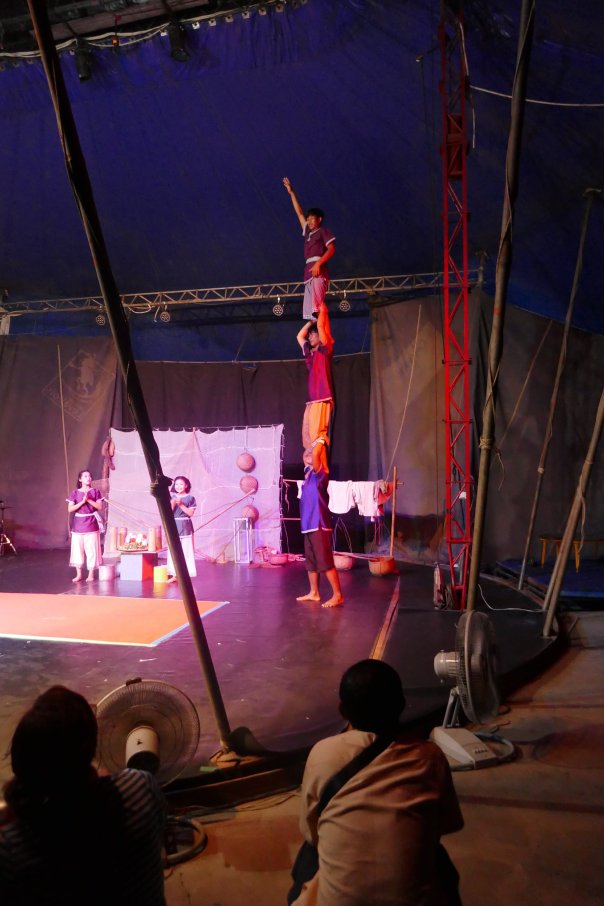
Our evening extravaganza was to go to the circus. Phare Ponleu Selpak is a performing arts school. The show is put on by the students a couple of times a week. It was billed somewhere as the “Cirque du Soleil’ of Cambodia.

Maybe not quite as swish and techno as that but full of exuberance and skill with traditional dancing, music on traditional instruments as well as acrobatics, juggling, incredible contortions by the girls woven into a story of village life. Great fun. A quiet day then!

Sunday 13th January : Banteay Chhmar to Battdambang : 127km and only 48m of climbing!

Today was a case of “getting the miles done”. It was flat but long – with a constant headwind and with the road surface being appalling for large parts of the last 70km. At one stage I remarked to Bernie that there must be an easier weight loss plan we could have followed and we both almost fell off our bikes laughing – not a great idea when there were large trucks on the road.

Anyway the day started early – earlier than we intended thanks to the “helpful” music coming from the Buddist Temple which was about 100 yards from our homestay. It belted out repeated rhythms from about 5am, making our 5.30 alarm call wholly pointless. We got up, did the last of our packing and said our goodbyes to our generous hosts.

Then, just as it was getting light, we left at 6.12am. We started by cycling on the left hand side of the road – as per Thailand and the UK – and soon realised our error when we almost crashed with a motorbike who was mega confused – our fault entirely. The air was light and calm, the morning rush hour to the fields was underway and we only stopped to take photos of the rising sun.

The next 60km were glorious – good surfaces, quiet roads and virtually no wind. We also went very, very gently downhill for 50km, starting at 90m height and ending at 15m. There were loads of people about in the small towns we passed and workers off to the fields. As we descended, the amount of water increased and paddy fields began to appear. We also noted that the ambiance took on a greater feeling of prosperity. Cambodia’s GDP has been steadily growing by between 6% and 8% per year for the past 10 years – an impressive but sustainable level of growth. 40% of the Cambodian population is aged 16 or below, so the economy needs to create lots of jobs just to meet the needs of those coming onto the labour market each year. This means there are schools and lots of young people everywhere. There are also a number of older citizens but a distinct lack of people in their 40s and 50s – due to the Pol Pot regime and the Killing Fields. So it is a country with a history of recent tragedy, but with a growing population and economy, and an obvious enthusiasm for the future.

Fellow escapees from the hot sun – sheltering under a tree

At about 10am we reached the major town of Sisophon, where we would turn East to get to Siem Riep (with the Ankor Wat temples) or go south on the road to Battambang. We knew the Battambang road would be busy, because it was one route to get to Phnom Penh but had no factored in that the whole route was in the (slow) process of being upgraded to a 2 lane motorway, but still being used as a main road. This meant the usable surface was smaller than usual, in pretty bad condition and there was a huge amount of dust from the new carriageways being laid out at the side. This is all Chinese money – part of the silk road development process – that will tie the government of Cambodia into China for the foreseeable future. The same thing is happening across Asia and Africa, Mr Trump may have his “America First” policy but China has a far more effective approach by investing in (and then owning) infrastructure for developing countries in many parts of the the world and creating long term economic ties as a consequence. China has invested more than $2billion in Cambodia in recent years, which buys a lot of new roads in this part of the world!

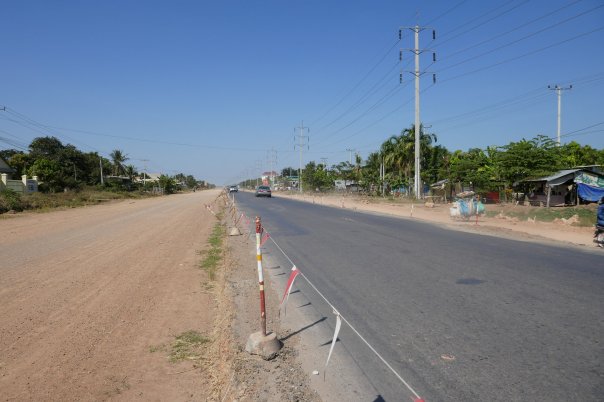
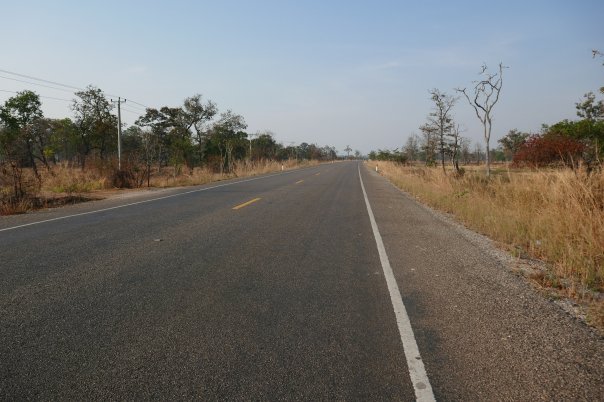
This is what the road was like for 70km!

The short term consequence of Chinese investment was a horrid 70km for us, but we rolled into Battdambang at about 3pm, and collapsed after a welcome shower. Then we strolled around this French colonial town for the early evening, ate and discussed life, the universe and everything. The market was colourful and had a feeling of activity that drew in locals and visitors alike – but we did not partake of the live eels that were being killed on demand – but they must have been very fresh (if fresh eels are your thing).
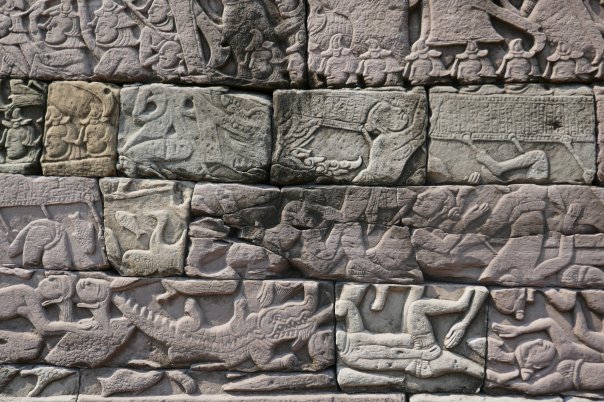
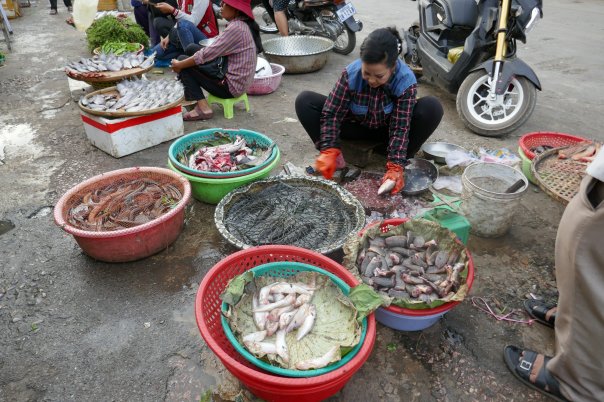
Live eels in the middle basket and one just being despatched off to the great eel farm in the sky!

It seems a long way away from the Brexit vote in Parliament, but the only clear thing is that Brexit-inspired chaos looks certain to continue. However, we feel well out of it here (knowing full well nothing will be any clearer when we get back at the end of February.

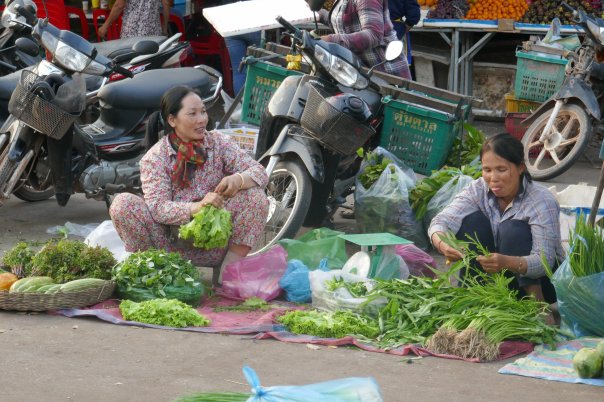
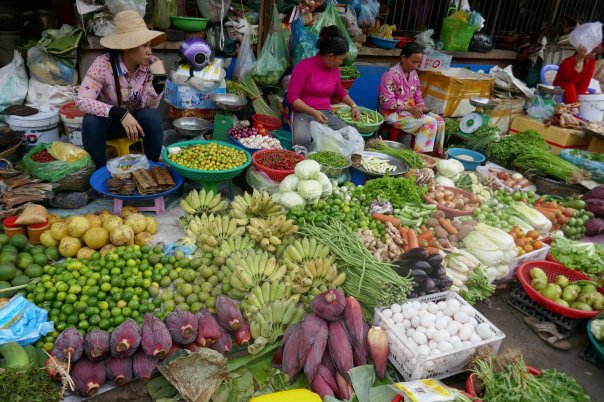
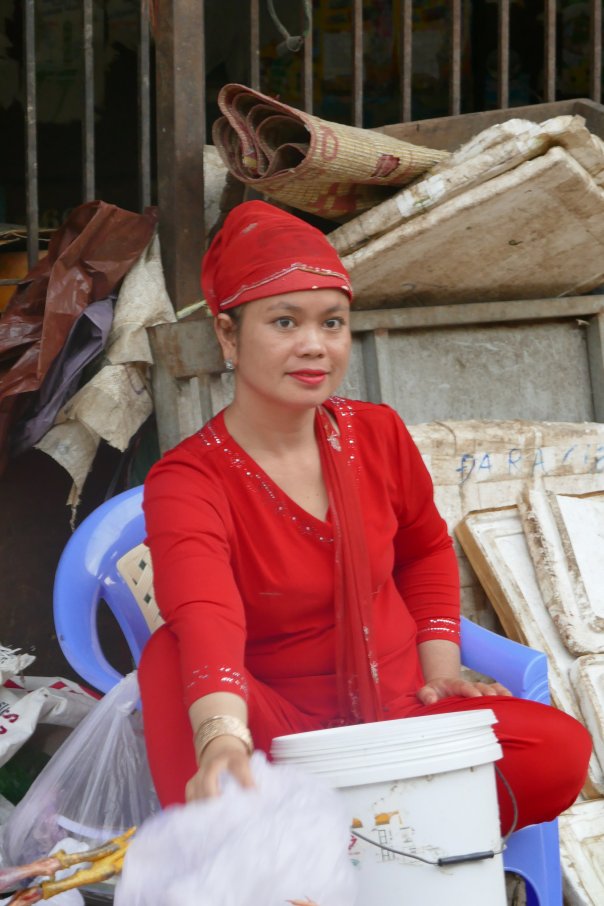
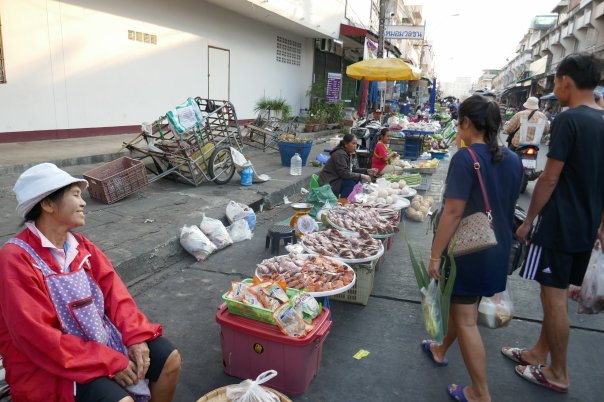
All dressed up – to sell vegetables!

Saturday 12th January. Samroung to Banteay Chhmar. 56km.

There were no more mishaps with our room and we slept well, waking with a 5.30 alarm. We said our good byes to our cycling compatriots and were on the road at 6.30 am. As always the early start was worth it. The town was also up an about. Children were on their way to morning school, which appeared to start at 7am.

We were turning west into the remote north east part of the country. The road was newly paved but with hardly any traffic – the odd motorbike or ‘mini tractor’ a ‘sit on mower’ type engine with a variety of trailers attached) and the very occasional car. The temperature was lovely and we climbed 1meter in the first 10km!

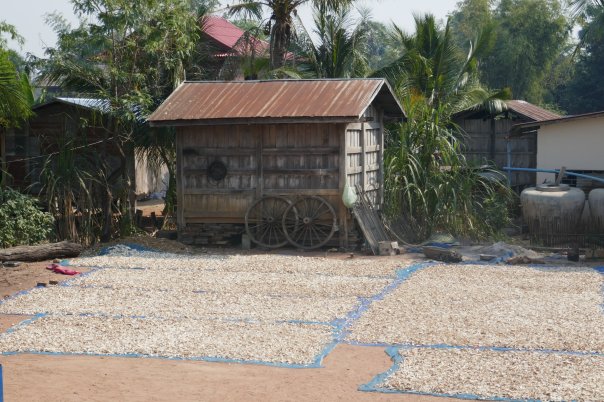
There was some agriculture – dormant rice paddies, many with the stubble being burnt, and cassava – and a lot of scrub land. Chopped up cassava was laid out by the side of the road to dry.

We cycled through small villages and the occasional town. Every small village had a primary school with the larger towns also having high schools. Schooling still seems to happen on Saturdays. We brought bread and donuts from a young chap with a laden motorbike which sat in the stomach as a welcome second breakfast as we pedalled along. The traditional wooden houses on stilts were in all the villages but some now had brick built bases. No doubt many are poor but most people were well dressed and looked well fed. The villages are clean and the shops small but seemed to have basic provisions. Every town of course had a variety of mobile phone shops.
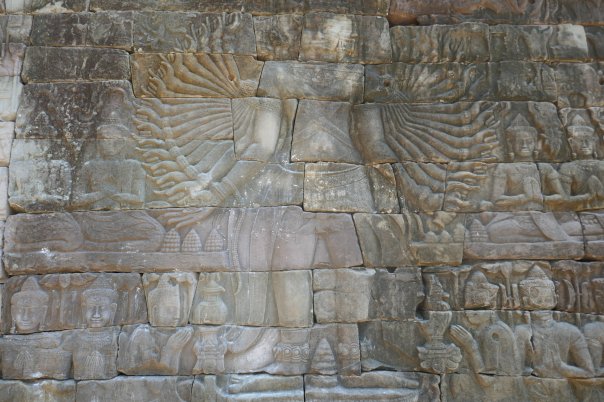
We sped through 55km on the flat and with our early start we had reached our destination, Banteay Chhmar by 10am. We had read about a community tourism project that arranged tours and local homestays and soon found their office. Although they could not arrange a tour (we had not made any advance arrangements) a helpful chap soon arranged our homestay at a house in the village. We had a bedroom in the wooden upper floor and shared a very basic bathroom with the family who lived downstairs. Mosquito net, fan and even a kettle! Perfect.

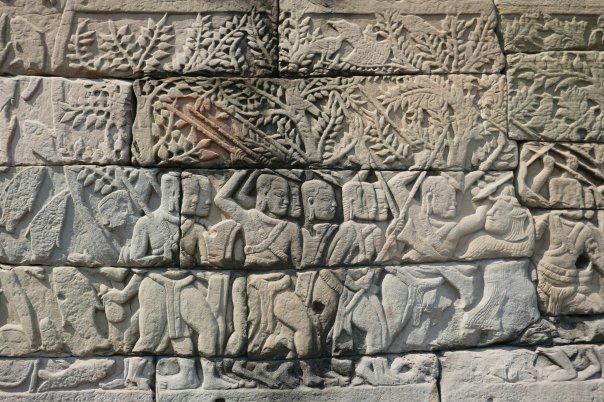
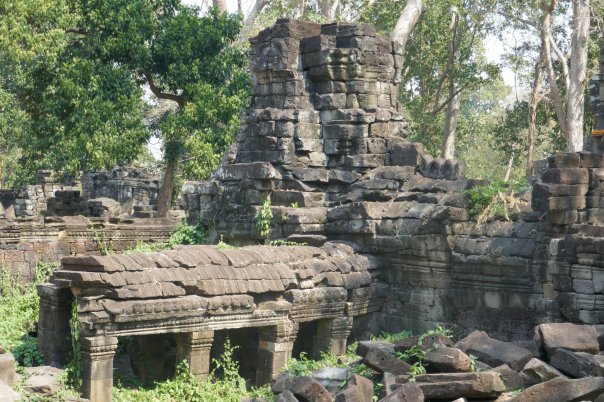
The reason for visiting Banteay Chhmar was to see some pre-Angkor ruins of a temple complex dating from 11th-13th century. After a short clean up, we decided to go straight out to the ruins before it got too hot – the temperature was already rising significantly. The site was amazing – most had fallen into ruin and overtaken by the surrounding jungle but renovation had been going on for a decade or two. We were seeing much of the place as archaeologists must have seen early sites – piles of rubble with amazing stone carving peaking out. An outer wall with incredible carvings had been painstakingly reconstructed showing stories and many armed deities. It reminded me of Mayan carvings in Mexico 1000s of miles across the world.

The inner temple complex had small parts reconstructed giving a glimpse into how incredible the place must have been in its heyday. To start we had the place virtually to ourselves as we clambered about the stones. It was helpful that we had already seen some temple complexes as it meant we could imagine the structures and layout. A really memorable visit.

B

ack at our homestay the afternoon heat was now full on. 1-3pm are meltingly hot. We lay on the bed with the fan on full blast. By 4pm it was getting pleasant enough to sit out on the balcony in the shade with some breeze. I knew it was going to be hot but had not anticipated quite how hot and with a humidity which we have not cycled in before. We will have to work out how to manage the afternoon heat – an even earlier start tomorrow! I read and David checked the bikes over, tightening up things that had worked loose on the bumpy roads and sorting a few minor things. But overall the bikes are proving to be really reliable.

By 5pm the temperature was pleasant and we took a stroll through the village and round the edge of the ruins again. We had arranged to have dinner at the CBT office (which has fans and wifi) and had a tasty meal with plenty of fresh veg (although I think they left out all the chillies of us!). Have done some more useful planning today so our Cambodian chapter is taking shape.

Friday 11 January : Prasat, Thailand to Samroung, Cambodia: 79km

Today we crossed into Cambodia, met a lovely Dutch couple who were also travelling by bike and managed to fuse a hotel’s electricity system – all in 24 hours.

We started early and were on road by 7.15am. I have now found the temperature setting on the Garmin so know it was 21C when we started (and climbed to be well into the 40s by the early afternoon). We plodded along for 30km, had some coffee and then braced ourselves for crossing the border. We had read all manner of horror stories – mostly involving the need to pay copious bribes – but actually it was efficient, we were charged $35 for the visa (which is either the right amount or only $5 over) and then crossed into Cambodia.
Cambodia is poorer than Thailand but the people are more engaging with visitors, especially those on bikes.

We got numerous waves, smiles and “hellos” from children (who we think are partially taught in English). The road surfaces was good and we dropped 100m over the first 7km – so it was a fast start to a new country. First impressions are that this is young country, with loads of children. It is dusty, developing at a great pace and has an enthusiasm that is perhaps missing in Thailand.

However 20km from the border we were feeing very hot, and needed a rest. So we stopped at a bus shelter and drank water and ate doughnuts – bought from “Tescos” or 7-11” in Thailand the day before. We carried on through this agricultural but arid scenery and stopped to take some photos.

Then, to our utter astonishment, we saw 2 other cyclists coming towards us. Wilma and Will are a Dutch couple of about our age who are on a 5 week cycling tour of Thailand, Cambodia and Laos. They stormed up to us and were as amazed by meeting us as we were meeting them! We were both going the same way so we teamed up and chatted as we rode. The flat countryside whizzed by and we soon reached Samroung, the town where we all had marked as the end of the day’s cycle.

It was astonishing to hear them putting forward exactly the same reasons as us for embarking on this madcap adventure. They spoke of the peace, the quiet, meeting people and seeing a country at a slow pace – all things we have tried to explain in our own words. So we are either both mad or we are onto something.

We found a hotel by the lake and then showered. A new country means a new Sim card – but at $1 it was not going to break the bank. I then spent several hours reading up on Cambodia’s past, including the Khymer Rouge period when millions died. It was more complex than I had recalled (as is always the case) but there are very few people our age since our generation lived (and died) in the terror,
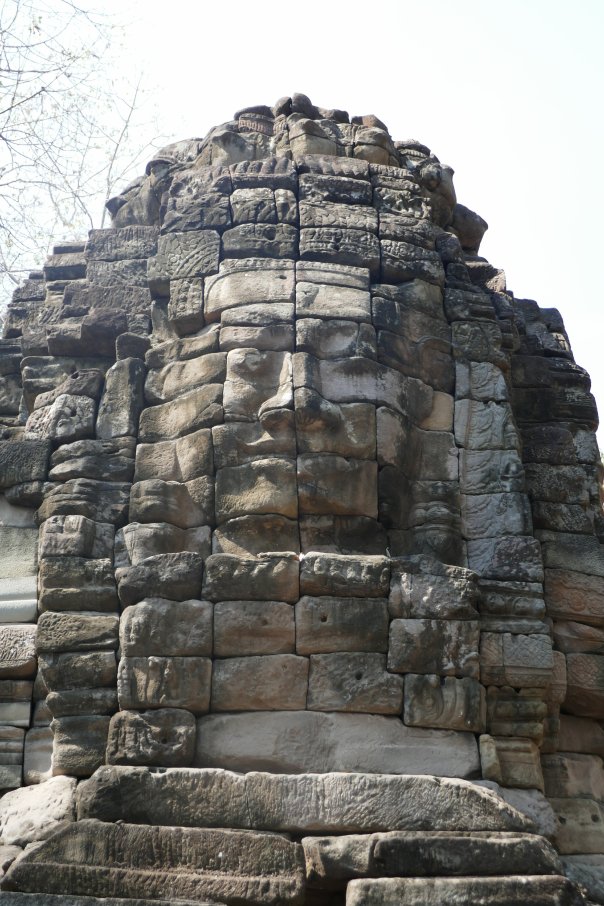
We then had a pleasant meal out with Wilma and Will and learned that they tried to cycle every day in Holland, despite the winds. They were certainly faster than us and this may explain it. As we walked back music was booming across the lake and we were treated to a firework display that reflected in the lake waters – not to welcome us to Cambodia we think but probably a wedding celebration.

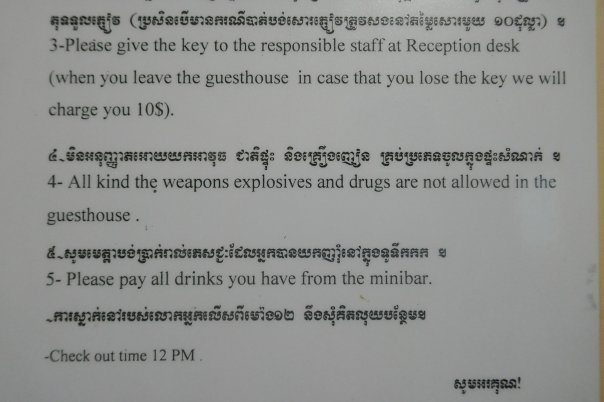
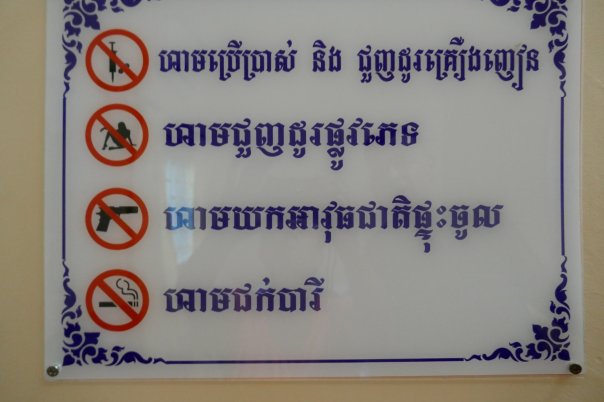
Then back to the hotel with its amusing signs. However the act of turning on the bedroom light fused the hotel’s system, resulted in young boys spending a long time fiddling with live electricity wires. I could not bear to watch but, having failed to mend them, we were moved to a room with functioning lights!

Thursday 10th January.  Nang Rong to Prasat via Phnom Rung Historical Park. 98km

We slept in slightly later than planned as David had an unfortunate incident with bed bugs last night when he woke up with his back covered in bites. Urghh! Luckily I had some anti-histamines to settle the itching and there was a sofa that he could decamp to and we had sleeping bag inners that we could cover ourselves up in. We had even splashed out on a 3* hotel so it just goes to show (something).

It was bright and sunny when we set off and our spirits brightened as we cycled through the morning market. All those delicious fresh herbs and spices that are a part of the cooking on display.

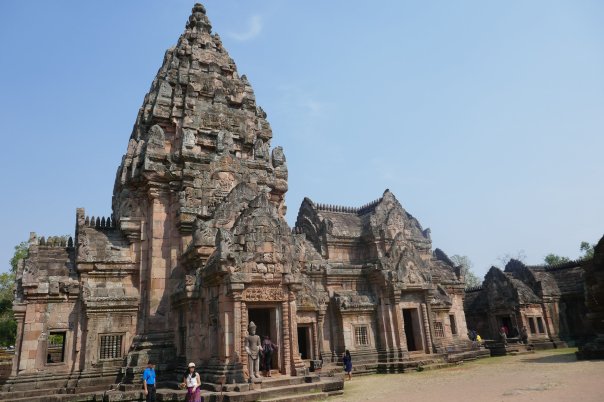
We had a pleasant 30km ride to the Phnom Rung Historical park, through pleasant countryside and a paved road (hurrah). At least it was pleasant until the last couple of km. Prasat Phnom Rung is an amazing Khmer Hindu temple built between the 10th and 13th centuries. It sits on top of an extinct volcano that springs out of the surrounding flat landscape. For us that meant another lung busting steep 200m climb. This time we did not have to get off and push so must be getting fitter but it still wiped us out by the time we got to the top.

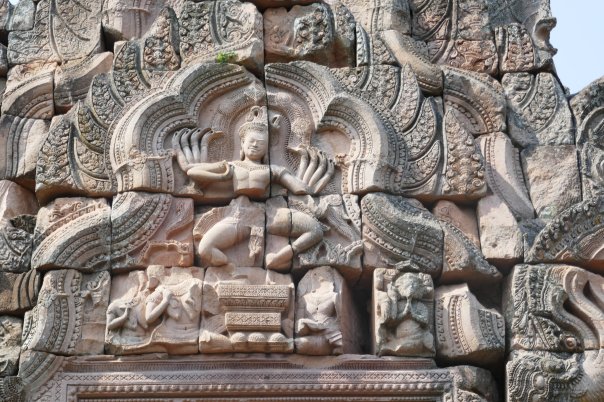
A reviving cup of decent coffee and then we visited the temple. I won’t describe all the detail but the setting was fantastic, the approach was along an amazing walkway and series of steps and the stone carvings beautiful. Hopefully the photos will give some idea. The complex is one of a whole series of temples that line an ancient Khmer highway between Angkor Wat in Cambodia and Phimae a bit further north in Thailand. It gave us a taster of what is to come. I must read up about the link between Hinduism and Buddhism but the temple was reminiscent of some of the ancient temples we saw in India.

T

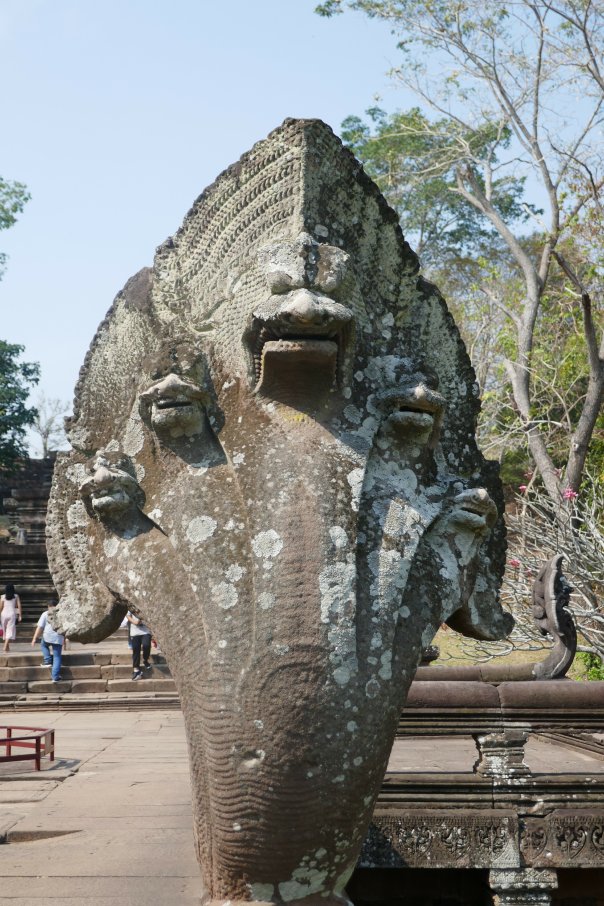
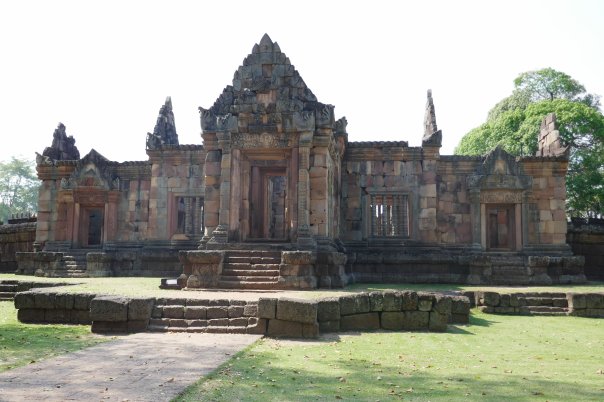
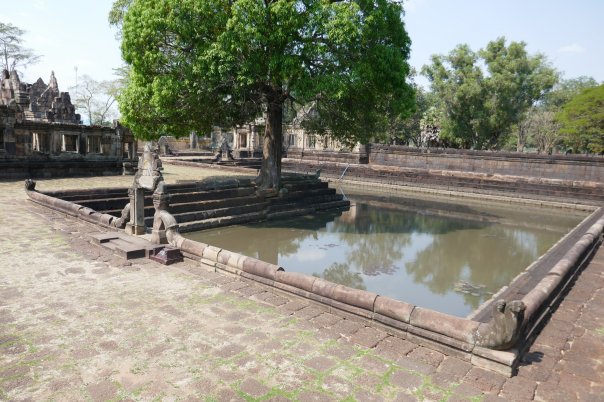
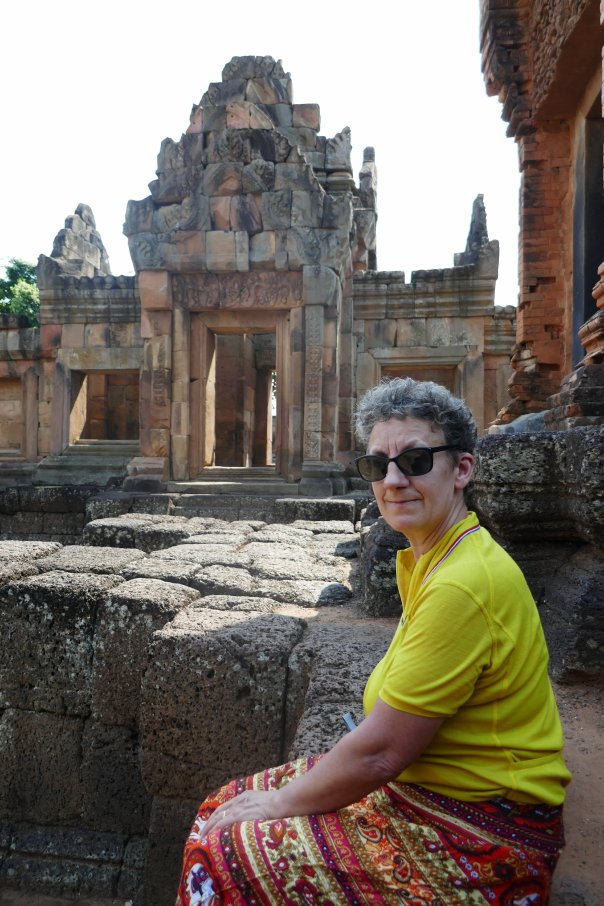
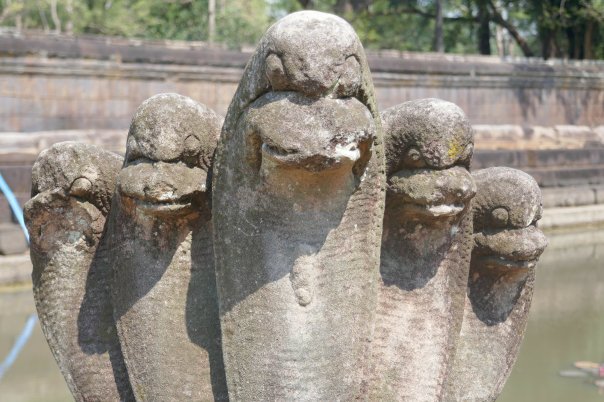
Time for a second breakfast (omelette on rice -nicer than it sounds) and off to our second temple at the bottom of the volcano. Today the skies were clear and the sun much hotter that we have experienced so far. Prasat Muang Tam was a less visited monument in serene surroundings next to a lake. The main temple building flanked by 4 L shaped ponds guarded by 5 headed Nagas (serpents). A 100 year old mango tree gave some shade. We were now at the height of the sun (mad dogs and Englishmen etc) and melted our way round. The only leaflet we had was in Thai but the setting felt calm and evocative.

W

We now had 60km to get to the next main town with some accommodation. It felt rather daunting in the heat, although bizarrely it felt less hot cycling at a nice steady pace (flat) because it generated a 20km breeze. Luckily no more hills. After 20km we dived into shade for a sticky sugary drink and after that the main bite of the sun had gone. We were back on the main road, although now much less busy, and the next 35km was rather like riding an exercise bike – just keep the legs whirring round. We even overtook a couple of very heavily laden old trucks/tractors! Tedious but the km ticked down until we reached Tescos in Prasat – yes Tesco (supermarkets as we know them have been sown up by Tesco and 7-eleven). A quick stock up of supplies then off to find a homestay we had seen on one of the hotel websites. We had decided not to book as for the last few days we have been almost the only people in the hotel so going direct meant more money for the owner. The sun was starting to fade as we rolled in – “full’ the owner said “sorry, sorry”. In fact everything looked closed up rather than full but she directed us to another hotel a couple of km away, which was perfectly fine.

98km and 2 temple visits – quite a day. Just 40km to the Cambodian border tomorrow.

Wednesday 9th January : Pak Chong Chai to Nang Rong : 114 km – mostly flat

This will be a short blog posting as not a great deal of interest to anyone else happened on our trip today! Well, apart from cycling 114km which is the longest we have cycled so far, and shows we might just be regaining some lost fitness.

We woke at 6 and were on the road before 7 (again a first for this trip). The morning air is cool, the light is low and the air is fresh. It means that early morning is a lovely time of the day to cycle. We were soon out of the town and ambling along tiny paved roads through small villages. The soil is a deep red colour here and it seems to be a really productive agricultural area. The buildings indicated people were not poor – but not well off either.

The roads got a bit more bumpy as we went East. Thailand has a north-south industrial corridor which starts 50 miles to the west of us (or so it seems). But this part is rural Thailand and the roads are of poor quality – which seems to be a pattern all over the world. Eventually the potholes gave way to hard earth with no tarmac at all. We ploughed on – though maybe using the word “plough” to describe cycling on dirt roads may not be the best choice going – but it was pretty tough. Our average speed dropped from about 20kph to about 12kph, as we navigated the road ahead of us.

At least it was flat .. and then there was a significant hill to climb on the dirt roads. This part of the country is not short of quiet paved roads. In fact there are plenty of them. The problem is that, apart from the No24 (quasi-motorway), they all go north to south and we were going west to east! So we bailed out and headed for No24. Just before we got there we stopped for a brilliant lunch with an effeminate Thai man who conjured up the most marvellous fish soup plus an omelette – a combination that worked in the heat and humidity.

Then it was 37km on the hard shoulder of a busy dual-carriageway. The less said about that the better – save that it was far better than the No2 motorway we had struggled with a few days before.
At about 4pm, after covering 144km, we rolled into Ban Nang Rong. “Ban” seems to mean town so it was Nang Rong town – and a mighty fine town it was. This is the stopping off place before visiting the famous Khymer ruined temples of Phanom Rung, so we have that delight tomorrow.